Pumpkin Seed Oil Hair Growth: A Natural DHT Blocker for Thinning Hair
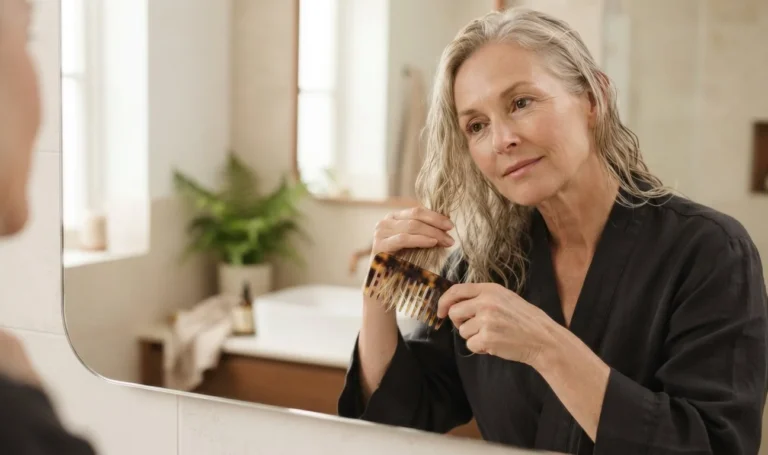
You part your hair one morning and the line looks wider than it did last year. Maybe your temples have gone soft and wispy, or your ponytail feels thinner in your hand, and you’ve started angling the mirror away from the bathroom light.
I’ll be honest with you about where pumpkin seed oil fits into that picture, because most of what you’ll read online oversells it.
Unlike the random kitchen oils people swear by on social media, pumpkin seed oil actually has clinical research behind it, and that research points to one specific mechanism: it appears to interfere with 5-alpha reductase, the enzyme that converts testosterone into DHT. That matters, because DHT is the hormone driving most hormonal thinning in women.
How Pumpkin Seed Oil Actually Works
Your thinning probably isn’t happening because follicles are dying. In pattern hair loss, they shrink. Each growth cycle produces a slightly thinner, shorter, weaker hair than the one before, until what grows back is barely more than fuzz. Trichologists call this miniaturization, and it’s why your part widens even though you’re not going bald in patches.
DHT is what drives that shrinking. It’s a potent form of testosterone that latches onto receptors in genetically sensitive follicles, mostly along your part, crown, and temples. The enzyme 5-alpha reductase is what creates DHT in the first place.
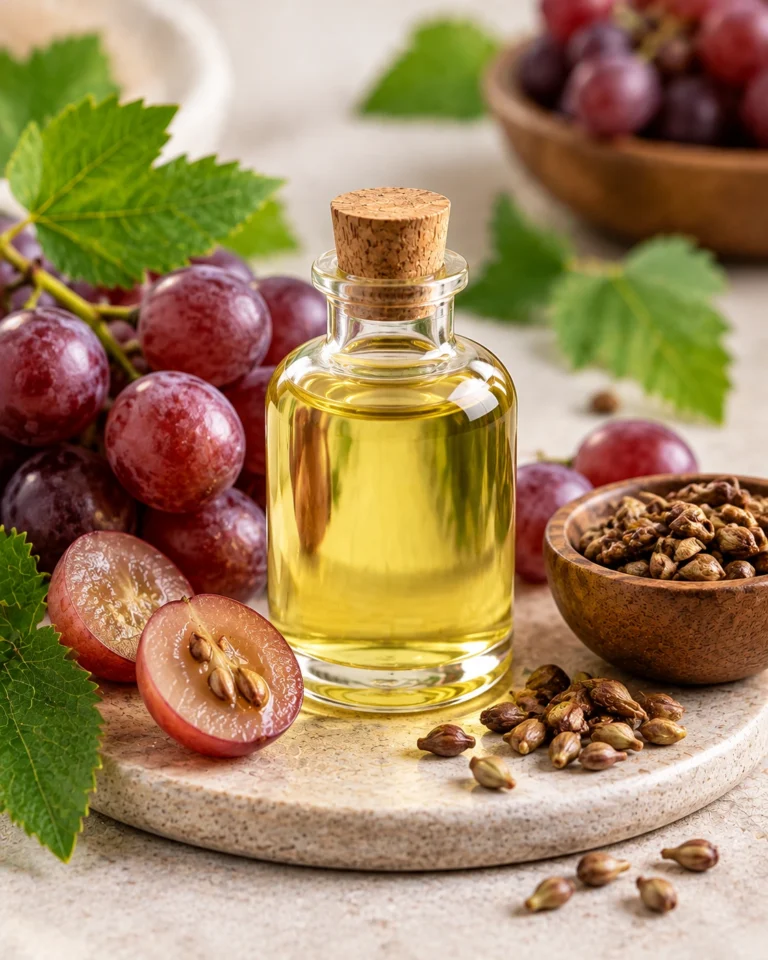
Pumpkin seed oil is rich in phytosterols, plant compounds that look structurally similar to our own hormones. Beta-sitosterol is the one you’ll see named most often, and research also points to a group called delta-7 sterols. In lab and animal studies, these compounds appear to slow that enzyme down.
Less DHT reaching a follicle means less pressure on it to shrink. Think of it as easing the brakes rather than pushing the accelerator, because a natural DHT blocker for hair works by protecting what you still have, not by forcing new growth.
Oral or Topical: Which One Should You Choose?
This is the question I get most, and the honest answer is that the stronger evidence sits with the capsules.
The Case for Oral Supplements
The most cited study gave 76 men with mild to moderate pattern hair loss either 400 mg of pumpkin seed oil daily or a placebo for 24 weeks. The supplement group saw a roughly 40 percent increase in hair count, compared with about 10 percent in the placebo group.
Two honest caveats. It was a small trial, and every participant was male, so we’re borrowing the findings. Talk to your doctor before starting any supplement that influences hormones, especially if you’re pregnant, breastfeeding, trying to conceive, or taking hormonal medication.
The Case for Topical Use
A smaller trial in women compared topical pumpkin seed oil with 5 percent minoxidil foam over three months. Both groups improved, and the pumpkin seed oil group showed measurable gains in hair shaft quality, though minoxidil came out ahead overall.
So topical use is worth doing, but treat it as scalp support rather than a replacement for medical treatment. If your shedding is sudden, patchy, or rapid, please see a dermatologist or trichologist first. Natural oils can’t fix a thyroid issue, low ferritin, or postpartum shedding.
The Fine Hair Safe Application Method
Here’s where most fine-haired women get burned, and I don’t blame them, because nearly every oiling tutorial online is written for thick or coarse hair.
Why Overnight Oiling Backfires on Fine Hair
Fine strands have a smaller diameter, so the same amount of oil coats far more surface area and weighs the root down instead of sitting harmlessly on it. Your part collapses, your roots look slick, and the thinning you were trying to hide looks worse.
The scalp issue is the bigger one. Leaving oil on for eight hours mixes it with sebum, sweat, and dead skin, which can congest the follicle opening and leave you flaky or itchy. An inflamed scalp is the last thing a miniaturizing follicle needs.
And when you finally wash all that out, you end up scrubbing hard with a stripping shampoo, which is rough on delicate strands. Thirty minutes gives you the contact time you need without any of that.
The 30-Minute Pre-Wash Routine
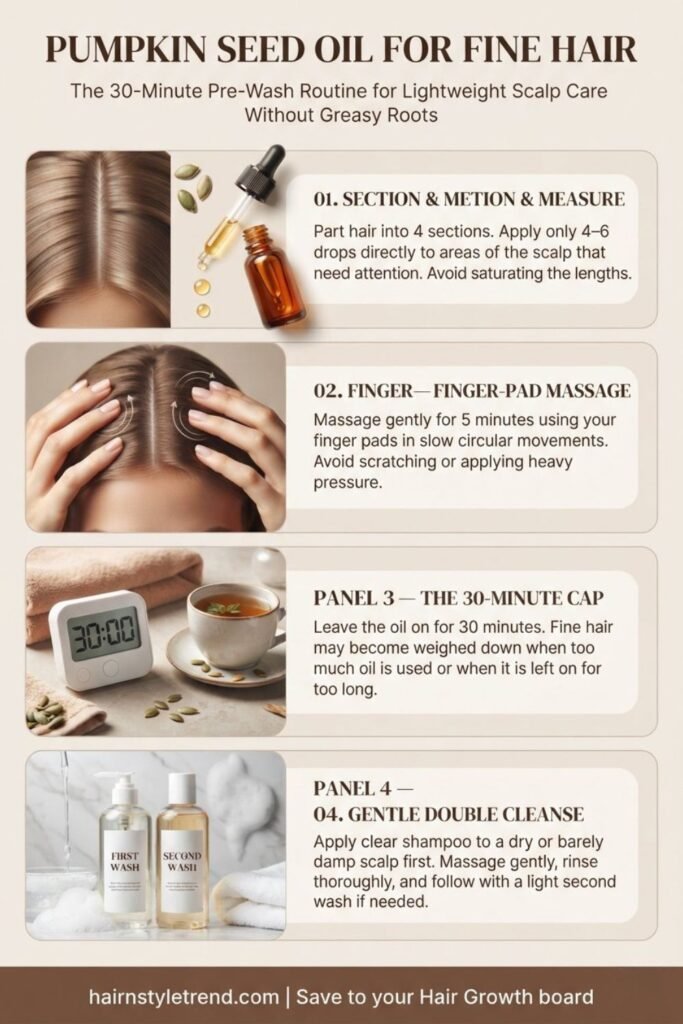
- Start dry and sectioned. Part your hair into 4 to 6 sections so you can reach the scalp, not the lengths.
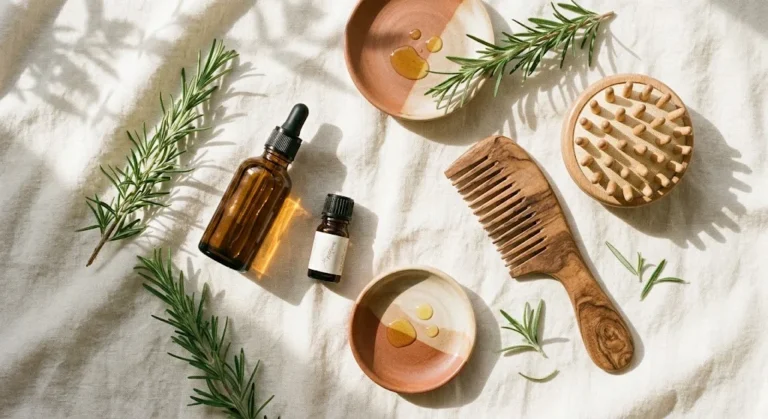
- Use 4 to 6 drops from a dropper. Not a palmful, not a tablespoon. Apply directly along each part line where thinning shows.
- Massage for 5 minutes with finger pads. Slow circles, never nails, and gentle pressure that moves the scalp rather than tugging the hair.
- Leave it 30 minutes, then wash. An hour is your absolute ceiling. Set a timer so it doesn’t turn into an accidental overnight.
Keep every drop on the scalp. Your ends aren’t where DHT does its damage, and oil there is what makes fine hair look limp for days.
The Double Cleanse That Won’t Strip You
- First wash: Apply a clear, lightweight shampoo to your dry or barely damp scalp before adding much water. Oil lifts oil, and this pass does the heavy work.
- Rinse thoroughly, then do a second, gentler lather focused on the scalp only.
- Condition from the ears down, never at the roots, and rinse for longer than feels necessary.
Two gentle washes beat one aggressive one every time. If you want more on this, our hair care for fine hair guides go deeper into wash-day technique.
What Results to Realistically Expect
Most people quit at week three because nothing has happened. Nothing was supposed to happen yet. Hair grows about half an inch a month, and a follicle that’s been shrinking for years needs time to recover.
- Weeks 1 to 4. Your scalp feels calmer and less tight. No visible growth, and that’s normal.
- Weeks 6 to 12. Daily shedding may start to settle down, and the hair you have can feel a little stronger.
- Months 3 to 6. This is where topical pumpkin seed oil results actually show up. Look for short baby hairs along your part and temples, and a part line that stops widening.
- Beyond 6 months. Slow gains in density, as long as you’ve stayed consistent.
Take a photo of your part in the same light on the first of every month. Progress this slow is invisible in a mirror and obvious in a photo.
Pumpkin Seed Oil vs. Rosemary Oil vs. Castor Oil
| Pumpkin Seed Oil | Rosemary Oil | Castor Oil | |
|---|---|---|---|
| Weight on fine hair | Medium, washes out easily | Very light, always diluted in a carrier | Extremely heavy and sticky |
| DHT-blocking evidence | Strongest of the three, via phytosterols | Early and indirect | None established |
| Main strength | Hormonal thinning and shedding | Scalp circulation and follicle stimulation | Conditioning dry, brittle ends |
| Best for fine hair? | Yes, as a 30-minute pre-wash treatment | Yes, properly diluted | Not on the scalp, ends only |
Pumpkin seed oil and rosemary oil complement each other nicely, since one addresses the hormone and the other the blood supply. Castor oil is the one to keep off a fine scalp entirely.
Pumpkin Seed Oil FAQ
Does pumpkin seed oil block DHT in women?
The mechanism is the same in everyone, because women produce DHT through the same enzyme, just in smaller amounts. The catch is that the main clinical trial only studied men, so we’re reasoning from biology rather than direct female evidence. Expect a mild, supportive effect, not a prescription-level one.
How often should I use it on fine hair?
Two to three times a week, always as a pre-wash treatment on wash days. More often than that adds buildup without adding benefit, and buildup is the enemy of root lift.
Can it cause shedding at first?
Some women notice extra hairs in the first few weeks, and it’s usually one of two things. Massage and washing release hairs that had already finished their cycle and were sitting loose, or dormant follicles are restarting and pushing old strands out.
Either way it should settle within about six weeks. If shedding is heavy, gets worse, or comes with an itchy or painful scalp, stop and see a professional.
Is it better to take it or apply it?
If you can only choose one and your doctor approves it, the capsules have the stronger evidence behind them. Topical application gives you the scalp massage, better circulation, and a calmer scalp, which is why plenty of women do both.
Nothing about this is fast, and I wish I could tell you otherwise. What I can tell you is that gentle, consistent scalp care over six months does far more for thinning hair than an aggressive routine you abandon by February.
Four drops, thirty minutes, twice a week, and a photo on the first of each month. Be kind to your scalp and patient with your hair, because it’s doing its best. When you’re ready to make what you have look fuller in the meantime, our volume and thickness guides will help.
Save this pumpkin seed oil routine, so it’s ready for your next wash day.