How to Wash Fine Hair Without Breakage: The Gentle Salon Protocol
If you want to wash fine hair without breakage, the shower is where most of the damage is decided. Not the shampoo bottle, not your genes. The handful of strands in the drain and the tangles you fight afterward usually come down to how the hair was handled while it was soaking wet.
Water changes hair while it’s in it. The inner part of the strand absorbs water and swells, the outer cuticle scales lift, and the bonds that hold everything firm loosen. Wet hair stretches much further than dry hair before it snaps, which feels like strength but is the opposite.
On fine hair, that’s a thin strand doing all of this at once. Add friction from scrubbing, a rough towel, or a comb dragged through it, and healthy hairs break halfway down the length.
The good news is that washing itself isn’t causing your hair loss. Six small changes to how you do it are enough to wash fine hair without breakage, and you’ll notice the difference at the next wash.
The Fragile Hair Wash Rules
- Detangle dry, never wet. This is rule one if you want to wash fine hair without breakage. Comb through with a wide-tooth comb before you step in. A knot that goes into the shower comes out three times tighter.
- Shampoo the scalp only. Your roots hold the oil and the buildup. The suds rinsing down are enough to clean your lengths, and scrubbing the ends is what roughs them up.
- Lukewarm water, always. Hot water softens the lipids that hold fine cuticles flat, and softened cuticles catch on each other.
- Blot and squeeze, never twist. Wringing wet hair stretches it while it’s at its weakest. A regular terry towel grabs fine strands and snaps them.
How long your hair stays soaked also depends on your porosity, and that changes how you should wash fine hair without breakage. Low porosity hair repels water and takes ages to wet through, while high porosity hair floods quickly and stays fragile longer. Our Hair Porosity Finder tells you which you have, and it changes how long the next few steps should take.
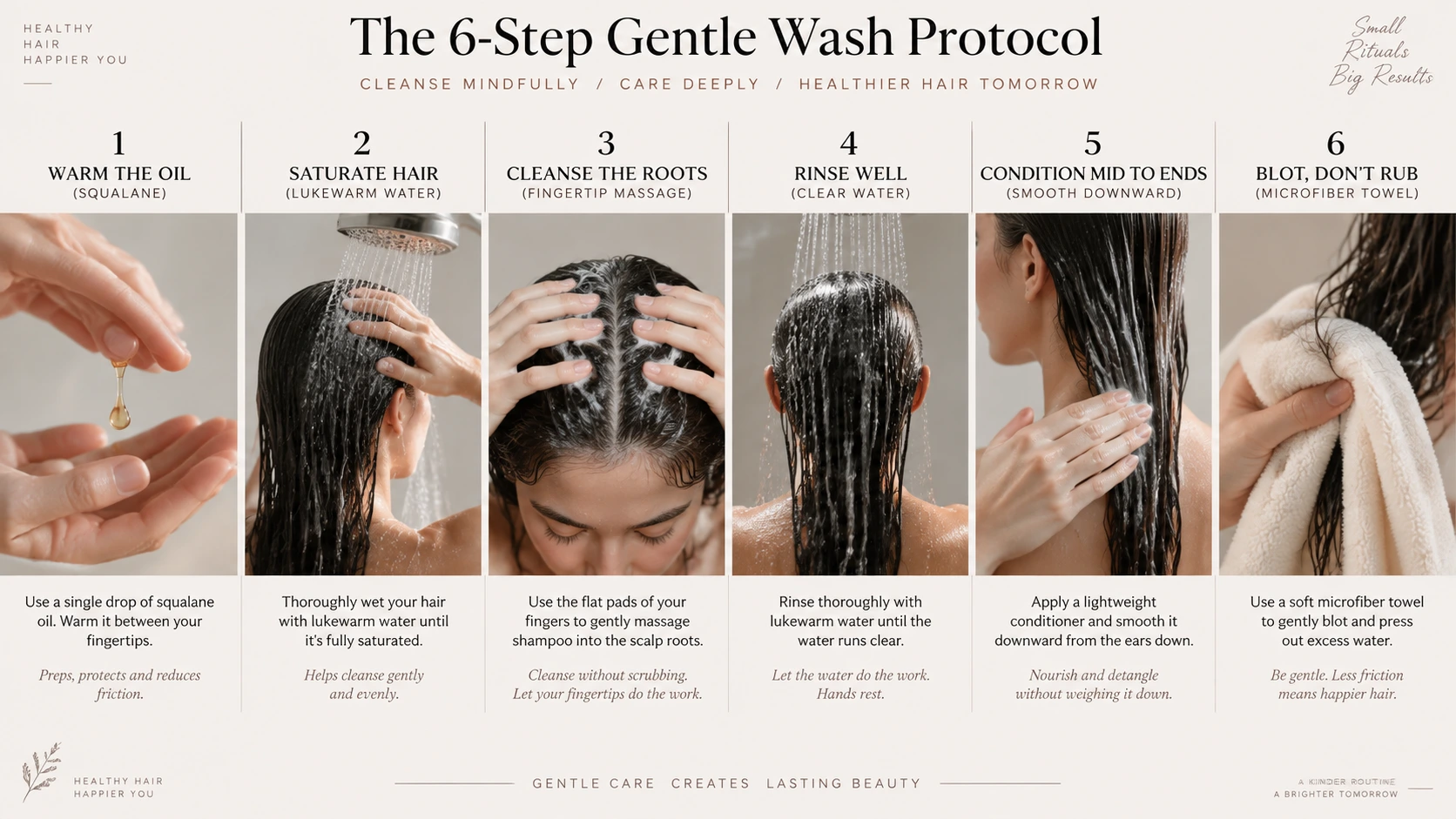
The 6-Step Protocol to Wash Fine Hair Without Breakage
1. The Pre-Wash Oil Shield
Step 01 • Before the shower
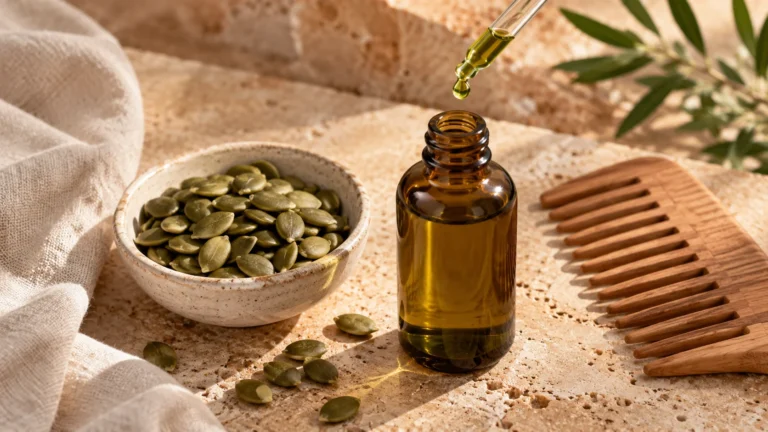
Warm one drop of squalane or jojoba oil between your palms and press it through the last few inches of dry hair.
This is the quietest trick for washing fine hair without breakage, because that thin film slows how fast water floods the ends, so they swell less and stay less fragile through the wash. It also means the comb glides afterward.
Tool or technique: One drop of squalane or jojoba, ends only
Common mistake: Applying it at the roots, which flattens fine hair for the whole day
Breakage-free rule: Ends only, and never more than one drop on fine hair
2. The 60-Second Soak
Step 02 • Getting wet properly
Stand under lukewarm water for a full minute before any shampoo touches your head. Most people rush this and start lathering on half-wet hair.
If you want to wash fine hair without breakage, this minute matters: properly soaked hair lets shampoo spread with almost no rubbing. Half-wet hair makes you work the product in with your hands, and that working is friction.
Tool or technique: Lukewarm water and a slow count of sixty
Common mistake: Starting to lather before the hair is fully saturated
Breakage-free rule: No shampoo until water runs off the ends freely
3. The Flat-Pad Scalp Wash
Step 03 • Cleaning the scalp
Put the shampoo in your palms, rub them together, then apply it directly to your scalp with the pads of your fingers. Move in small circles, never with your nails.
The single biggest rule when you wash fine hair without breakage is this: don’t pile your lengths on top of your head and scrub. That tangles the hair into itself, and untangling that later is where the breakage happens.
Tool or technique: Fingertip pads and a coin-sized amount of shampoo
Common mistake: Piling hair on top of the head like laundry
Breakage-free rule: Hair stays hanging down through the entire wash
None of this helps much if the cut itself is working against you. Thinned-out, tapered ends tangle far more than a blunt line does, which is why our haircuts for fine hair guides push so hard for a solid perimeter.
4. The Gravity Rinse
Step 04 • Rinsing
Let the water run straight down from the roots to the ends and do nothing else. No scrunching, no raking, no squeezing as you rinse.
Rinse for longer than feels necessary, especially at the nape, since leftover product undoes half the work of washing fine hair without breakage. Leftover shampoo at the scalp is a common reason fine hair feels rough and looks flat.
Tool or technique: Water pressure doing the work, hands still
Common mistake: Scrunching or twisting the lengths during the rinse
Breakage-free rule: Hands out of your hair until the water runs clear
5. The Slip Sandwich
Step 05 • Conditioning
Squeeze out the excess water first, then apply a lightweight conditioner from the ears down in smooth, downward strokes.
That slip is what lets you detangle safely later, and detangling is where most people undo their efforts to wash fine hair without breakage. If you must comb in the shower, do it only now, with conditioner in, using a wide-tooth comb from the ends upward.
Tool or technique: A coin-sized amount of light conditioner, ears down
Common mistake: Conditioner at the roots, which flattens fine hair by midday
Breakage-free rule: Downward strokes only, never rubbing it in circles
6. The Microfiber Blot
Step 06 • Drying
Press the water out with a microfiber towel or an old cotton t-shirt. Squeeze sections gently, from the top downward.
Drying is the last place to wash fine hair without breakage and then lose strands anyway, because the loops in a regular terry towel catch fine hairs and snap them, and rubbing your head with one creates a tangle you then have to comb out.
Tool or technique: Microfiber towel or a soft cotton t-shirt
Common mistake: Rubbing your head vigorously or twisting hair into a turban
Breakage-free rule: Press and squeeze, never rub, and never wring
3 Habits That Snap Fine Strands
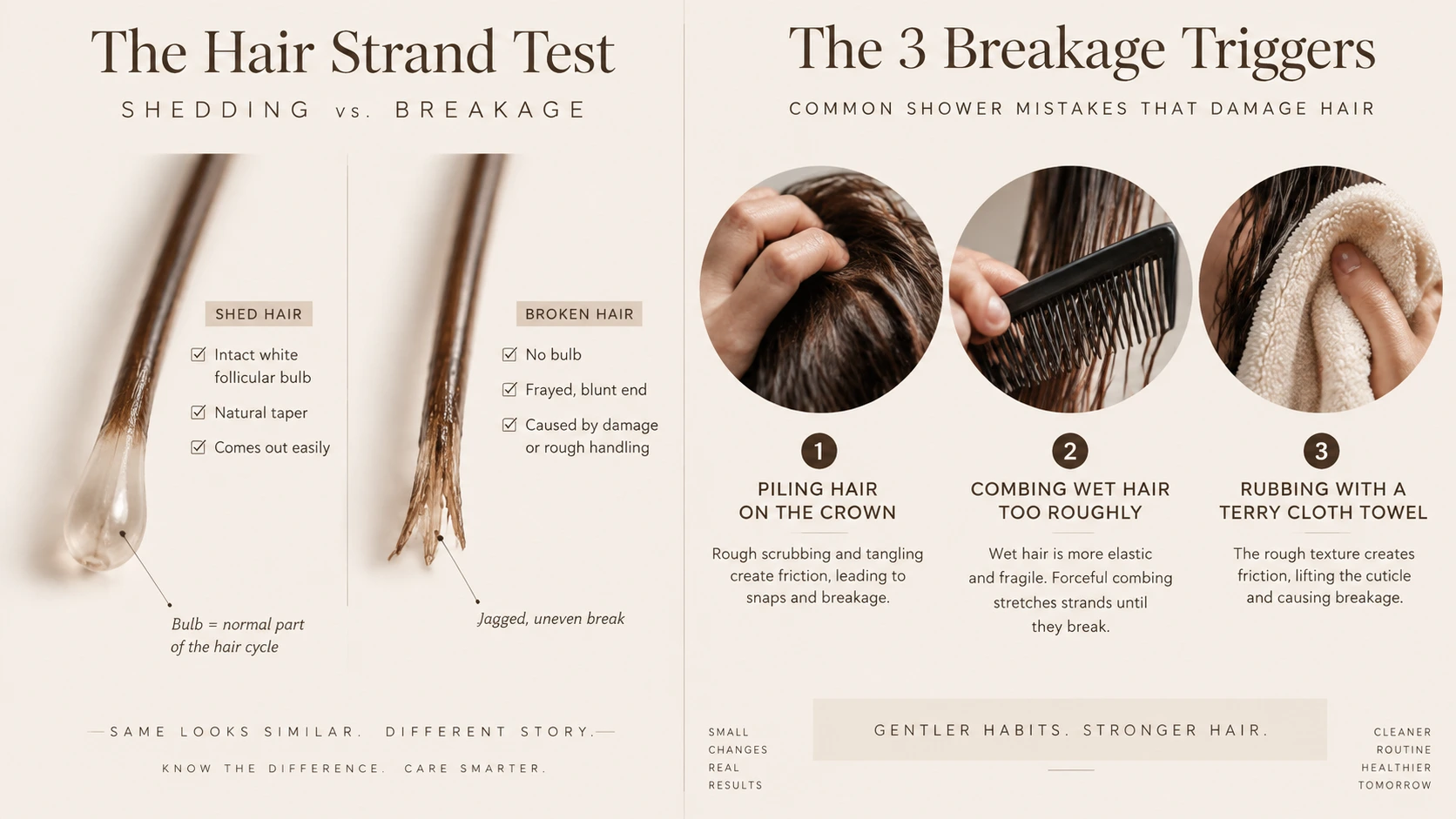
Scrubbing your lengths like laundry. Nothing undoes an effort to wash fine hair without breakage faster. Research on how hair actually breaks during combing points to hair catching on itself rather than on the comb. Piling wet hair on your head creates exactly those tangles.
Combing in the shower with no conditioner. This is where most people lose the hair they were trying to protect. Wet hair has more friction than dry hair, and studies comparing wet and dry combing show more breakage when hair is combed wet. If you comb in the shower, do it with conditioner in and start at the ends.
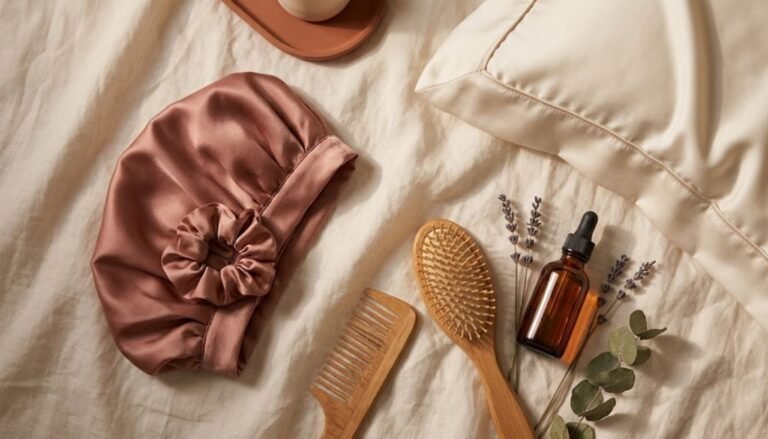
Going to bed with damp hair. All the care you took to wash fine hair without breakage counts for little here. Damp strands are still in their weakest state, and eight hours of rubbing against a pillow is where split ends multiply. Dry your hair most of the way, or at least sleep on silk.
On the drying question, how you dry matters as much as when. Our volume and thickness guides cover a root-drying routine that builds lift without dragging a brush through fragile hair.
Frequently Asked Questions
How often should fine, fragile hair be washed?
Every one to two days for most fine hair, as long as you wash fine hair without breakage using the steps above. Oil sits at the root and flattens fine strands fast, and a scalp left dirty for a week is not healthier. Washing gently and often beats washing roughly and rarely.
Is shedding in the shower normal, or is it breakage?
Look at the hair you find, because that tells you whether you are shedding or breaking. A shed hair is full length with a tiny white bulb at one end, and losing some every day is completely normal. Short broken pieces with no bulb are breakage, and that is what the steps above are designed to stop. If shedding suddenly increases or your part widens quickly, see a dermatologist.
Should I use a clarifying shampoo on fragile fine hair?
Once a month at most, and only on the scalp, if you want to wash fine hair without breakage the rest of the time. Clarifying shampoos strip buildup well, which fine hair benefits from, but they also strip the lipids that keep the cuticle smooth. Follow with a lightweight conditioner on the ends.
Is air-drying or blow-drying safer for fine fragile hair?
Neither extreme is ideal when the goal is to wash fine hair without breakage and dry it the same way. Hair stays swollen and fragile the whole time it air-dries, and high heat damages the cuticle. Rough-dry on medium heat until about 80 percent dry, then finish with cool air, and you get the best of both.
Final Thoughts
Fine hair isn’t weak by nature. It is thin, and thin things need to be handled without friction, which is the whole idea behind learning to wash fine hair without breakage.
So detangle before you get in, keep the shampoo at your scalp, let gravity rinse, and press the water out rather than rubbing it. Give it three or four washes, then check your drain. That is usually all the proof anyone needs.