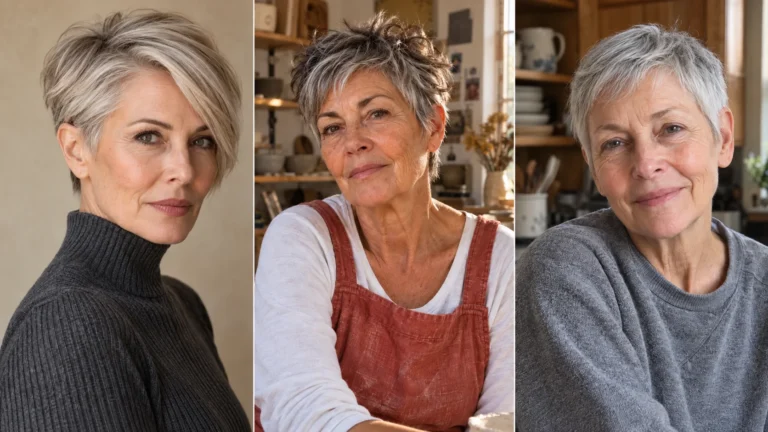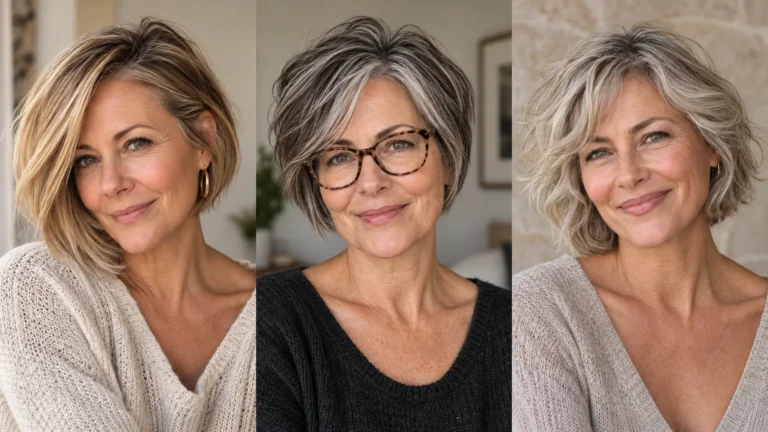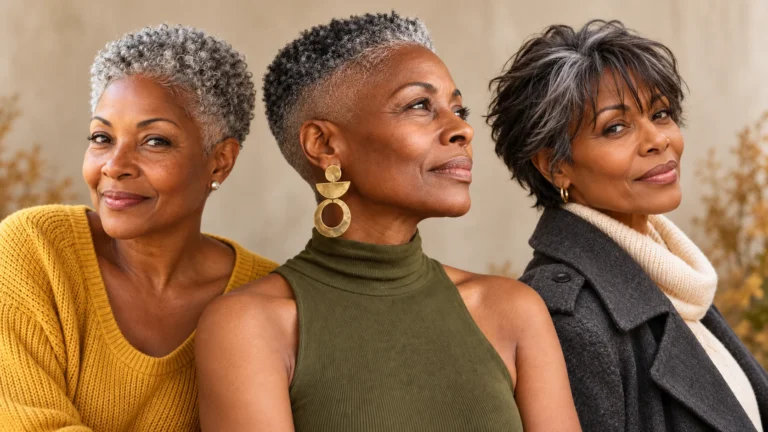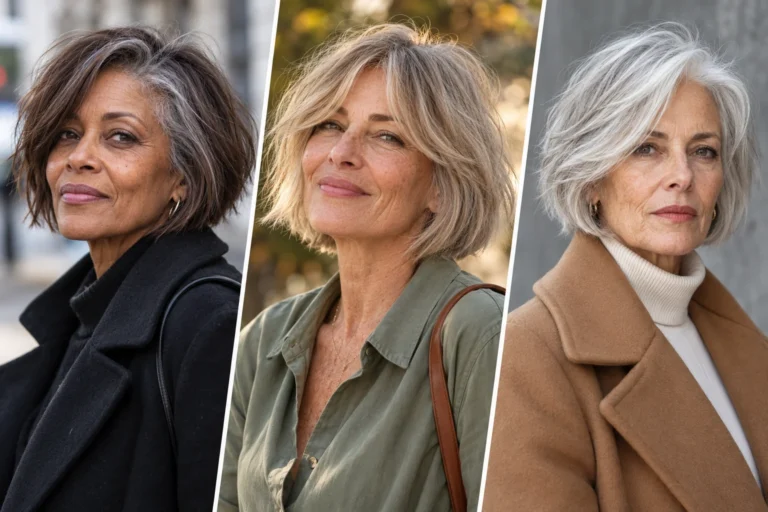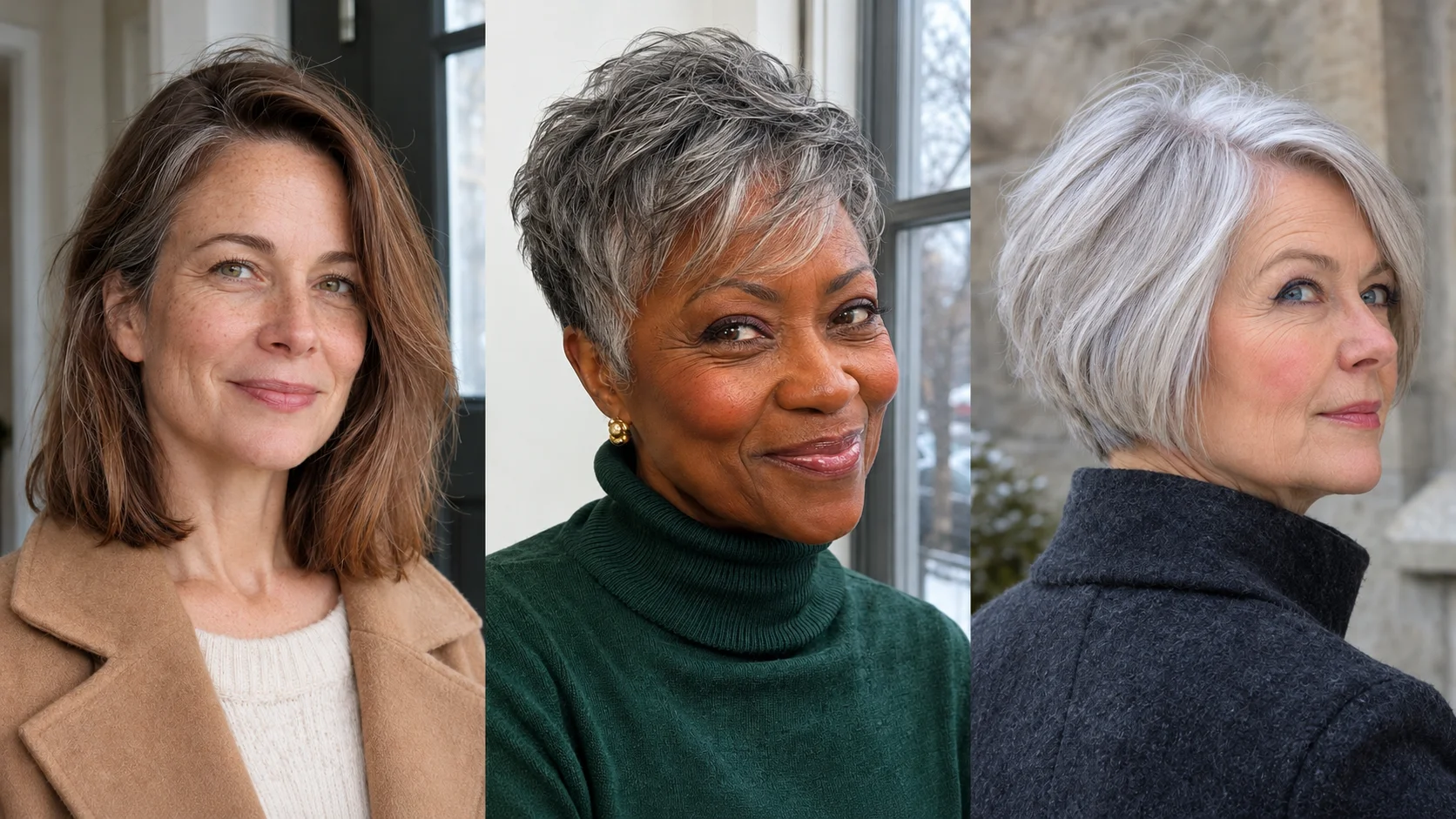
12 Winter Hairstyles for Women Over 50 That Beat Hat Hair
You pull the beanie off in the car, glance in the mirror, and your hair is flat on top and stuck to your coat collar. By the time you get inside, static has it lifting off your shoulders like it has a mind of its own.
The direct answer: the best winter hairstyles for women over 50 are chin length bobs, textured lobs, and soft layered cuts. All three sit above or just at the collar, so there is far less friction against wool. They carry built in texture, which hides static rather than showing it. And they bounce back with a finger shake after a hat instead of needing a full restyle.
Length is most of the decision, though it depends on your coat. Hair below your collar line gets rubbed on every car ride, and that friction is where winter tangles come from. A high collar puffer moves that line up two inches, a flat lapel coat barely touches your hair.
Below are twelve cuts and styling ideas worth asking for, each assessed on what matters in January. Does it survive a hat, and does it get on with a turtleneck.
How Winter Weather Actually Affects Hair After 50
Two things happen at once in January, and they explain why winter hairstyles for women over 50 get judged on different criteria than summer ones.
Indoor heating pulls room humidity down to desert levels. Hair loses moisture to dry air, and after 50 it has less of its own oil to hold, so it goes brittle faster.
Then static. Wool sweaters, fleece linings and hat liners strip electrons off your hair every time they brush past. Each strand ends up with the same charge, and like charges push apart. That is the halo. Dry hair holds the charge far longer than hydrated hair, which is why the sweater that was fine in September makes your hair fly in December.
This is why cut shape matters more in January than July. A blunt, slightly weighted perimeter gives strands something to lie against, while wispy ends have nothing to group with, so they lift individually and the halo shows more. A good cut makes static less obvious. It does not stop it happening. Conditioning agents cut friction and the charge hair holds, which the literature on hair cosmetics and conditioning agents covers in detail.
The Winter Coat and Beanie Test
Every style below gets the same three line assessment, because these are what actually decide whether you like your hair in winter. Most roundups of winter haircuts for older women skip all three.
Hat recovery. Does it come back with a finger shake, or does it need a dryer
Collar friction. Does the length sit above the coat collar, or get rubbed by it all day
Turtleneck behavior. Does it tangle at the nape against a high neckline
These are editorial judgments based on how each shape behaves, not lab testing. Your collar height and hair texture will shift them.
12 Winter Hairstyles for Women Over 50
1. The Collarbone Textured Lob

This one gets recommended more than any other cut for a reason, and it tops most lists of winter hairstyles for women over 50. A collarbone length sits right at the line where coats start to matter, so how it behaves depends entirely on what you wear over it.
Ask for internal texture rather than visible layers. It stops the ends looking stringy and keeps the shape from flattening under a hat.
Worth separating two things that get lumped together. Fine hair means thin strands, which usually suits a blunt line plus light internal texture. Low density means fewer strands, and removing bulk there can make hair look thinner, not fuller. If you have both, ask your stylist to go light on the thinning shears.
Hat recovery: Good. Flip your head forward and shake once
Collar friction: Depends on the coat. Fine under a lapel, rubs under a high collar, so tuck the back in on long drives
Best for: Fine to medium density, straight or slightly wavy
2. The Soft Feathered Pixie With Long Bangs

Styling tip first, because it changes everything here. Put a pea of styling paste through the top before the hat goes on, not after. Hair that already has grip holds its direction under a beanie instead of going flat.
The long bangs keep a pixie from reading severe on mature features, and give you something to push sideways when the rest is squashed.
Hat recovery: the strongest on this list, three minutes to restyle at most. Collar friction: none. Turtleneck: nothing to tangle.
3. The Chin-Length French Bob

The most underrated winter cut going. It sits clear of nearly every collar you own, which removes most of the tangling and end damage that builds between November and March.
A French bob is cut blunt with a slight curve in toward the jaw, which makes thin hair look denser at the ends. It is also one of the genuinely low maintenance hairstyles over 50, since the shape does the work. If you are unsure whether a chin length bob suits your bone structure, our face shape haircut finder will tell you in a minute.
Hat recovery: Very good. The blunt line falls back into place on its own
Collar friction: None. Nothing reaches the collar
Styling effort: Low. A flat iron pass on the two front sections and you are done
4. The Shoulder-Length Shag With Curtain Bangs

If you have been searching for winter hairstyles for fine hair, this one does the most with the least. The shag puts short pieces at the crown, and those stand up instead of lying down.
Curtain bangs frame the face without the commitment of a full fringe, and they grow out gracefully, which matters when you are less inclined to reach the salon every six weeks.
One caution. A shag relies on texture, so it needs a texturizing mist most mornings. If you want something to leave entirely alone, go for the French bob instead.
Hat recovery: fair, the crown needs refluffing. Collar friction: moderate. Turtleneck: some nape tangling.
5. The Modern Bixie Cut

Picture the morning you have to leave in fifteen minutes with coat and scarf already on. A bixie, a bob and pixie hybrid, handles that without a mirror.
It keeps the length of a short bob through the front and the cropped, textured back of a pixie. That cropped nape is why it is among the most practical options here, since there is nothing back there for a scarf to catch on.
Hat recovery: very good. Collar friction: none. Turtleneck: clean, thanks to the cropped nape.
6. The Layered Midi Cut With Side-Swept Bangs

Quick styling tip. Blow dry the bangs across your forehead first, while the rest is damp. Bangs dried last dry in whatever direction they fell, usually the wrong one.
The midi length, between the collarbone and the shoulder blade, is the longest cut here and needs the most coat management. Fine under an open coat or a lapel, less so under a zipped high neck. The side swept bangs break up a wide part line, which is why it shows up so often in searches for thinning hair.
Hat recovery: Fair. Expect to redo the bangs
Turtleneck behavior: Tangles at the nape. Keep a wide tooth comb in the car
Styling effort: Medium
7. The Sleek Low Twisted Chignon

For a holiday party or a windy day, nothing beats having the hair put away. A low twisted chignon keeps every strand off your coat and away from your scarf.
Twist a low ponytail into a coil at the nape and pin with two U pins crossing inside it. Use day two hair, since freshly washed hair is too slippery to hold pins.
Keep it loose at the hairline. A tight updo puts steady pull on the most fragile hair you have, and the American Academy of Dermatology is clear that repeated tension at one spot is worth avoiding.
Hat recovery: good, the coil survives a beanie. Collar friction: none, the hair is contained. Turtleneck: the best option on this list.
8. The Soft Choppy Crop for Natural Gray and Silver Hair

Silver hair has a different texture than it did when pigmented. It tends to be coarser, wirier, and it loses oil faster, which is why a soft choppy crop works so well among gray hair winter styles.
The chop removes the weight that makes coarse gray hair sit like a helmet, and the choppy ends catch the light so silver reads bright rather than dull. Most stylists I have sat with prefer scissors and point cutting over a razor on coarse gray, since a razor can leave those ends frayed. A skilled hand with a sharp blade manages it fine, so ask your stylist rather than treating it as a rule.
Best for: Coarse or wiry silver and salt and pepper hair
Hat recovery: Excellent
Winter care note: Lightweight oil on the ends only. Heavy oil dulls the brightness that makes silver look expensive
9. Warm Honey or Caramel Lowlights on Shoulder Layers
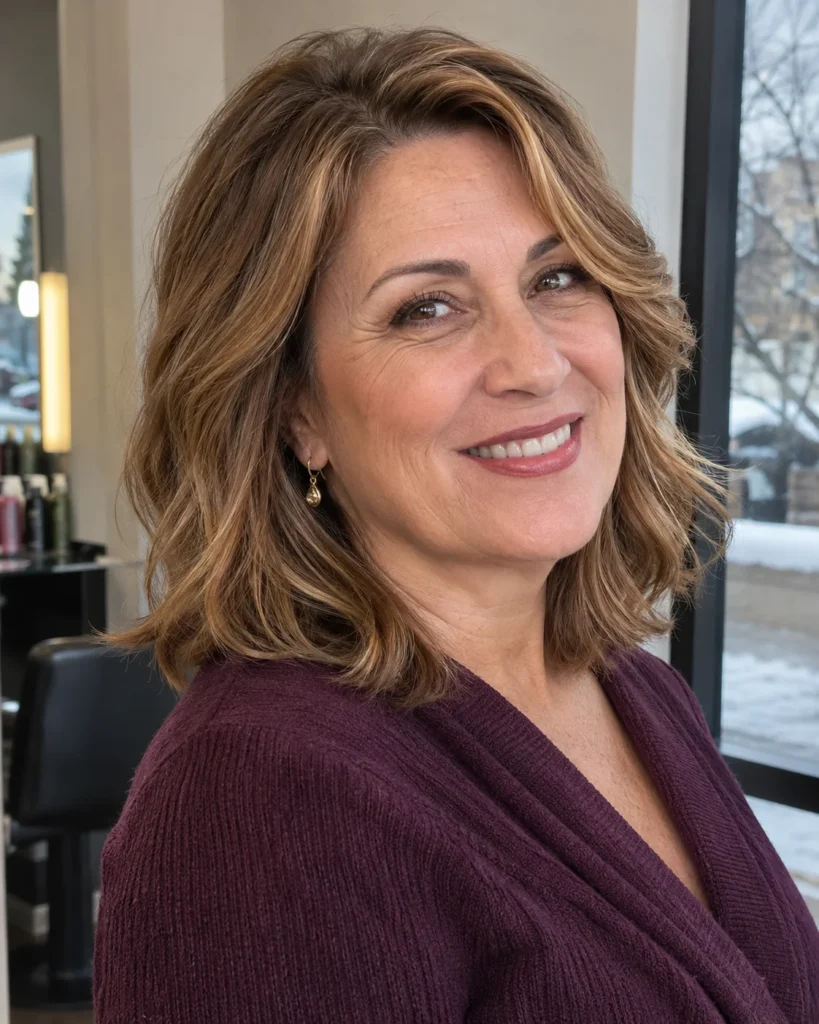
The one entry here that is color rather than cut, and it earns its place because of what winter light does to hair. Overhead indoor lighting in January flattens everything, and a single flat color reads lifeless under it.
Lowlights add dimension, so the eye reads depth where there is really just shadow. On shoulder layers that depth makes thin hair look considerably thicker.
Two honest notes. Lowlights on gray hair grow out with a visible root line, so plan a refresh every eight to ten weeks. And since these involve chemical processing, if your hair already feels brittle from indoor heating, ask your colorist about a gentler formula or a gloss first.
Color rather than a cut, so hat and collar behavior come from the shape it sits on. On shoulder layers, expect moderate collar contact.
10. Voluminous 90s-Inspired Blowout Layers
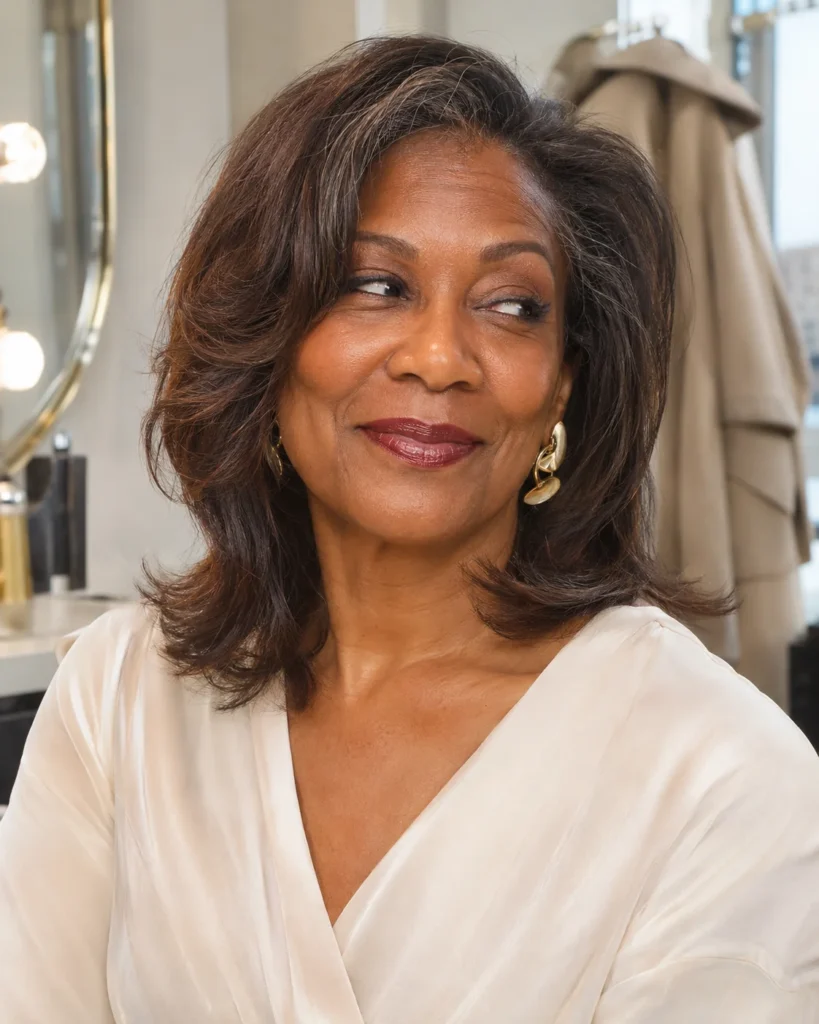
Everyone assumes the magic is root lift. It is not. The outward flick at the ends widens the silhouette, and a wider silhouette reads as more hair.
Dry the crown in sections, pulling each up and away from the scalp, then turn the brush out for the final two inches. For more ways to get that lift without the heat, our volume and thickness guides go through the root level options.
Hat recovery: weakest here, since a beanie crushes the volume that is the whole point. Collar friction: moderate. Save it for days you drive straight in.
11. The Half-Up Claw Clip Twist

No heat and no pins, which removes two of the usual causes of damage. The one to default to on cozy days. Fit still matters, so pick a clip that closes without straining and move its position day to day rather than clamping the same spot.
Gather the top half, twist once, clamp. The clip holds without the dent an elastic leaves, so you can take it down in the evening and the hair still looks styled.
It keeps the front sections off your face while the length stays warm against your neck.
Hat recovery: good, just reclamp. Collar friction: the loose length still touches. Turtleneck: fine, the top half is held up.
12. The Tapered Nape Stacked Bob
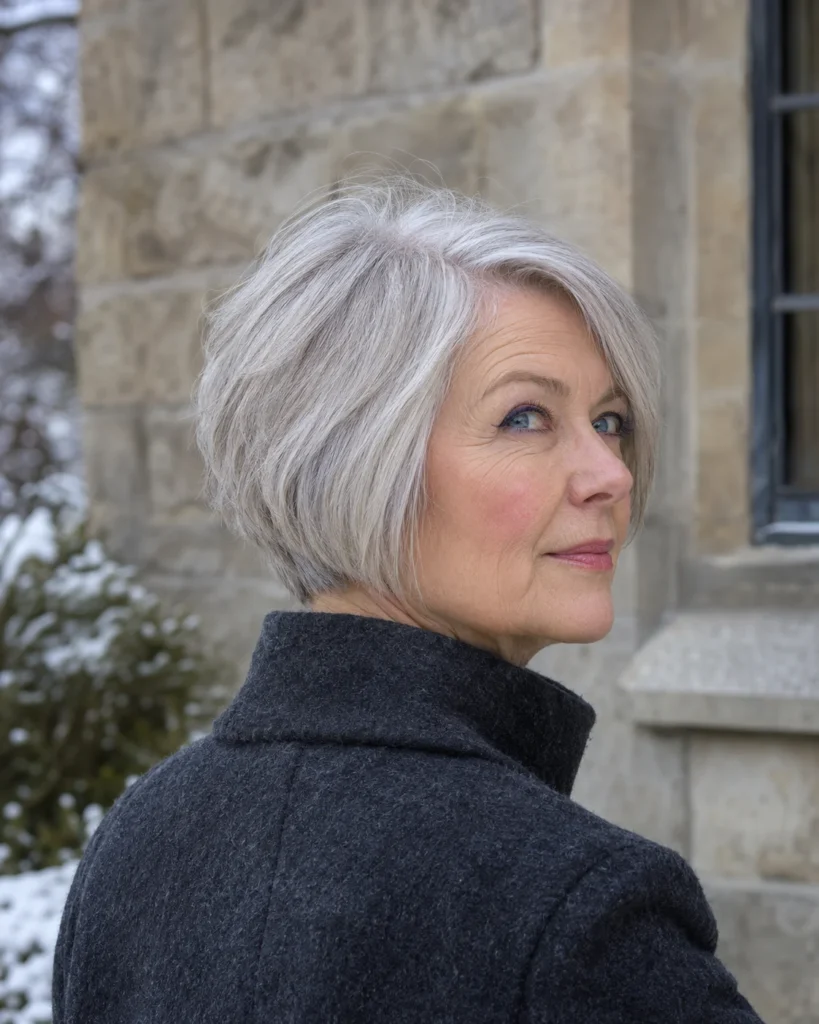
If you live in high collar coats and turtlenecks, this is the cut designed for you, and the one I would put at the top of the list. The nape is tapered short and the back stacked slightly, so nothing sits where a collar lands.
The stacking lifts the back of the head, which counteracts the flatness that shows in hair thinning through the crown. A solid perimeter is what makes the shape hold, and our haircuts for fine hair guides explain why asking a stylist not to thin that line matters once density drops.
Hat recovery: Very good
Collar friction: None. Best on the list for high necklines
Trim schedule: Every six to eight weeks. The tapered nape is the first part to lose its shape
One gap worth naming. This list leans toward straight and wavy hair, as most winter roundups do. If your hair is curly or coily, the logic still holds with two changes. Ask for a dry cut so your stylist can see where the curl falls, since shrinkage can be dramatic, and go for a tapered shape or a curly bob rather than a blunt one.
3 Quick Tricks to Stop Winter Static and Hat Hair
1. Switch to a smooth lined beanie. Look for a slick lining rather than a particular fiber, since satin is a weave and plenty of satin linings are polyester. A smooth surface slides over hair instead of gripping it, so less friction and less root flattening than a brushed or napped lining. Fit matters too, since a hat that grips at the hairline flattens more than a looser one in the same fabric.
2. Try dry shampoo before the hat rather than after. Mist at the roots, work it in, then put the beanie on. It absorbs oil and adds the appearance of fullness, and in my experience applying it first helps the roots hold separation under pressure. Go easy either way, since heavy repeated use leaves fine hair feeling dry.
3. Run a damp palm over the halo. Static is a charge, and water dissipates it. Wet your hands, shake off the excess, smooth over the top. Five seconds, costs nothing. A little lightweight oil on the palms lasts longer, but use a drop, not a pump.
A fourth thing, if your hair is fine. Keep a wide tooth comb in the car and run it through the nape before you walk in anywhere. Turtleneck tangles clear far more easily while still loose.
Quick Comparison of All 12 Winter Hairstyles for Women Over 50
All twelve side by side. Save this for your next salon visit.
| Hairstyle | Best hair texture | Styling effort | Hat friendly |
|---|---|---|---|
| 1. Collarbone Textured Lob | Fine to medium, straight or wavy | Low | Good |
| 2. Soft Feathered Pixie | Fine to medium, any pattern | Very low | Excellent |
| 3. Chin-Length French Bob | Fine to medium, straight | Low | Excellent |
| 4. Shoulder-Length Shag | Fine or flat, wavy | Medium | Fair |
| 5. Modern Bixie Cut | Fine, thinning crown | Very low | Excellent |
| 6. Layered Midi, Side Bangs | Medium to thick | Medium | Low |
| 7. Sleek Low Twisted Chignon | Mid length and longer, any | Low | Good |
| 8. Soft Choppy Crop | Coarse silver, salt and pepper | Low | Excellent |
| 9. Honey or Caramel Lowlights | Any, on shoulder layers | Salon upkeep | Depends on the cut |
| 10. 90s Blowout Layers | Fine to medium | High | Poor |
| 11. Half-Up Claw Clip Twist | Any texture, any density | Very low | Fair |
| 12. Tapered Nape Stacked Bob | Fine to medium, thinning crown | Low | Excellent |
If you take one thing from this, make it the length. Of all the winter hairstyles for women over 50 here, the shorter cuts that sit clear of your collar tend to solve more in one salon visit than any product on your shelf will all season. Static looks less obvious, tangling eases, and your hair looks styled on the mornings you did nothing.
And do look at your beanie. A smooth lined one that is not too tight costs very little, and you notice the difference the first cold morning.
What is your biggest winter hair complaint, the static or the flat hat hair? Tell me in the comments, because the fix is different for each one.