13 Short Pixie Cuts for Women Over 60 That Lift Your Features
You sat in the chair and asked for something soft and modern. You walked out with a stiff, rounded shape that sits on your head like a hat, and you spent the drive home flattening it with your hand at every red light.
Almost every woman I’ve worked with over 60 has that story. The cut isn’t wrong because it’s short. It’s wrong because it was built to be set and sprayed into place rather than to move with you.
Meanwhile, your hair has genuinely changed. Silver strands often come in wiry and resistant while the rest goes baby-fine, the crown thins first so your part widens, and your cheekbones and jawline have softened in a way that a rigid round shape only emphasizes.
None of that is fixed with more product. It’s fixed with geometry. Where the weight sits, how the perimeter tapers, and how much height you have at the crown decide whether a pixie lifts your face or sits on it.
The Rules of a Youthful Mature Pixie
Scissors, Never a Razor
Grey hair has a different cuticle. It’s often more porous and more brittle than pigmented hair, which means it doesn’t take kindly to being sliced.
A razor cuts the strand at a long angle and leaves a frayed, open end. On fragile silver hair, that end splits within weeks and turns into the halo of frizz you keep trying to smooth down.
Sharp scissors leave a clean, flat cut edge that catches light and reflects it back. Point-cutting, where the stylist cuts into the ends vertically, gives you all the softness a razor promises with none of the damage. Say the words out loud in the chair: scissors only, and go easy with the thinning shears.
The Eyeglasses Rule
If you wear glasses every day, your cut has to account for the arms. When hair above and in front of the ear is left too heavy or cut too bluntly, the frames push it outward and you get a little wing of hair flaring over each temple.
The fix is blending. Sideburn and temple pieces should be tapered and softened so they lie flat against your head with the arms sitting on top of them, not fighting through them.
Ask your stylist to put your glasses on before the final check. Sounds obvious. Almost nobody does it.
Why Crown Height Does the Heavy Lifting
As the lower face softens, the eye naturally travels downward. Height at the crown counteracts that by giving the eye something to travel up toward, which is why a flat top makes everything below it look heavier.
This is also where mature hair thins first, so building lift there solves two problems at once. Shorter layers through the crown let the pieces underneath push the top ones upward, and that structural height holds far better than anything you can spray on.
13 Youthful Pixie Cuts for Women Over 60
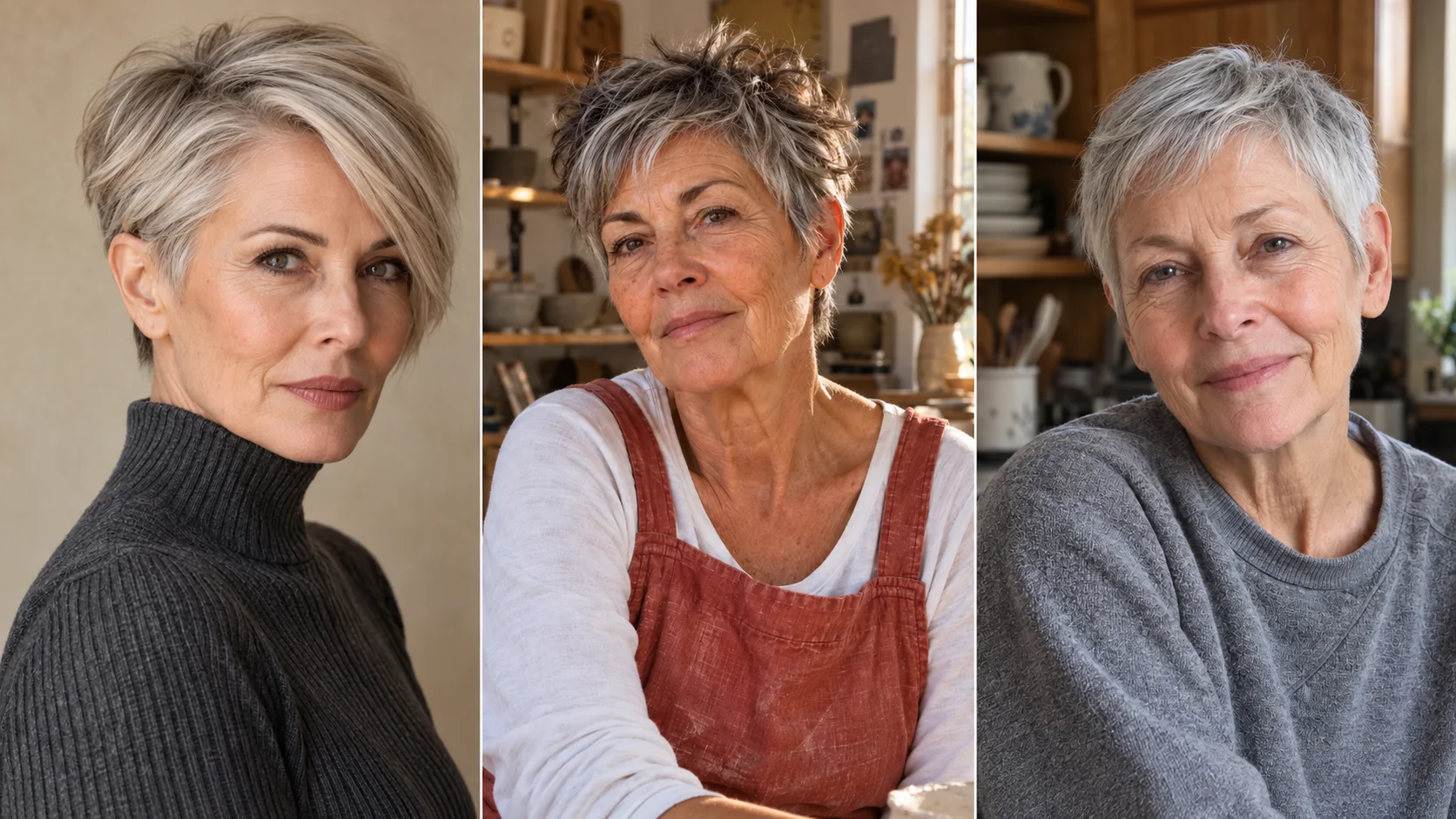
Each one below is built around a different problem, whether that’s a flat crown, thinning temples, wiry silver texture, or glasses. Every one styles in under five minutes. Start with the shape that solves your biggest frustration.
1. The Classic Textured Crown Pixie
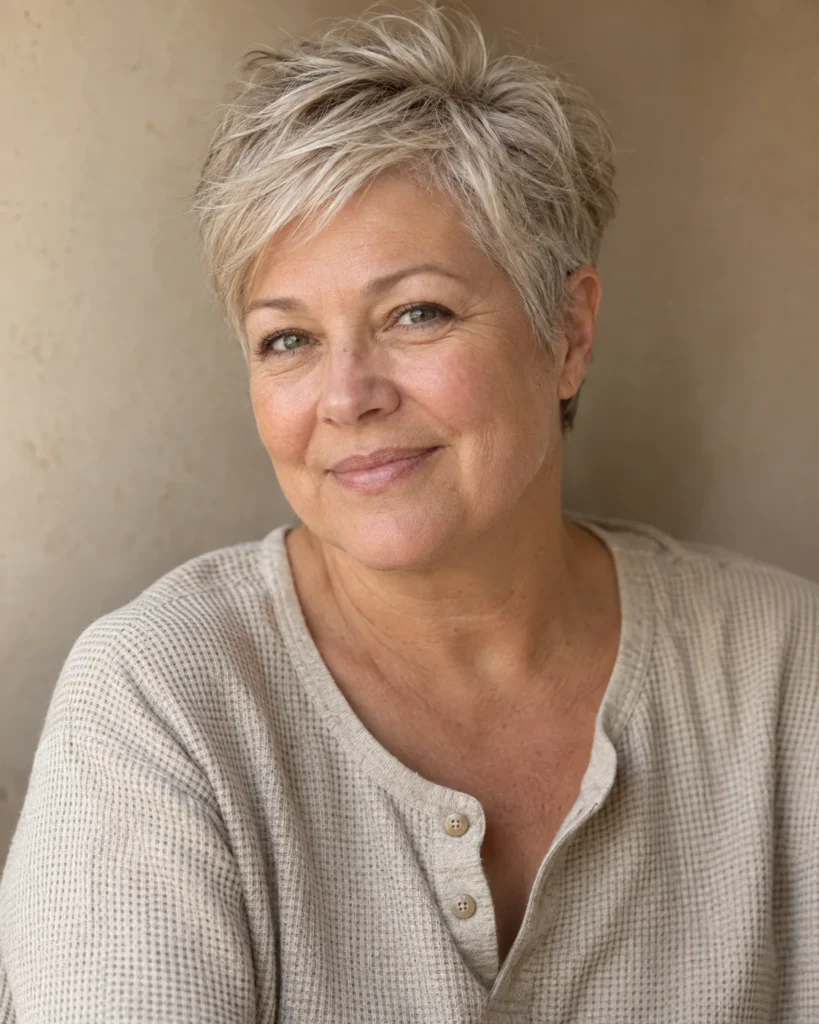
The everyday workhorse. Short through the sides and back, with the crown layered shorter than the surrounding hair so the top sits up rather than lying flat.
The layering is what lifts thinning crown roots. When those top pieces are shortened, the shorter hairs underneath physically support the longer ones above them, and you get height that survives a windy afternoon.
- Best for: Thinning at the crown, a widening part line, and anyone wanting a first pixie that isn’t dramatic.
- Ask for: Layers shortened through the crown, length kept at the front, and a softly tapered perimeter.
- Styling in 5 minutes: Spray a little root lifter at the crown on damp hair, rough-dry with your fingers pushing upward, finish with cool air.
- Skip it if: You want zero salon visits, because the crown shape softens within about six weeks.
2. The Soft Feathered Silver Pixie
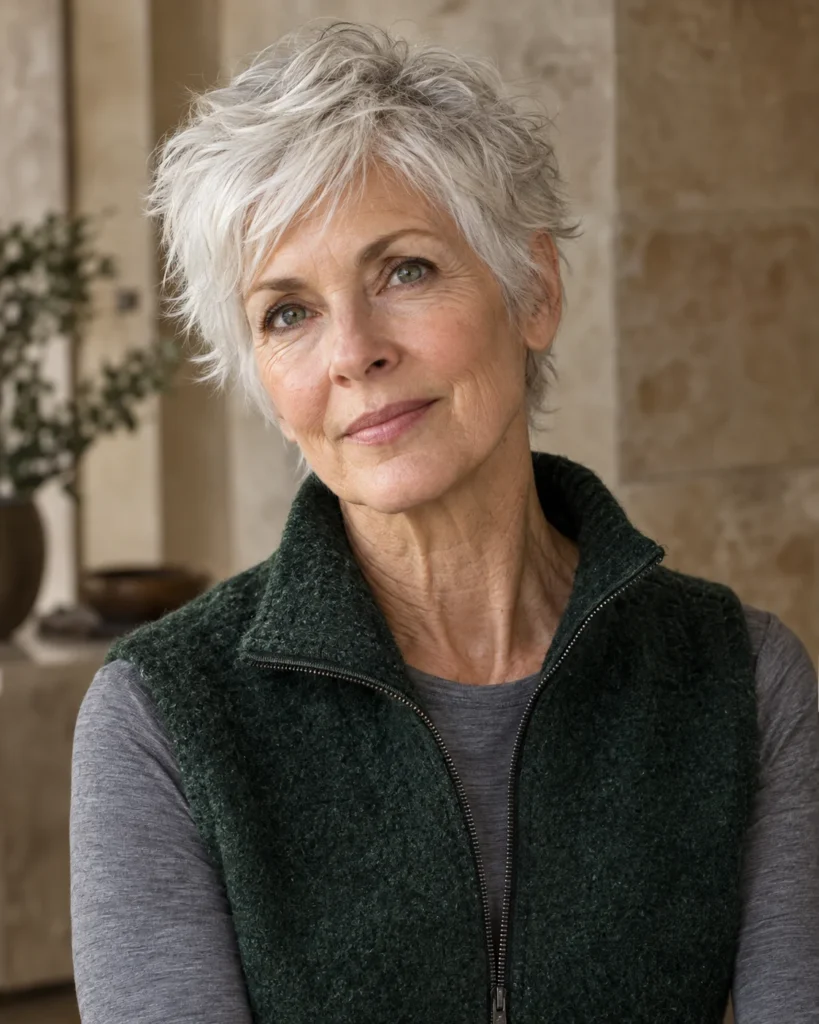
Cut with feathered, point-cut ends throughout, so no edge in the whole shape is blunt. Every piece tapers to a fine point and sits slightly separated from the one next to it.
This is the answer to wiry white and silver texture. That coarse, resistant hair fights a blunt cut and pops out where you don’t want it, but feathering gives each strand somewhere to go, and the result reads as airy movement rather than frizz.
- Best for: White, silver, and coarse grey textures that never sit where you put them.
- Ask for: Point-cut feathering throughout, soft edges everywhere, and no blunt lines at the ears or nape.
- Styling in 5 minutes: A pea-sized amount of light cream warmed between your palms, pressed through the ends only, never the roots.
- Skip it if: You prefer a crisp, structured look, since this shape is deliberately soft-edged.
3. The Tapered Bixie
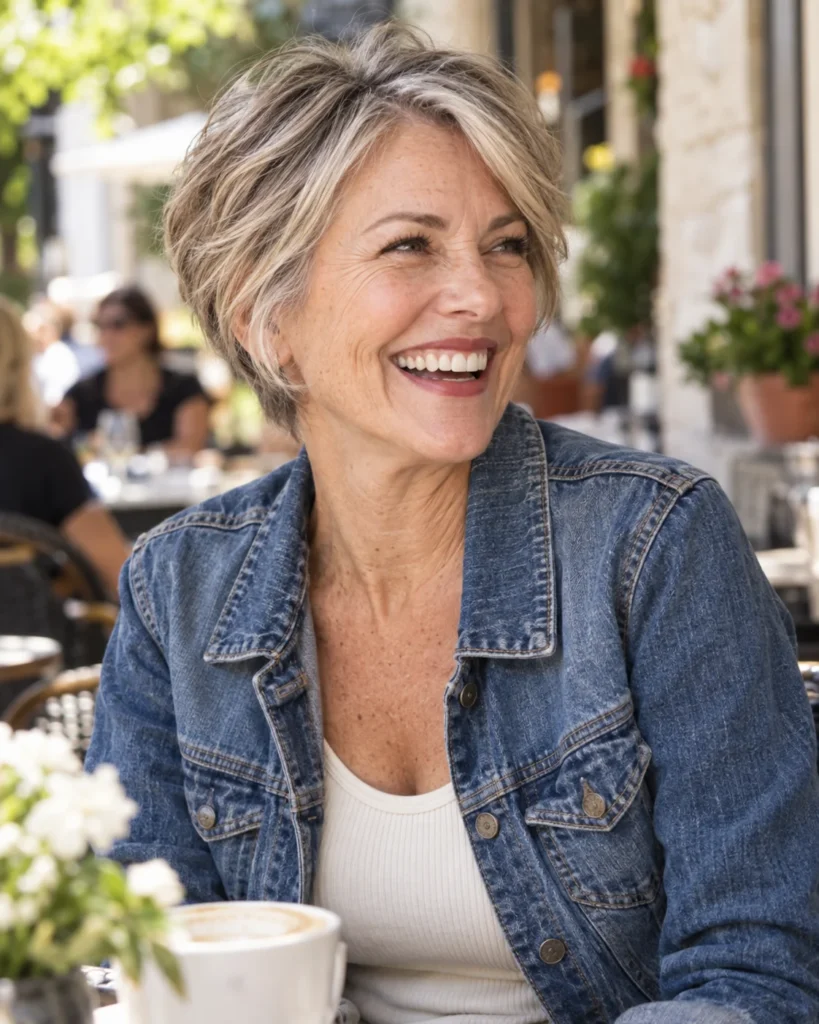
Part pixie, part bob, sitting around the ear and jaw with short crown layers and slightly longer pieces at the front. It’s the safest way to test short hair.
The length at the front is what makes it feel gentle. You get pixie lift on top and enough hair around your face to still feel like yourself, which matters more than stylists tend to admit.
- Best for: Anyone nervous about going short, and women with rounder faces who want length near the jaw.
- Ask for: Short crown layers, front length kept at or near the jaw, and a tapered nape.
- Styling in 5 minutes: Rough-dry upside down, then push the front forward and the crown up with your fingertips.
- Skip it if: You want the absolute minimum morning routine, since the front sections need a little direction.
4. The Side-Swept Asymmetrical Pixie
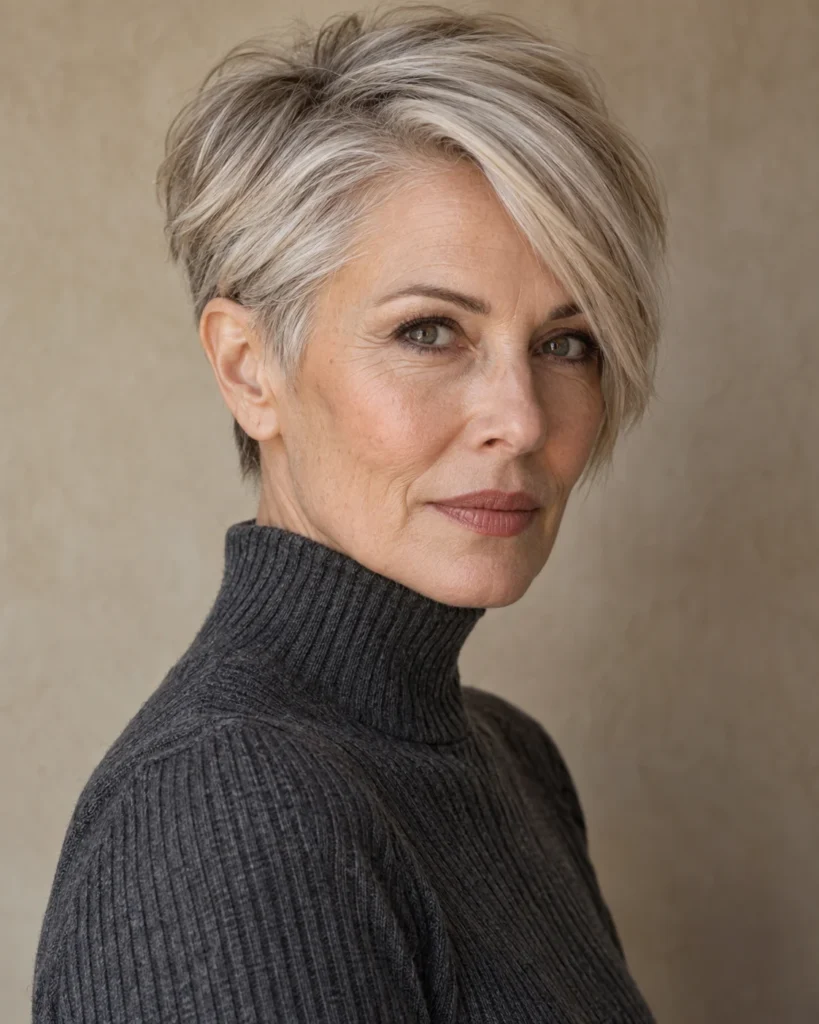
One side kept noticeably longer than the other, with a deep part and the length swept across the forehead and temple on a diagonal.
Two things happen at once. The diagonal line lifts the eye across your face instead of cutting it horizontally, and the swept section falls exactly over the temple area where thinning shows first.
- Best for: Thinning temples, a receding hairline at the sides, and softening forehead lines without a heavy fringe.
- Ask for: A deep side part, real length on the longer side, and the shorter side tapered close but not shaved.
- Styling in 5 minutes: Dry the long side across on the diagonal with a flat brush, then hold it with a mist of light hairspray.
- Skip it if: You change your part often, because this cut commits to one side.
5. The Modern Spiky Textured Crop
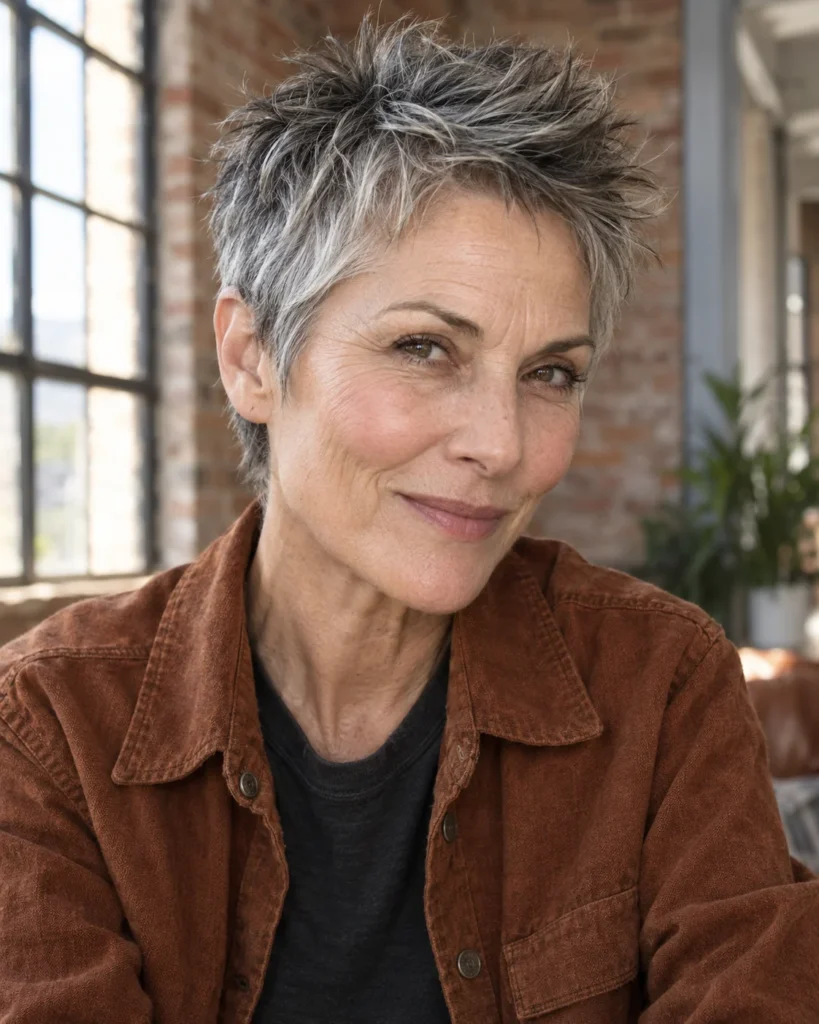
Short all over with heavily texturized pieces on top that you can push in any direction. Nothing about it is precise, and that’s the appeal.
The word spiky puts women off, but this isn’t the stiff, gelled version from decades ago. Worked with a matte paste instead of a shiny gel, it reads as playful and confident rather than harsh.
- Best for: Strong bone structure, fine hair that won’t hold a softer shape, and women who like a bit of edge.
- Ask for: Texturized layers on top, close sides, and pieces long enough to actually move.
- Styling in 5 minutes: Rub a small amount of matte paste between dry palms and push it through the top. Skip anything glossy, which flattens fine hair.
- Skip it if: You want soft and romantic, or you can’t commit to a trim every five weeks.
6. The Glasses-Friendly Tapered Pixie

Built specifically around frames. The sideburn area and the hair above the ear are tapered close and blended into the sides, so nothing flares out when your glasses go on.
It’s not a different haircut so much as a different finish, but the difference on your face is immediate. The frames become the feature, and your hair frames them instead of competing.
- Best for: Daily glasses wearers, especially anyone whose hair currently sticks out at the temples.
- Ask for: Tapered, blended sideburns, a clean but soft perimeter around the ears, and a final check with your glasses on.
- Styling in 5 minutes: Smooth the sides down with damp palms while you dry the top upward. That contrast is the whole look.
- Skip it if: You only wear glasses occasionally, in which case you have more freedom at the temples.
7. The Wispy Bang Pixie

A pixie with a fine, airy fringe that you can see skin through. It sits on the forehead without covering it, which is the entire distinction.
A heavy fringe draws one solid horizontal line across your face and shortens it. A wispy one softens the forehead and points straight down at your eyes, which is where you want attention going.
- Best for: Softening forehead lines, higher hairlines, and anyone who has always liked a fringe but felt weighed down by one.
- Ask for: A fringe thinned and point-cut so light passes through it, cut to brow level or just above.
- Styling in 5 minutes: Dry the fringe first, brushing it side to side so it doesn’t set in one direction, then leave it alone.
- Skip it if: You have very fine hair overall, since a fringe borrows density from the rest of the cut.
8. The Salt-and-Pepper Choppy Pixie

Choppy, uneven layers cut through a natural mix of grey and darker hair. The irregular lengths let the two tones show at different depths.
This is a density trick more than anything. When strands of different colors sit at different lengths, the eye reads shadow and dimension instead of scalp, and low-density hair looks considerably fuller than it is.
- Best for: Natural salt-and-pepper hair and low density anywhere through the top.
- Ask for: Choppy, varied layer lengths rather than a uniform crop, and no all-over color that would flatten the tones.
- Styling in 5 minutes: Texture spray at the roots, then scrunch with your fingers to separate the pieces and let both tones show.
- Skip it if: You color all over to a single shade, since this cut depends on having two tones to play with.
9. The Soft Curved Wedge Pixie
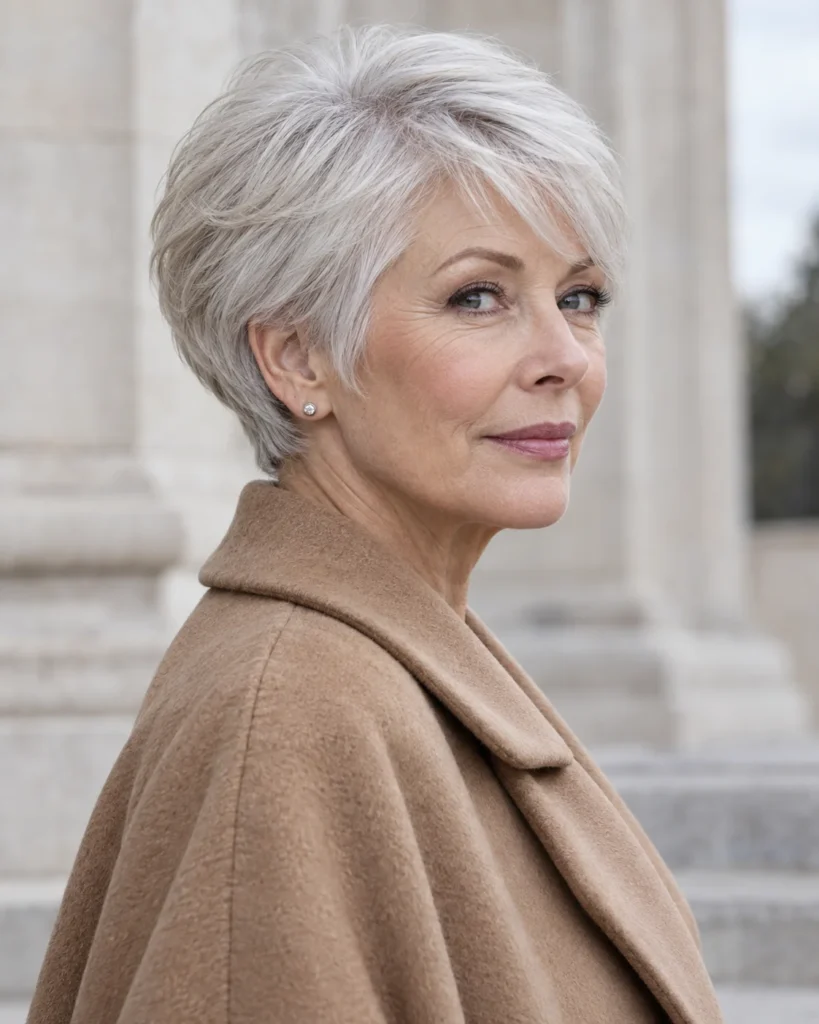
Graduated through the back so the weight builds into a soft, rounded curve at the back of the head, tapering down to the nape.
Many women have a flat spot at the back of the skull, and a straight-down cut makes it obvious. The wedge builds a gentle round profile there, which balances the whole head shape in a way you only notice from the side.
- Best for: Flat backs of the head, and anyone who likes their cut from the front but not in the second mirror.
- Ask for: Graduation through the back building a soft curve, with the nape tapered close.
- Styling in 5 minutes: Lift the back sections straight out while you dry them, then let them fall and set with cool air.
- Skip it if: You want everything soft and undone, since this shape is a little more structured.
10. The Natural Wavy Fine Hair Pixie
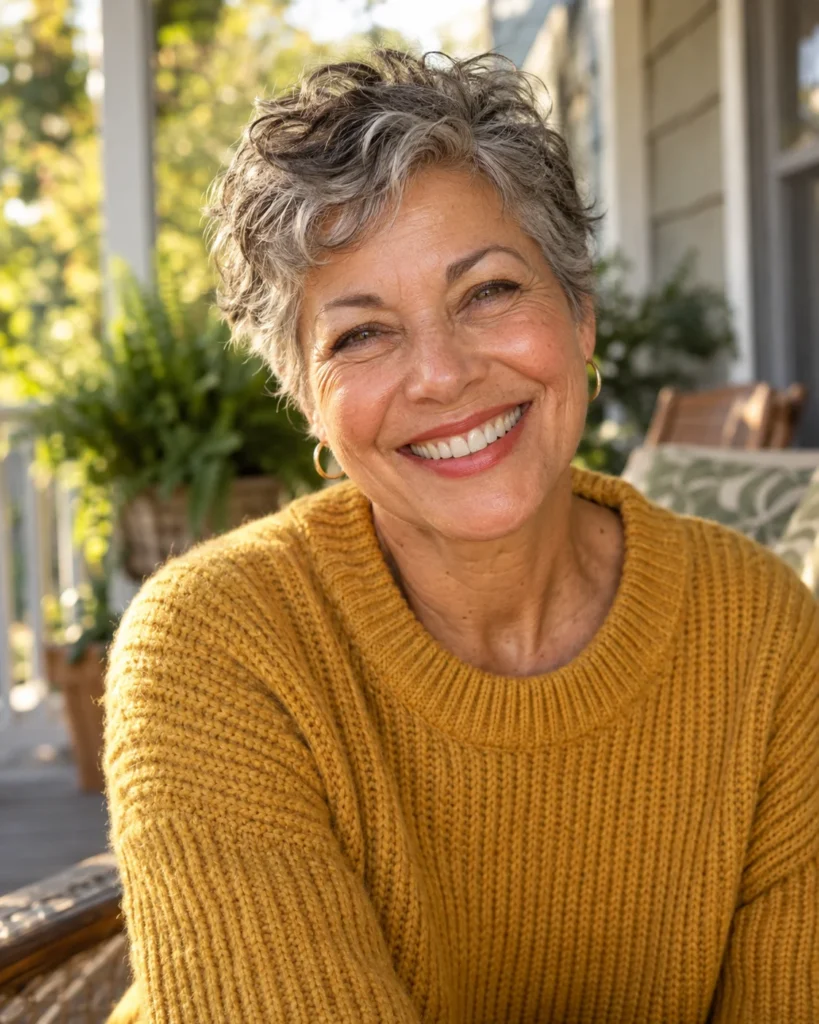
Cut slightly longer on top than a classic pixie, with layers that give each natural wave room to form instead of fighting it.
Fine wavy hair kept too short goes fluffy, and kept too long goes flat. This length sits in between, so your wave becomes crown bounce rather than frizz.
- Best for: Natural fine waves you’ve been flat-ironing away for years.
- Ask for: A little extra length on top, layers cut to support the wave pattern, and no thinning shears.
- Styling in 5 minutes: Light mousse on damp hair, scrunch once, then air-dry or diffuse on low and don’t touch it while it dries.
- Skip it if: You straighten daily, because the whole point is the movement.
11. The Brushed-Back Chic Crop
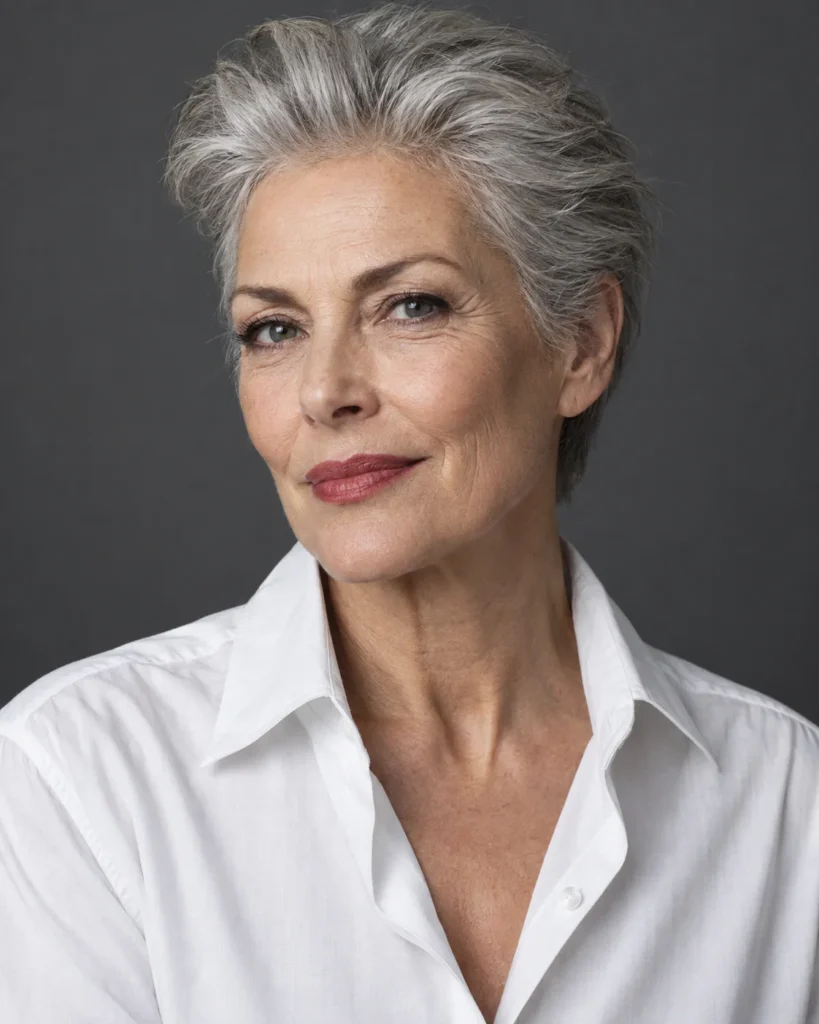
All the length swept up and back from the face, with enough weight on top to hold the direction. Nothing falls forward at all.
Pulling hair off the face fully exposes your cheekbones and jaw, and the lift at the front acts like a soft frame around your features. It’s the most elegant shape here, and it looks deliberate in a way few short cuts do.
- Best for: Cheekbones you want to show off, and women comfortable with a fully open face.
- Ask for: Length concentrated on top and at the front, with sides tapered close enough to stay back.
- Styling in 5 minutes: Blow-dry backward with a vent brush, then set with a light spray. A wide headband while you finish getting ready helps it hold.
- Skip it if: You use your fringe to soften your forehead, since this cut removes that option entirely.
12. The Micro-Pixie with Soft Edges
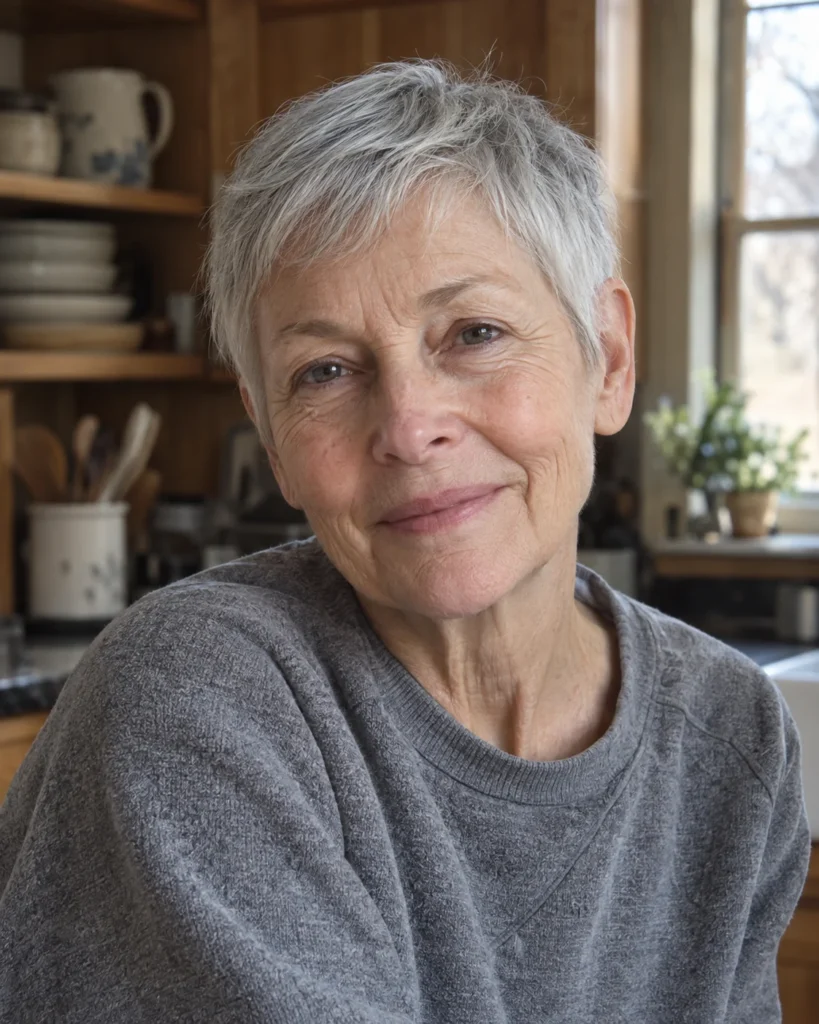
The shortest cut here, close all over, but with softened and feathered edges rather than sharp, shaved lines.
Those soft edges are what keep it feminine and warm. A micro-pixie with hard lines can look severe, while the same length feathered at the hairline, ears, and nape looks quietly striking.
- Best for: Truly wash-and-wear mornings, very fine hair with little to work with, and strong features.
- Ask for: Close length all over with feathered, softened edges at the hairline, ears, and nape.
- Styling in 5 minutes: Towel-dry and go. A fingertip of light cream if you want a bit of definition, and nothing else.
- Skip it if: You need a trim schedule you can stretch, since this length shows growth within about four weeks.
13. The Face-Framing Layered Pixie
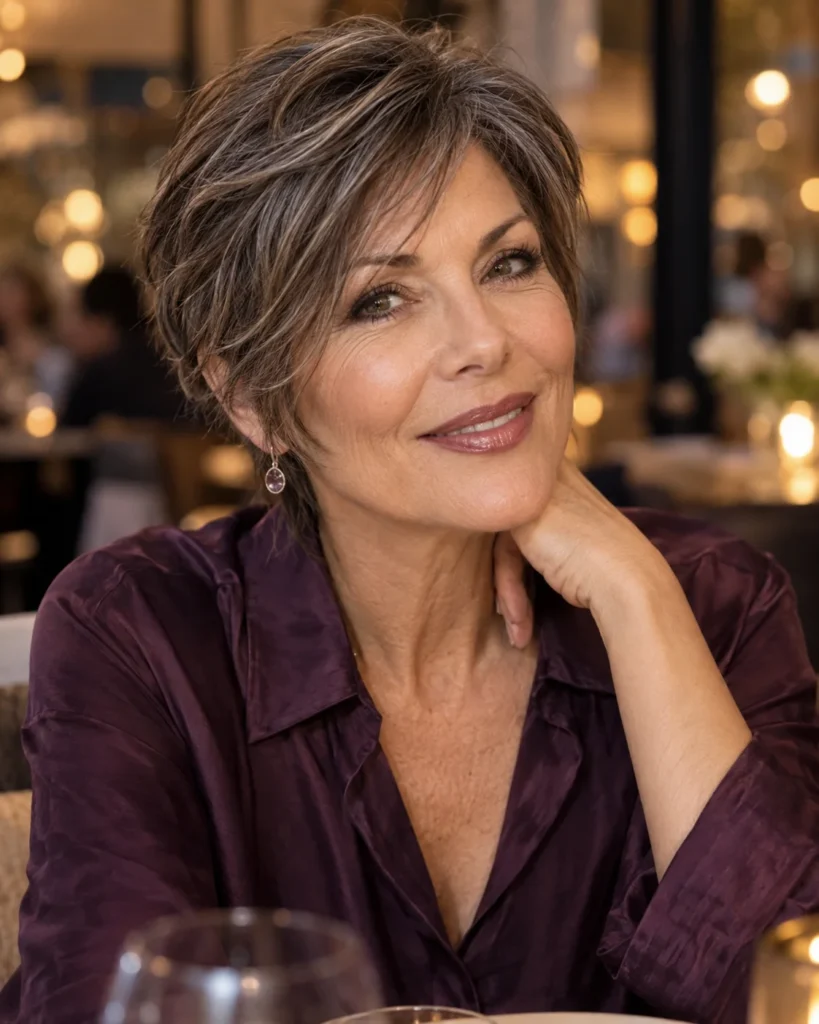
A pixie with soft, longer pieces left at the front that graze the cheekbones on either side of the face.
Those front pieces do something specific. They create a gentle diagonal along the side of the face, which softens the jawline and takes the edge off the transition between short hair and bare skin.
- Best for: Softening a jawline, and anyone who finds most pixies leave too much of the face exposed.
- Ask for: Face-framing pieces long enough to reach the cheekbone, blended softly into the shorter sides.
- Styling in 5 minutes: Dry the front pieces forward and slightly across, then set the crown up with your fingers.
- Skip it if: You tuck your hair behind your ears constantly, because these pieces are meant to sit forward.
What to Tell Your Stylist in the Chair
Photos help, but stylists cut to language. These four sentences translate what you actually want into instructions they can follow.
- Say this: “Please build the layers internally and keep my perimeter intact, so I don’t lose density at the edges.”
- Say this: “Scissors only, no razor, and please be conservative with the thinning shears.”
- Say this: “I need height through the crown and a tapered nape rather than a blunt line.”
- Say this: “Let me put my glasses on before you finish, so we can check how the sides sit.”
One more thing worth asking for: have them style it once in front of you and talk you through it while you hold the brush yourself. A cut you can’t reproduce at home isn’t a cut that works.
If density is your main concern, our haircuts for fine hair guides go deeper into which shapes protect what you have.
Pixies That Date You vs. Modern Youthful Pixies
| Pixies That Date You | Modern Youthful Pixies |
|---|---|
| Stiff, lacquered curls set in place | Touchable matte texture you can move with your fingers |
| Blunt, heavy hair over the ears | Soft tapered feathering that lies flat |
| A hard, straight line across the nape | A graduated nape that follows the neck |
| Uniform length all over with no crown lift | Shorter crown layers that build height |
| A heavy blunt fringe across the brow | A wispy or side-swept fringe you can see through |
| Razor-cut, frayed silver ends | Point-cut ends that reflect light |
| Shiny gel and firm-hold spray | Light cream, matte paste, and dry texture spray |
Frequently Asked Questions
Will an ultra-short pixie make my face look wider?
It can, but only if the shape is wrong rather than because it’s short. Width comes from volume sitting at the sides, level with your cheeks, which pushes the face outward visually.
Move that volume to the crown and taper the sides close, and the same short length makes your face look longer and leaner. Height narrows, width rounds.
How do I keep fine silver hair shiny instead of dull or yellow?
Yellowing comes from mineral buildup in water, product residue, and sun exposure. A purple-toning shampoo every week or two neutralizes it, but leave it on for the time on the bottle rather than guessing, since overuse turns white hair faintly lilac.
For shine, use a lightweight conditioner on the ends only and finish every blow-dry with 30 seconds of cool air, which closes the cuticle so it reflects light. Our volume and thickness guides cover the body side of this in more detail.
How often does a short pixie need trimming?
Every four to six weeks for most pixie shapes, and closer to four for a micro-pixie or anything with a tapered nape. Short cuts live or die by their outline, and the outline is the first thing to go.
If that feels like a lot, the bixie and the face-framing layered pixie hold their shape longest, comfortably reaching six or seven weeks.
Which product gives lift without sticky buildup?
For fine hair, the order matters more than the product. A light mousse or root spray goes on damp hair at the roots only, before drying, because that’s when it can actually build structure.
On dry hair, a dry texture spray adds grit so strands hold themselves apart, and a matte paste gives definition on top. Avoid shiny gels and firm-hold hairsprays, which glue fine strands together and add the exact weight you’re fighting.
The women who look best in short hair aren’t the ones with the most striking bone structure. They’re the ones who found a shape that suits the hair and face they have now, learned to style it in four minutes, and then stopped thinking about it.
That ease is the thing people actually notice. Pick the cut that solves your biggest frustration, take the talking points with you, and don’t let anyone set it into a shape you have to flatten on the drive home. For more ideas, browse our hairstyles over 50 section.
Screenshot the four talking points and the cut you picked, and take them into the chair with you.