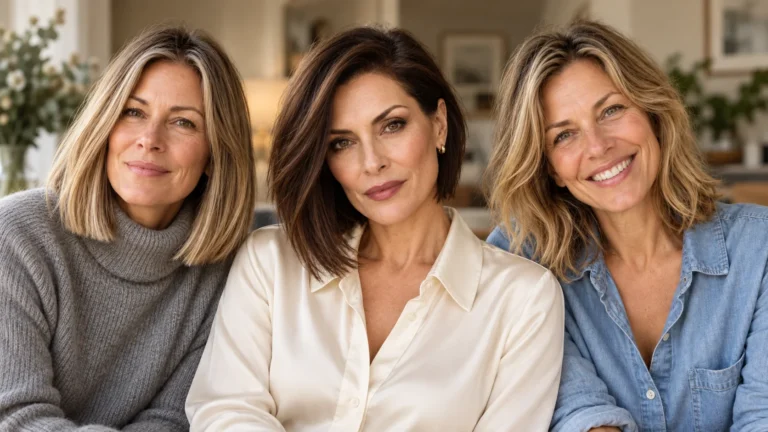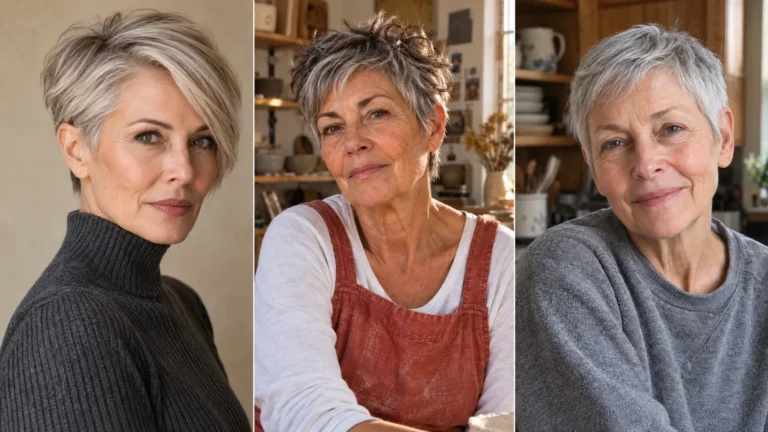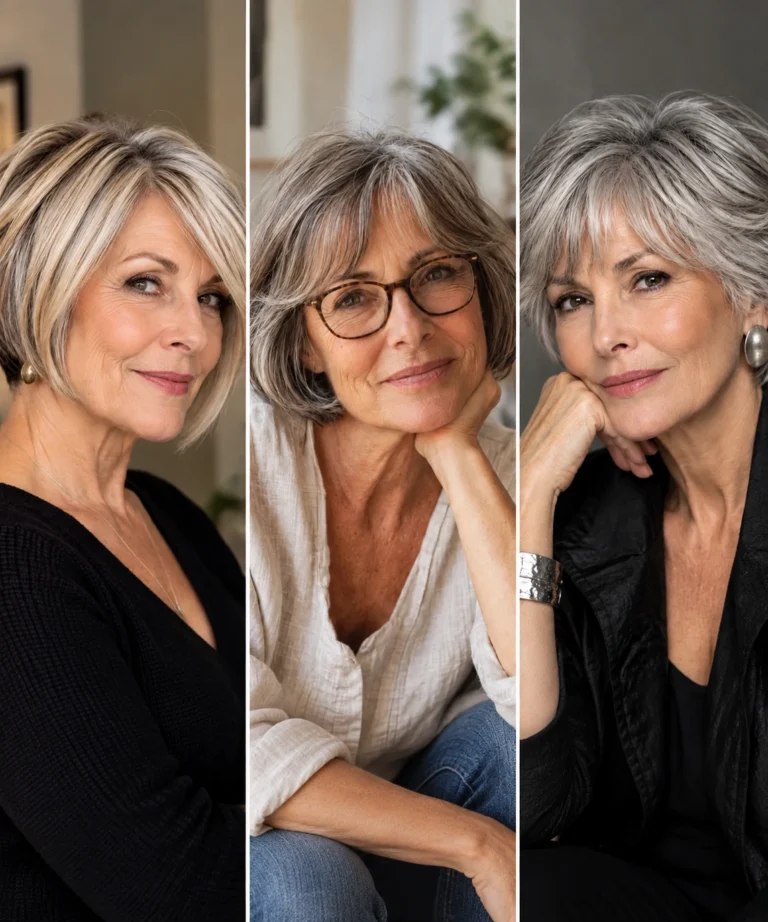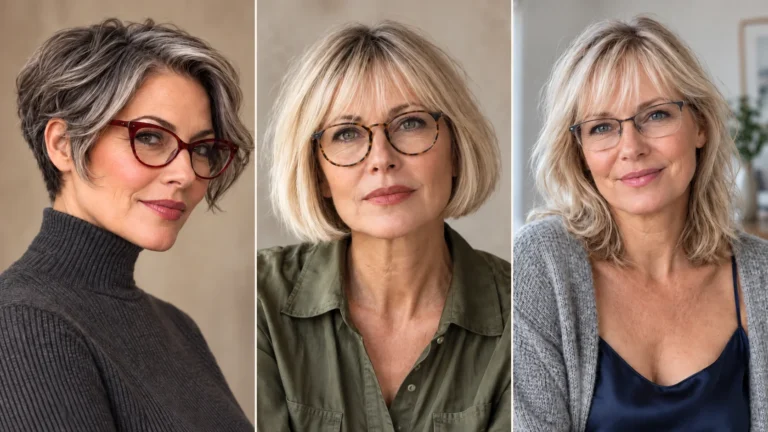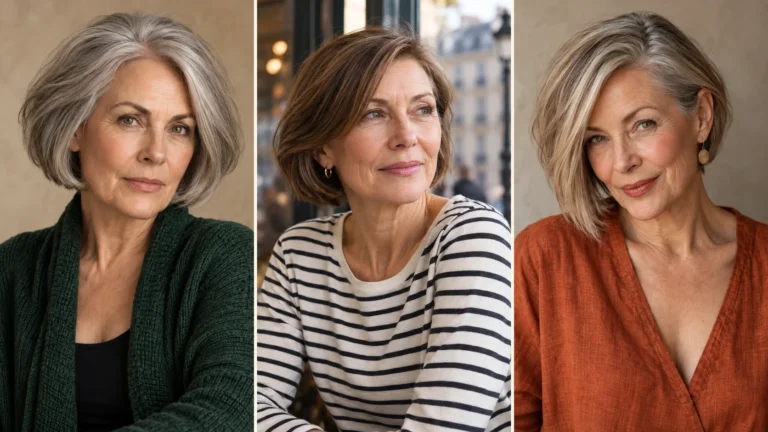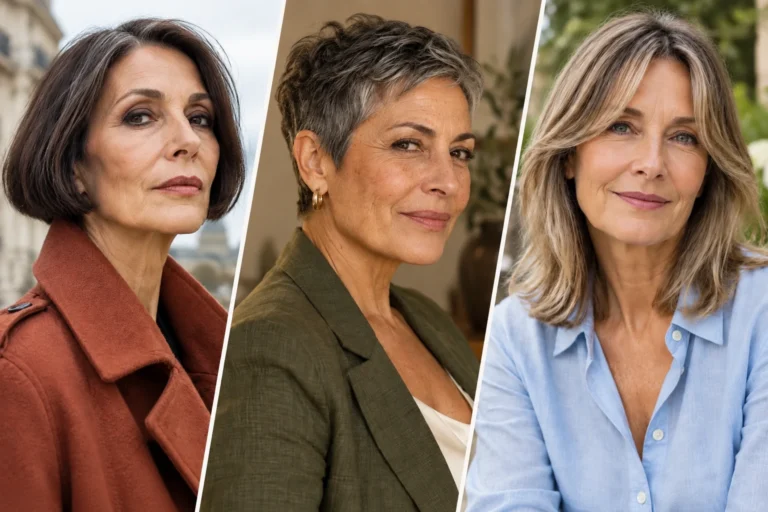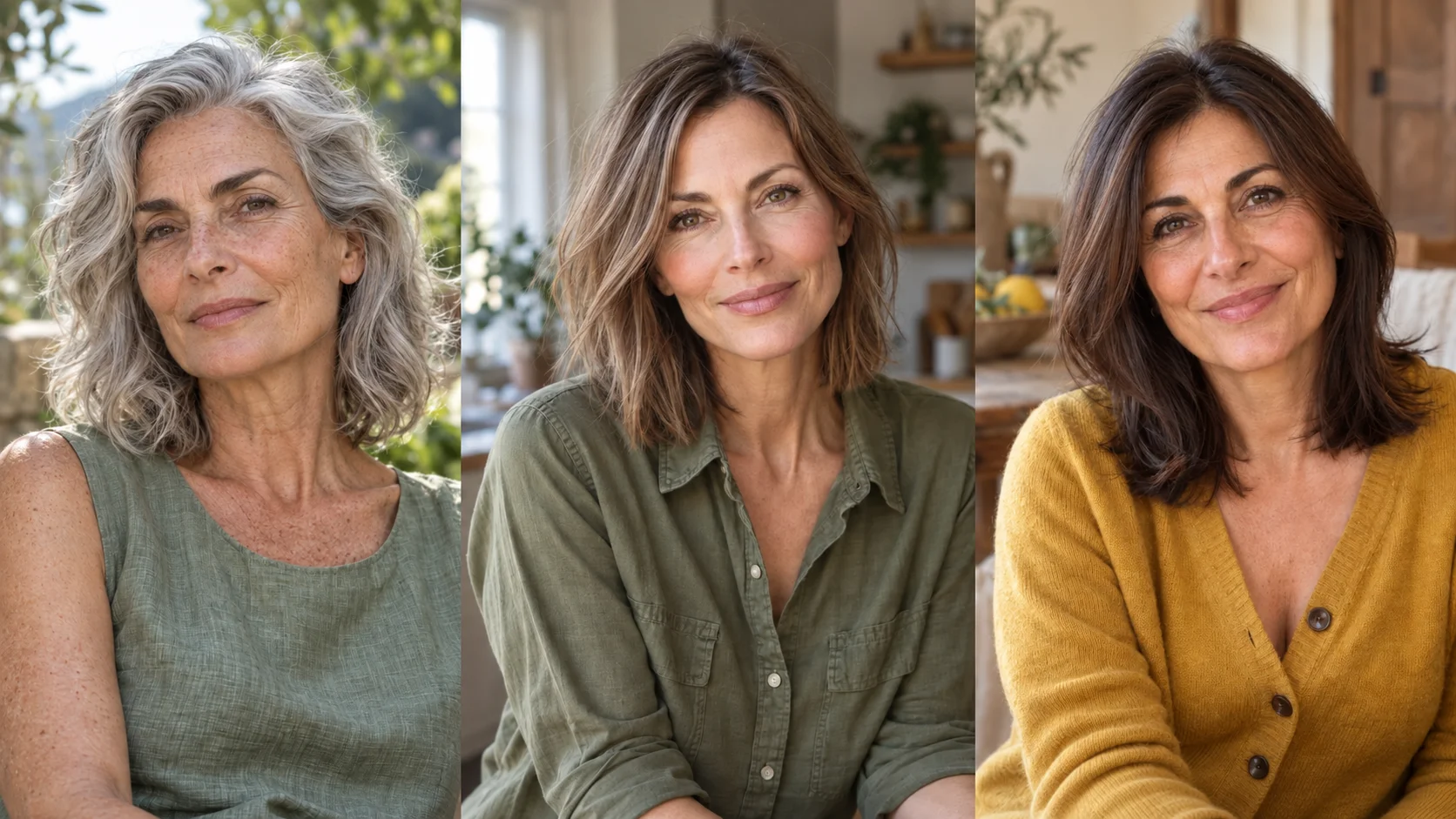
Youthful Haircuts for Women Over 50 That Lift Your Features
You’ve had the same cut since your daughter’s wedding, maybe longer. It suited you then, and some mornings it still does, but lately you’ve noticed it sitting flat against your head and hanging past your shoulders without much life in it.
Here’s the thing nobody tells you. Your hair changed underneath you. Individual strands got finer, the crown lost some of its density, greys came in with a wirier, more resistant texture, and your face gained softness along the jaw and cheek. A cut designed for the hair and face you had at 38 simply isn’t built for any of that.
The good news is that the fix is geometry, not effort. Where the weight sits in your cut decides whether your hair lifts your features or drags them down, and the right shape often takes less time in the morning, not more.
The Rules of a Youthful Haircut
Movement Beats Length Every Time
Long, one-length, stick-straight hair creates strong vertical lines on either side of your face, and vertical lines pull the eye downward. When that length is also fine and lacking body, it hangs like a curtain and makes everything under it look heavier.
Texture does the opposite. Soft bends, a bit of separation, and pieces that fall at different points break those long lines and lift the eye back up toward your cheekbones and eyes.
This is also why length alone won’t read as youthful. Volume through the mid-section of the head, roughly between the cheekbone and the jaw, is what does the visual work.
Scissors Only, Never a Razor
Mature hair is often more porous and fragile than it used to be, especially where grey has come in. A razor slices the strand at an angle and leaves a frayed, open end, which on fragile hair means splitting, frizzing, and ends that go see-through within weeks.
Sharp scissors leave a clean, blunt cut edge that holds its shape and reflects light. Point-cutting with scissors gives you all the softness you want without the damage, so say this out loud at your appointment. Thinning shears deserve the same caution, especially anywhere near your ends or temples.
Bangs That Soften Without Closing You Off
A well-placed fringe softens the forehead and draws attention straight to your eyes. A badly placed one sits like a heavy shelf, shortens your face, and hides the very features you want on show.
The difference is airiness. You want to see skin through the fringe, and you want it moving with you rather than lying there in a solid block.
12 Youthful Cuts for Fine and Thinning Hair
Every shape below builds volume where mature hair tends to lose it, and none of them demand a full blow-dry to look intentional. Start with the ones closest to your current length, since the smallest change is usually the one you actually keep.
1. The Bixie
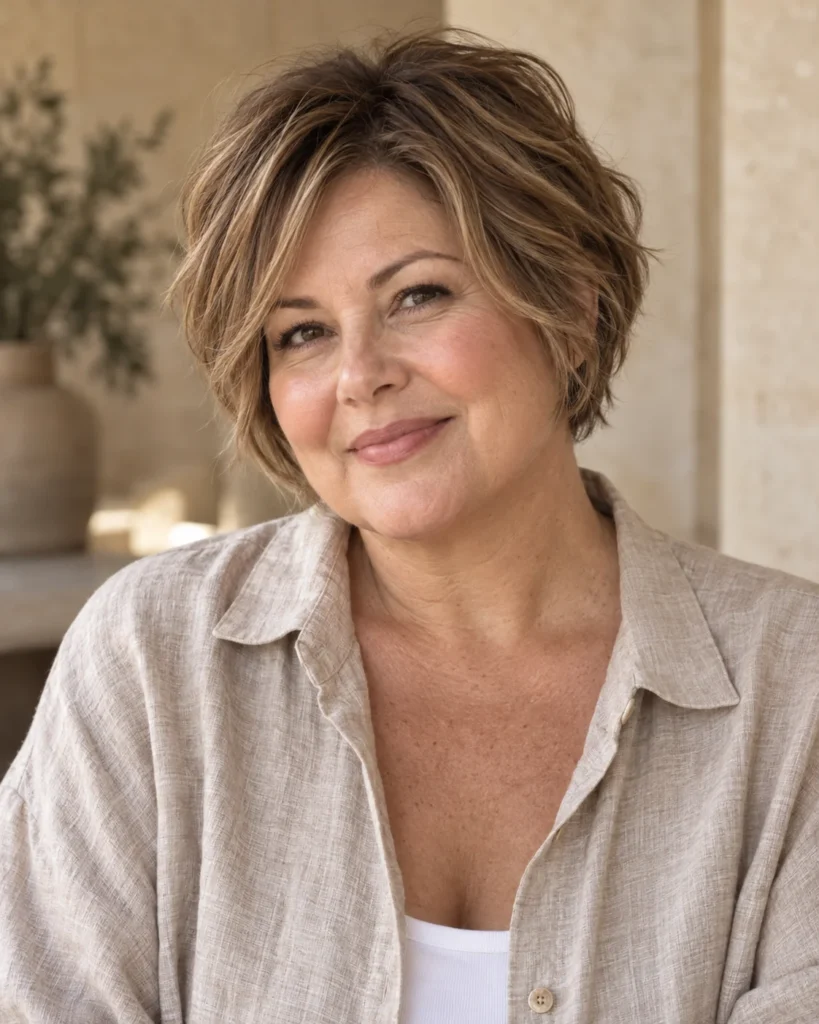
Part pixie, part bob, the bixie sits somewhere between your ear and your jaw with short, layered pieces through the crown and slightly longer lengths at the front. Think of it as a bob that someone gave a proper haircut to on top.
That crown layering is the entire reason it works. When hair is removed from the top of the head, the shorter pieces underneath push the longer ones up, and you get height exactly where a widening part shows most.
- Best for: Flat crowns, thinning through the part line, and anyone who wants short hair without committing to a full pixie.
- Ask for: Short layers through the crown, length kept at the front and sides, and a soft outline rather than a hard perimeter.
- Styling: Rough-dry upside down, then push it forward and sideways with your fingers and a pinch of root powder.
- Skip it if: You have a very round face and want length near the jaw, or you can’t get to the salon every five or six weeks.
2. The Textured Collarbone Lob
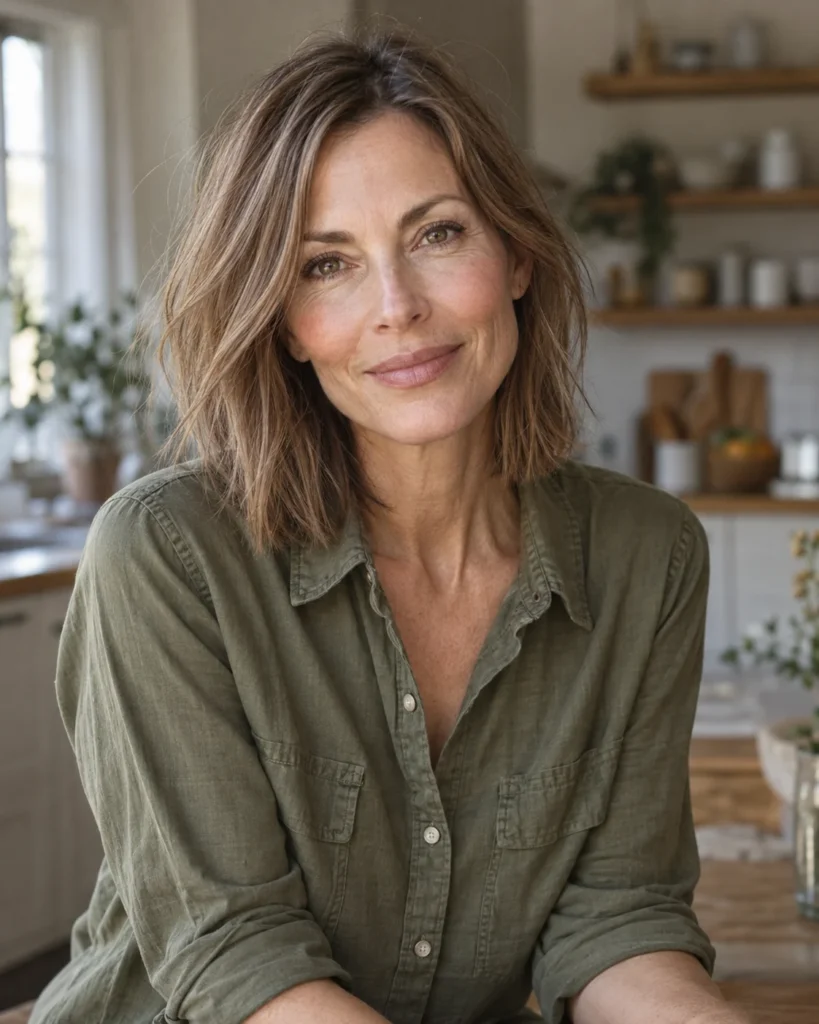
If going short feels like too big a leap, start here. The lob stops right at your collarbone, which is the sweet spot where hair still reads as long but stops pulling your face downward.
The trick is where the layers sit. Internal layers are cut inside the shape, so they create movement you can see while the outside edge stays thick and strong. Surface layers do the opposite and leave fine hair looking wispy.
- Best for: Women who want to keep length, and anyone whose hair is fine but not yet noticeably thin.
- Ask for: A blunt perimeter with weight removed internally, plus a few soft pieces around the face.
- Styling: A light mousse at the roots, then bend the mid-lengths with a large barrel iron and shake it out with your fingers.
- Skip it if: Your ends are already see-through, since this length needs real density at the bottom to look intentional.
3. The Chin-Length French Bob
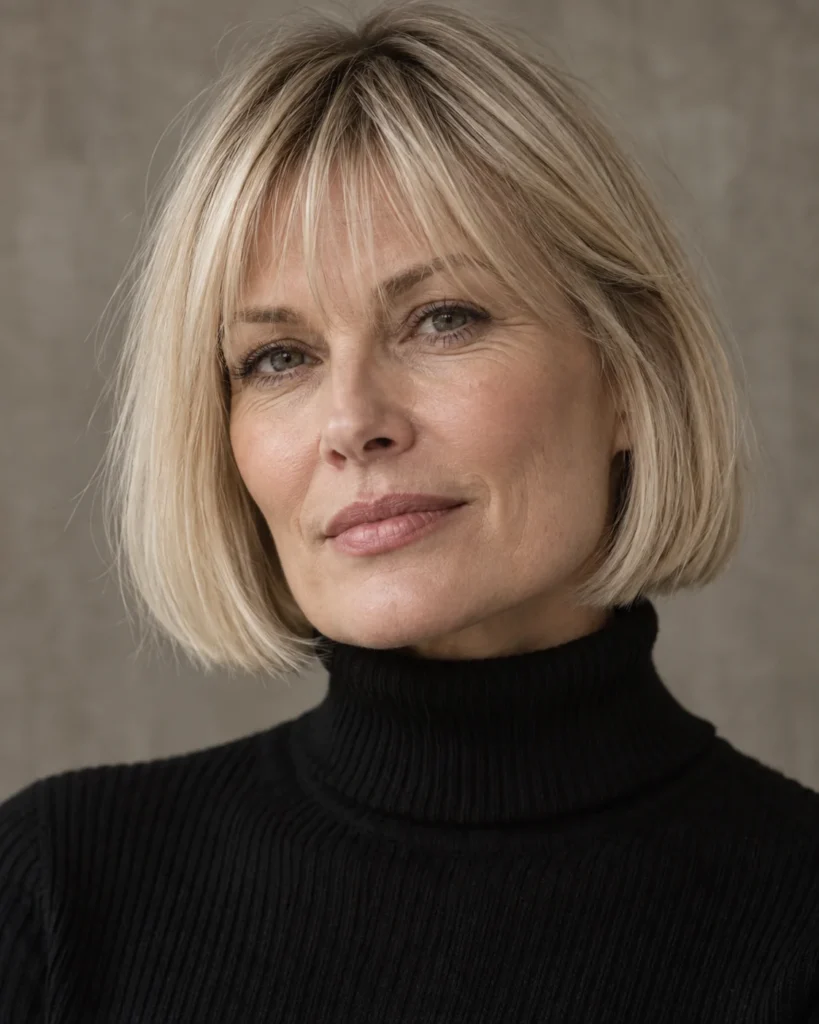
A short, blunt bob cut to land right at the chin, usually with a soft fringe. It’s one of the few cuts that makes fine hair look genuinely thicker, because every strand ends at the same point and the eye reads that as a solid edge.
The chin placement is deliberate. A line that sits right at the jaw draws a clean horizontal across the lower face and makes the jawline look more defined than it does under longer, softer hair.
- Best for: Fine hair that needs the appearance of density, and women who wear glasses, since the length sits just below the frames.
- Ask for: One blunt length at the chin, no internal thinning, and a soft, airy fringe rather than a heavy one.
- Styling: Blow-dry with a medium round brush, turning the ends slightly under, then finish with cool air so the shape holds.
- Skip it if: You have a very short neck, in which case dropping the length an inch below the chin is more flattering.
4. The Soft Feathered Pixie
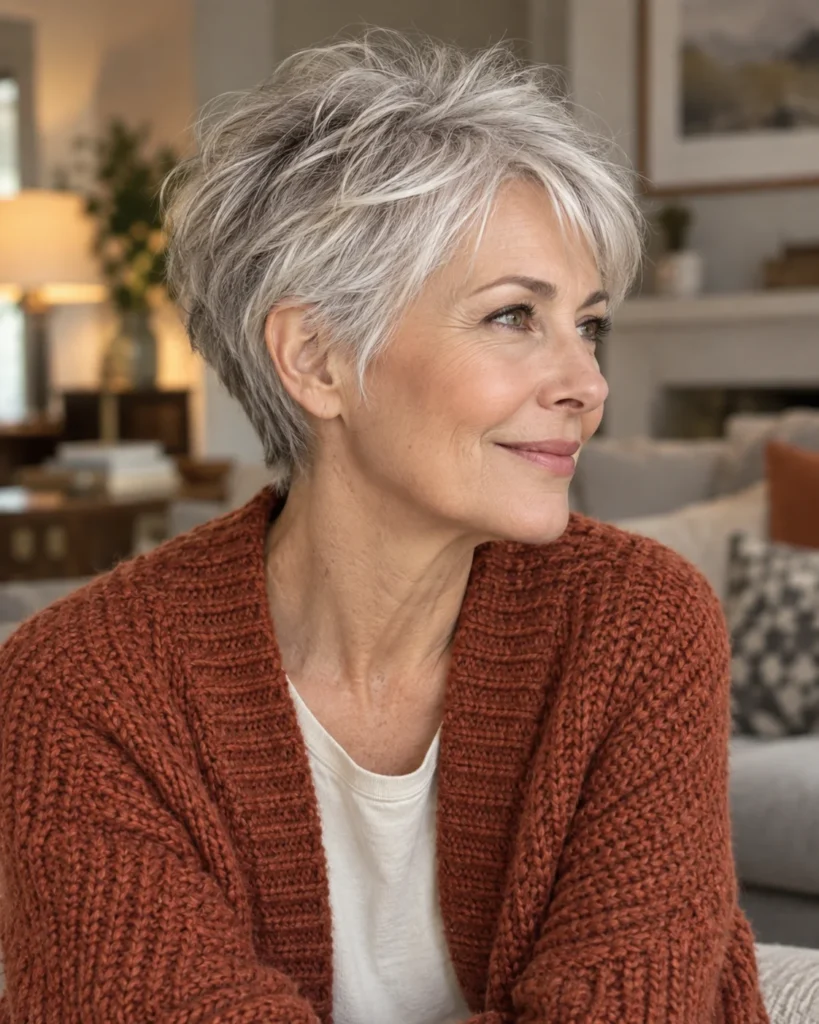
This is nothing like the tight, lacquered pixie you might be picturing. The modern version keeps real softness and length on top, with feathered pieces you can push in any direction depending on your mood.
The nape is what separates a beautiful pixie from a dated one. Tapered close and graduated, it follows the natural curve of your head and keeps the whole shape elegant. Cut blunt, it goes boxy immediately.
- Best for: Fine hair of any density, strong bone structure, and anyone who genuinely wants five-minute mornings.
- Ask for: Length left on top and at the front, a tapered graduated nape, and soft feathering rather than heavy texturizing.
- Styling: A pea-sized amount of light cream or paste warmed between your palms, then pushed through the top only.
- Skip it if: You dislike frequent salon visits, because this shape loses its line within about five weeks.
5. The Modern Subtle Shag

Today’s shag is far gentler than the 1970s version. The layers are concentrated around the crown and face rather than chopped through the whole head, so you get movement without the choppiness.
If you have natural fine waves that you’ve spent years fighting, this is the cut that finally puts them to work. The layers give each wave somewhere to go instead of collapsing into a flat triangle.
- Best for: Natural waves, grey and silver hair, and anyone who wants a cut that looks better air-dried than blow-dried.
- Ask for: Layers built around the crown and face, a curtain or soft side fringe, and point-cut ends for softness.
- Styling: Scrunch a light mousse into damp hair, diffuse on low, and resist touching it until it’s completely dry.
- Skip it if: You prefer a sleek, polished finish, because this cut is happiest with a bit of undone texture.
6. The Blunt Jaw-Length Bob
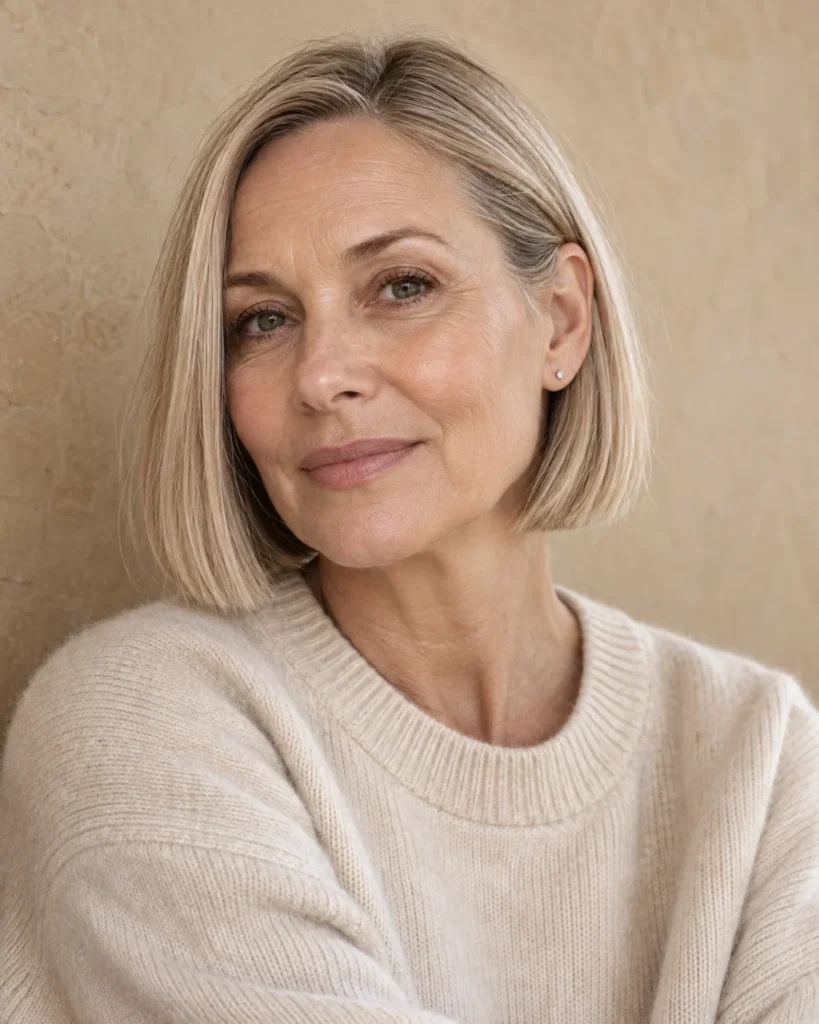
One clean length, no layers at all, cut to hit right at the jaw. When density is your main concern, this is the most effective shape on the entire list.
The reason is simple physics. Layers remove weight, and fine hair has very little weight to spare. Keeping every strand at the same length concentrates all of it into one thick, light-reflecting edge.
- Best for: Genuinely thinning hair, fine straight textures, and anyone who wants the illusion of more hair without any styling tricks.
- Ask for: One single length at the jaw, cut with scissors, and absolutely no thinning shears.
- Styling: Flat-dry it smooth with a paddle brush, then tuck one side behind your ear so the line doesn’t feel too severe.
- Skip it if: You have thick, coarse hair, since this shape can build unwanted width at the sides.
7. The Layered Shoulder Cut with Curtain Bangs

Shoulder-length hair with soft layers that start around the cheekbone, paired with a fringe that parts down the middle and sweeps outward on both sides. The two elements work as a pair.
The curtain opens up your face and draws attention to your eyes, while the layers keep the length from hanging flat. It’s the most versatile cut here, which makes it a good first step if you’re nervous about change.
- Best for: Anyone easing into a change, oval and long face shapes, and hair that’s fine but still reasonably dense.
- Ask for: Layers starting no higher than the cheekbone, and a curtain fringe cut to fall just past the cheekbone on each side.
- Styling: Dry the fringe first, brushing it back and away from your face with a round brush, before you touch anything else.
- Skip it if: You want a truly wash-and-go cut, since the fringe does need a minute of attention each morning.
8. The Stacked Angled Bob
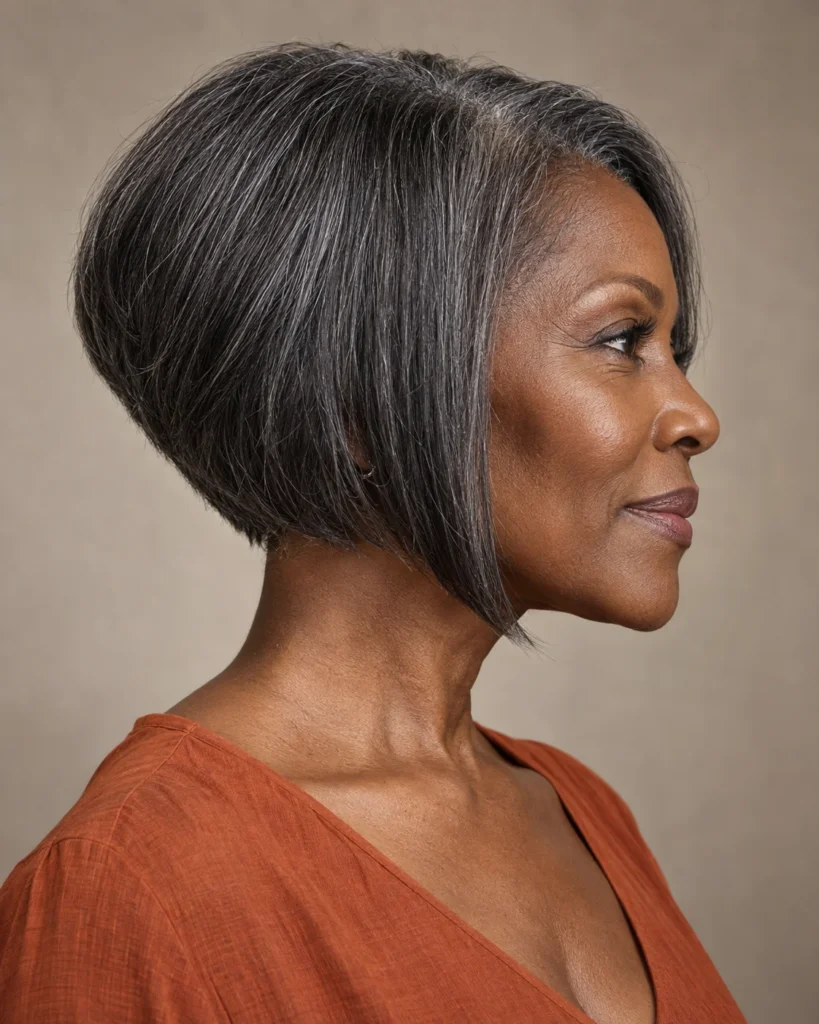
Cut shorter and graduated at the back, with the length angling longer toward the front. The stacked layers at the back build real, structural height rather than the illusion of it.
The forward angle does something clever too. It creates a diagonal line pointing up toward your cheekbones, and diagonals lift the eye in a way that straight horizontal lines never do.
- Best for: Crowns that go flat by lunchtime, and anyone who wants visible lift without teasing or backcombing.
- Ask for: Graduation through the back, a longer front angle, and the shortest point kept at the nape rather than higher up.
- Styling: Lift the back sections straight up while you dry them, then hit them with cool air before you let them drop.
- Skip it if: You often wear your hair tied back, since the short back layers won’t reach.
9. The Long Pixie with Side-Swept Fringe
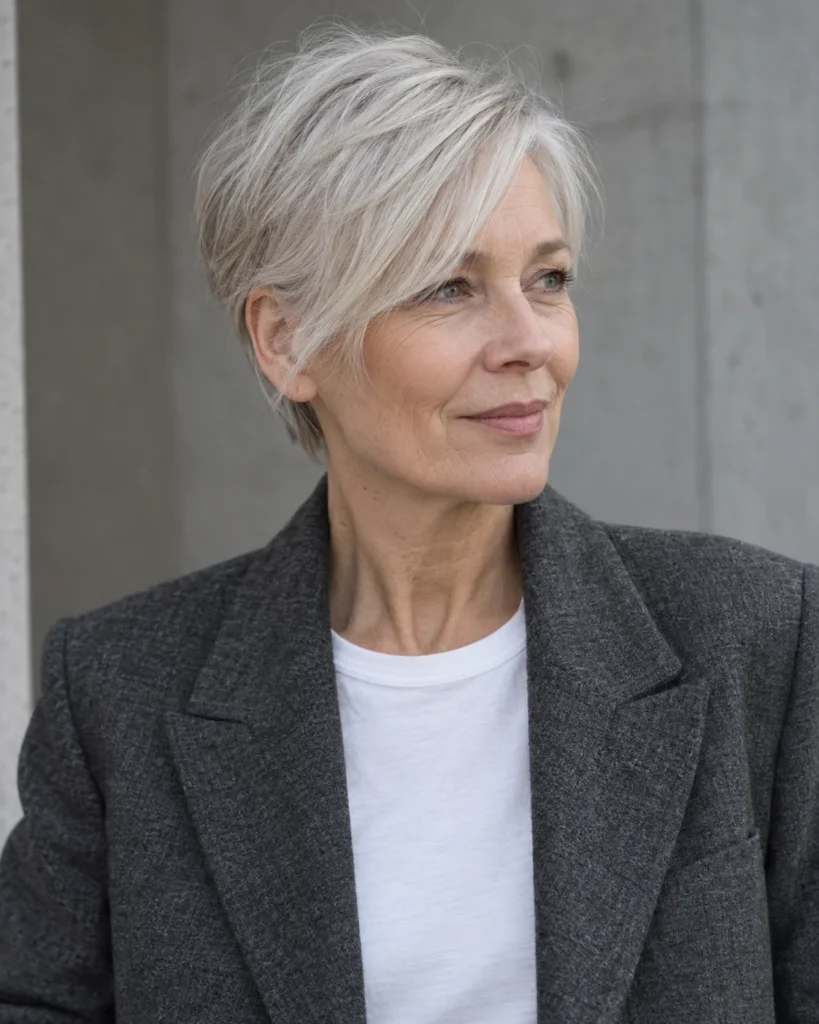
A pixie with extra length left on top and through the front, swept across the forehead on a diagonal. It gives you the ease of short hair with enough length to soften your hairline.
That swept fringe is quietly doing a lot of work. It falls across the temple area, which is exactly where women notice thinning first, and it covers it without looking like it’s trying to.
- Best for: Thinning temples, a receding hairline at the sides, and fine hair that won’t hold a longer shape.
- Ask for: Noticeably more length on top than a classic pixie, and a fringe long enough to reach your cheekbone when swept.
- Styling: Blow-dry the fringe across on the diagonal first, then set the top with a light texture spray at the roots.
- Skip it if: Nothing, honestly. Just ask for more length than feels safe. You can always take more off next time.
10. The Face-Framing Midi Cut
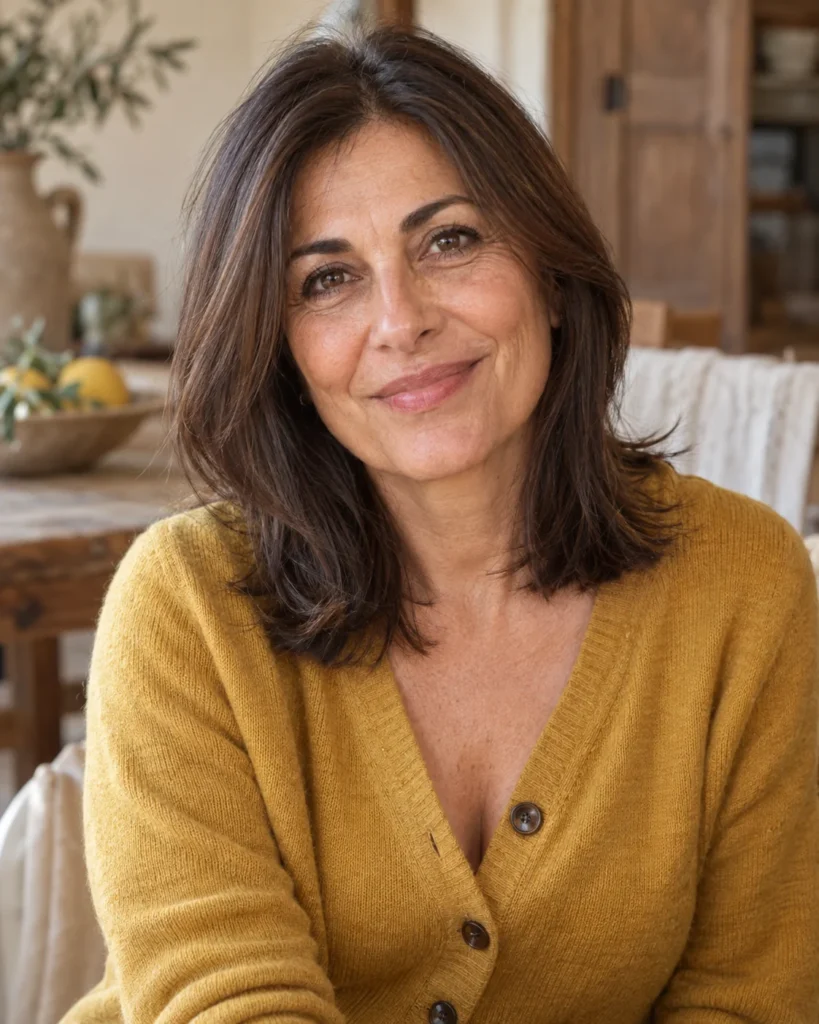
This falls just past the shoulders, with the shortest pieces starting at the chin and gradually lengthening as they move back. All the shaping happens at the front.
It’s the honest compromise for women who love their length but can feel it dragging the face down. Those front pieces lift and frame while everything behind them stays exactly as long as you want it.
- Best for: Long hair lovers, and anyone not ready to lose length but frustrated by a flat, heavy look.
- Ask for: Face-framing pieces beginning at the chin, blended softly, with the back length left untouched.
- Styling: Curl only the front sections away from your face, and leave the back straight or loosely bent.
- Skip it if: Your hair is thin all the way through, because length below the shoulders needs some density to carry it.
11. The Soft Wavy Lob for Grey Hair

A lob with a rounded, slightly bevelled edge and gentle waves worked through the mid-lengths. Grey hair tends to be coarser and more wiry than pigmented hair, and this shape uses that instead of fighting it.
Silver and white hair reflects a lot of light, which can look flat when the cut is one solid block. Waves break that reflection into highlights and shadows, and suddenly you have dimension without a single foil.
- Best for: Grey, silver, and salt-and-pepper hair, and anyone with a natural wave they’ve been flat-ironing away.
- Ask for: A lob with a bevelled edge, minimal internal layers, and ends point-cut rather than razored.
- Styling: Light mousse on damp hair, then air-dry or diffuse. A purple-toning shampoo every week or two keeps brassiness away.
- Skip it if: You straighten your hair daily, since this cut’s whole appeal is in the movement.
12. The Cropped Bob with Volume at the Crown
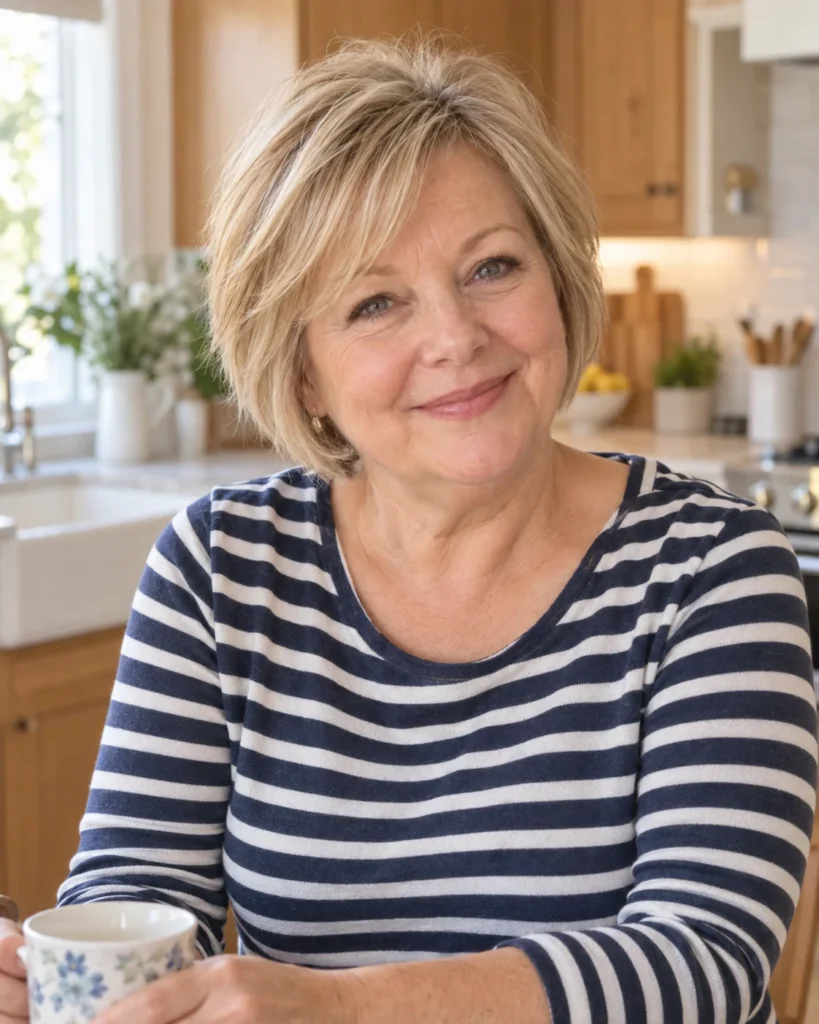
Short and ear-length, with layers kept high and tight through the top while the sides stay slightly longer. It’s the shortest cut on this list that still reads as a bob rather than a pixie.
The proportions are what make it work. High crown layers give lift where you need it, and the longer sides keep the shape from looking severe or masculine, which is the fear most women have about going this short.
- Best for: Fine hair that collapses at the crown, and anyone who wants something polished and genuinely low-effort.
- Ask for: High layers on top, sides left longer than the crown, and a soft rather than blunt outline around the ears.
- Styling: Root spray at the crown, rough-dry with your fingers lifting upward, then smooth the sides down with your palms.
- Skip it if: You’re growing your hair out, since this shape takes a long time to pass through.
Styling Tips That Make Any of These Cuts Work
A good cut does most of the work, but these habits are what keep it looking fresh between salon visits. None of them take more than a few minutes.
- Dry your roots upside down. Flip your head forward for the first few minutes of drying so the roots set standing up instead of flat against your scalp.
- Finish with cool air. Hair sets as it cools, so 30 seconds of cold air locks in whatever shape you just created. Walk away while it’s warm and it collapses.
- Move your part. Shifting it a little further over forces the roots to stand up as they fight back, and it covers a thinning part line at the same time.
- Keep conditioner from the ears down. Anything rich near the roots flattens fine hair immediately. Your ends are what need the moisture.
- Swap sticky hairspray for a dry texture spray. Firm-hold sprays glue strands together and add weight, while texture spray adds grit so hair holds itself apart.
- Use a light mousse, not a cream. A golf-ball-sized amount at the roots of damp hair gives body without the greasy weight of a styling cream.
- Sleep on silk or satin. Cotton roughs up fragile grey strands overnight and flattens whatever volume you built.
One more thing worth saying. If your styling routine takes longer than about eight minutes, the cut isn’t right for you, and that’s the cut’s fault rather than yours.
The Bangs Dilemma
Wispy, side-swept bangs are the safest bet for most mature faces, and here’s the reasoning. They fall on a diagonal, and a diagonal line lifts the eye across your face rather than cutting it horizontally in half.
They also soften forehead lines without pretending to erase them, they leave a bit of forehead visible so your face still feels open, and they grow out gracefully instead of demanding a trim every three weeks.
A blunt, heavy fringe does the opposite. It draws one hard horizontal line straight across, which shortens the face, and on fine hair it borrows so much weight from the rest of your head that the back goes flat.
If your heart is set on a fringe with more presence, ask for a curtain bang instead. It parts softly in the middle and sweeps outward on both sides, which frames your eyes without walling off your forehead.
What to Tell Your Stylist
Bring a photo, then bring these four sentences too. They translate what you want into language your stylist can actually cut to.
- “Please keep my perimeter blunt and build the layers internally.” This protects the density at your ends while still giving you movement.
- “Scissors only, no razor, and go easy with thinning shears.” Especially around the ends and temples.
- “I need height through the crown.” Shorter layers on top are what lift a flat, widening part.
- “Show me how to style this in five minutes.” Ask them to talk you through it with your own hands while you’re still in the chair.
What Ages a Cut vs. What Lifts It
| Cuts That Age You | Youthful Alternatives |
|---|---|
| Rigid, set helmet shapes | Soft, textured cuts with visible movement |
| One-length hair past the shoulders | A collarbone lob with internal layers |
| Thin, tapered, see-through ends | A blunt perimeter that holds its weight |
| A heavy blunt fringe across the brow | Wispy side-swept or curtain bangs |
| Flat, heavy crown with no lift | Shorter crown layers for height |
| Razor-cut, frayed ends | Clean scissor cuts that reflect light |
Frequently Asked Questions
Does short hair always look younger on an older woman?
No, and this is one of the most persistent myths in salons. A badly shaped short cut can look far more dated than a well-cut long one. What matters is where the volume sits and whether the shape has movement, not the number of inches.
Which haircut hides thinning temples best?
Soft, wispy face-framing pieces or side-swept bangs that fall across the temple area. A slightly deeper side part helps too, since it sweeps hair over the thinner side rather than exposing it.
Avoid pulling everything tightly back from your face, and ask your stylist to leave a little length at the front specifically for this.
How do I make fine grey hair look shiny and bouncy?
Grey hair is often coarser and more porous, so it needs moisture at the ends and nothing heavy at the roots. Use a lightweight conditioner from the ears down, and finish your blow-dry with 30 seconds of cool air to set shine into the cuticle.
A purple-toning shampoo once every week or two keeps brassy yellow tones from dulling your silver. For more on lift and body, our volume and thickness guides cover the styling side in detail.
How often should a short cut be trimmed?
Pixies and bixies need attention every four to six weeks, because their whole effect depends on the shape staying crisp. A French bob can stretch to six or eight weeks, and a collarbone lob is comfortable at eight to ten.
The most striking women I’ve worked with over the years weren’t chasing a version of themselves from twenty years ago. They found a shape that suited the hair and face they have now, learned to style it in five minutes, and then stopped thinking about it.
That ease is what actually reads as youthful. Book the appointment, take the photo in with you, and ask for the shape you want. Browse more ideas in our hairstyles over 50 section, and see our haircuts for fine hair guides if density is your main concern.
Screenshot the five cuts and the stylist talking points, and take them with you to your next appointment.