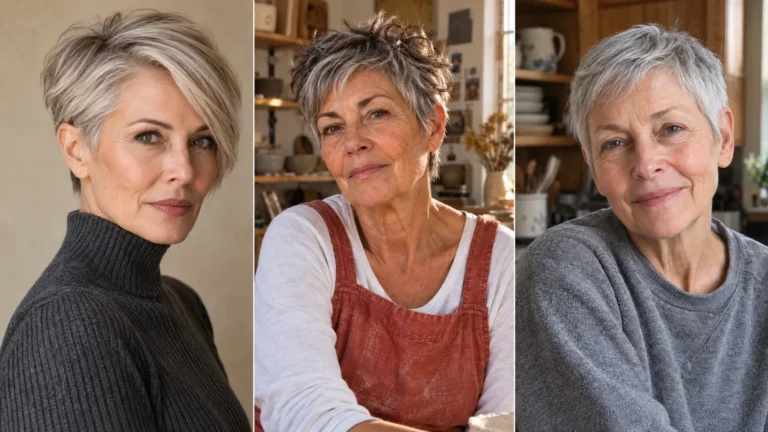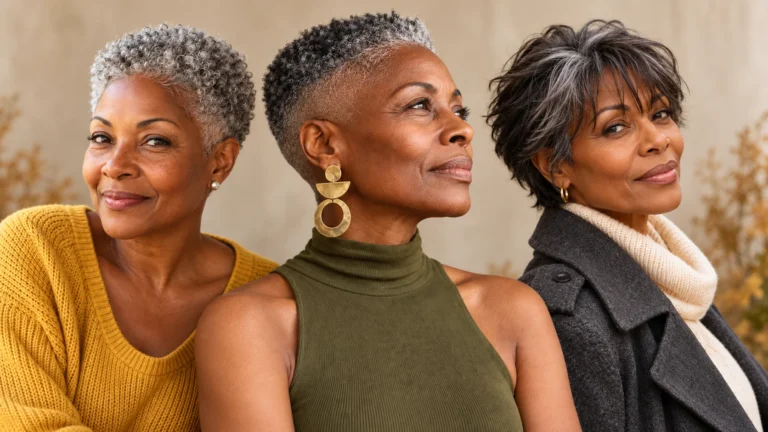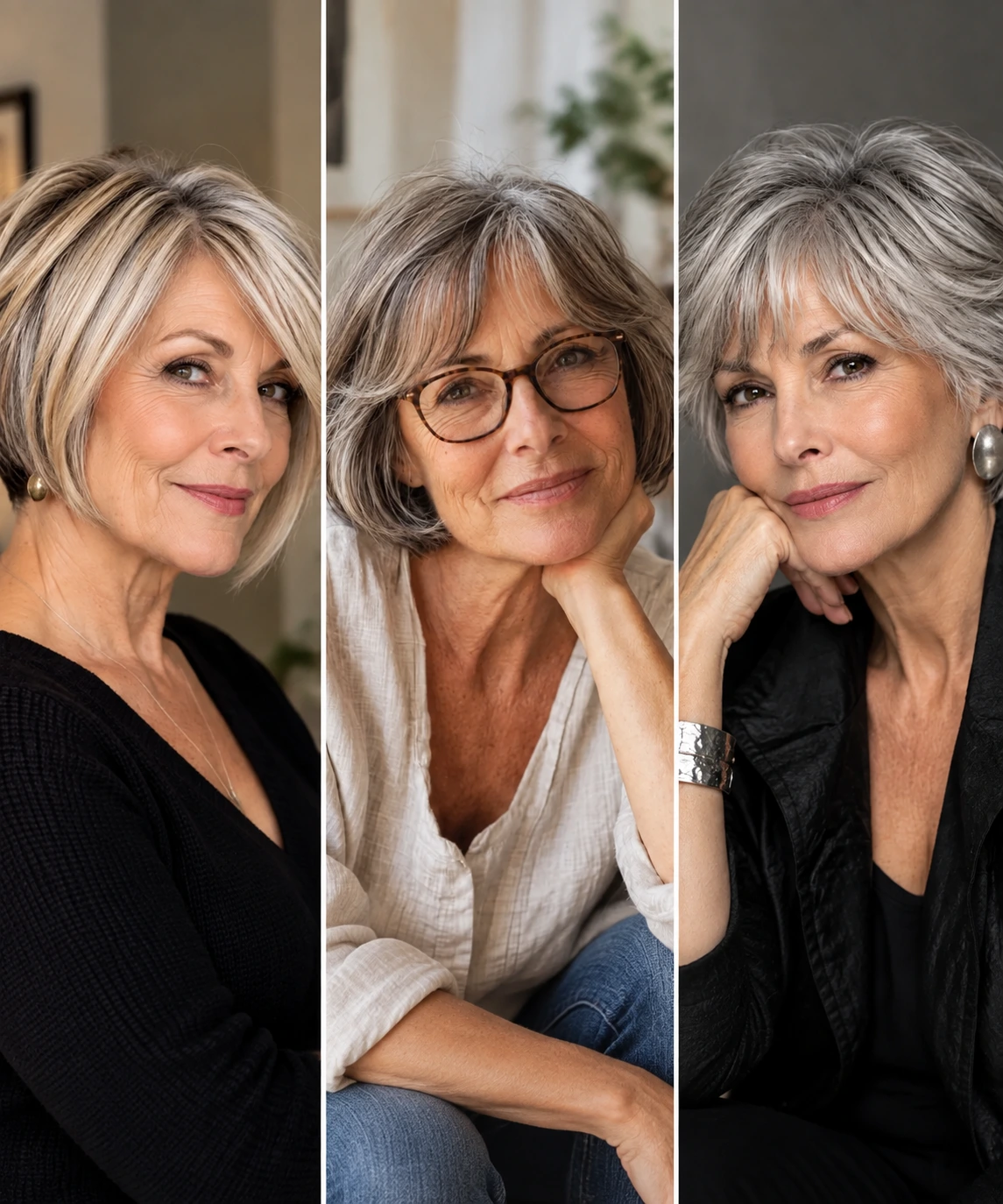
15 Hairstyles for Women Over 60 With Bangs That Make Your Eyes the Star
Somewhere around sixty, the fringe you’ve worn for years starts working against you. It sits heavier on the forehead than it used to, it knocks against the top of your reading glasses every time you look down, and by lunch it has split in the middle and gone flat.
That’s not the fringe getting worse. Your hairline has moved, the hair at your temples has thinned, and silver strands behave nothing like the ones they replaced. A thick, blunt fringe cut the old way now drags the whole face downward.
A lighter fringe does the opposite. Soft, piecey bangs blur forehead lines instead of drawing a hard line across them, and they point the eye straight to your eyes, which is where you want attention to land.
The fifteen cuts below were chosen for fine density, changing hairlines, and everyday glasses. None of them need a salon blowout to look right on a Tuesday.
The 60+ Bangs Rules
- Wispy over heavy, every time. Point-cut ends let light through. A heavy blunt fringe takes so much hair from the top that your sides and perimeter go visibly thin.
- Pass the glasses test. Your fringe should stop clearly above your frames, or be long enough to sweep past the hinges at your temples. Anything in between sits on the rims all day.
- Keep round brushes away from a cowlick. They lift it and make the split worse. Dry the fringe flat against your forehead instead, in alternating directions.
- Treat silver hair like it’s thirsty. Wiry gray strands need a light leave-in mist for softness, not a stiff, high-alcohol hairspray that makes them frizz.
15 Hairstyles for Women Over 60 With Bangs
Each cut lists the kind of fringe it uses and how long it takes in the morning. If you’re unsure which fringe shape suits your forehead and jaw, our face shape haircut finder will tell you in about two minutes.
1. The Wispy Bottleneck Bob

Look 01 • Everyday and easy
A chin-length bob with a bottleneck fringe: narrow and short in the center, then widening and lengthening as it moves toward the temples.
That shape is made for glasses. The short middle sits well above your frames, and the longer sides curve outward past the hinges instead of resting on them.
Best for: Daily glasses wearers and softer jawlines
Fringe type: Narrow at the center, angled at the sides
Morning styling: Three minutes with fingers and a flat brush
2. The Feathered French Pixie with Micro-Fringe

Look 02 • Delicate and polished
A soft pixie with feathered texture on top and a very short fringe that sits well above the brows.
On petite features, a longer fringe can overwhelm the face. A micro-fringe opens everything up and makes cheekbones and eyes the focus.
Best for: Fine hair and small, delicate features
Fringe type: Micro-fringe, cut short and soft
Morning styling: Two minutes with a pea-sized amount of cream
3. The Layered Lob with Soft Curtain Bangs

Look 03 • Keeps your length
Collarbone length with light layers and a fringe that parts in the middle and falls to about cheekbone level on each side.
The curtain frames the cheekbones and lifts the eye, while the length below the jaw stops the lower face from looking heavy.
Best for: Anyone not ready to go short
Fringe type: Curtain, parted at the center
Morning styling: Five minutes, drying the fringe back and away first
4. The Tapered Silver Crop with Side-Swept Bangs
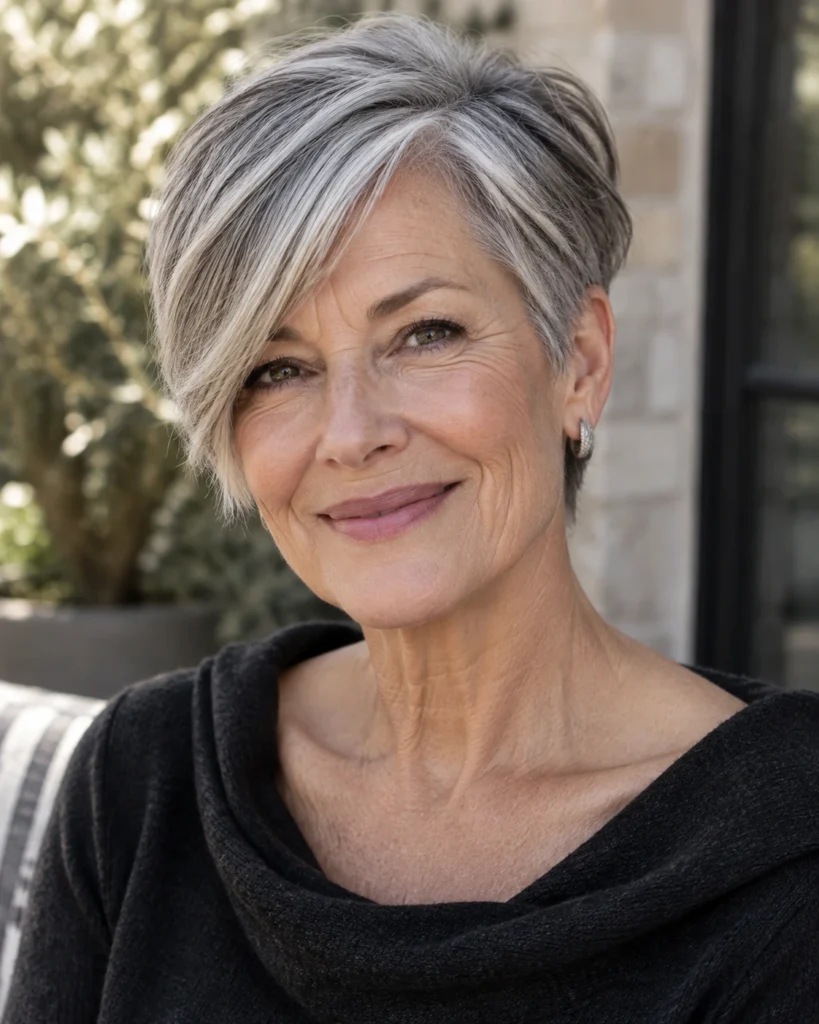
Look 04 • Hides thinning temples
A short crop, close at the nape and sides, with a longer fringe swept on a diagonal across the forehead.
The sweep falls directly over the temple area, which is where recession shows first, and it covers it without looking like it’s trying to.
Best for: Temple recession and natural silver
Fringe type: Side-swept, long enough to reach the cheekbone
Morning styling: Three minutes with a flat brush and a light mist
5. The Classic Textured Shag with Eye-Skimming Fringe

Look 05 • Relaxed and undone
Soft irregular layers at the crown and face, with a fringe that just grazes the lashes.
If you have a natural wave, this is the cut that finally uses it. The fringe moves with the rest of the hair instead of sitting as a separate flat piece.
Best for: Natural waves and medium density
Fringe type: Eye-skimming, point-cut
Morning styling: Scrunch in mousse and air-dry
6. The Rounded Chin Bob with Arched Bangs

Look 06 • Neat with glasses
A rounded bob at the chin paired with a fringe cut in a gentle arch, shorter at the center and dipping slightly at the edges.
The arch mirrors the curve of most frames, so the fringe sits above your glasses instead of clashing with the top line of them.
Best for: Oval and round frames
Fringe type: Arched, shorter at the center
Morning styling: Four minutes with a round brush on the ends only
7. The Spiky Asymmetrical Pixie with Diagonal Fringe
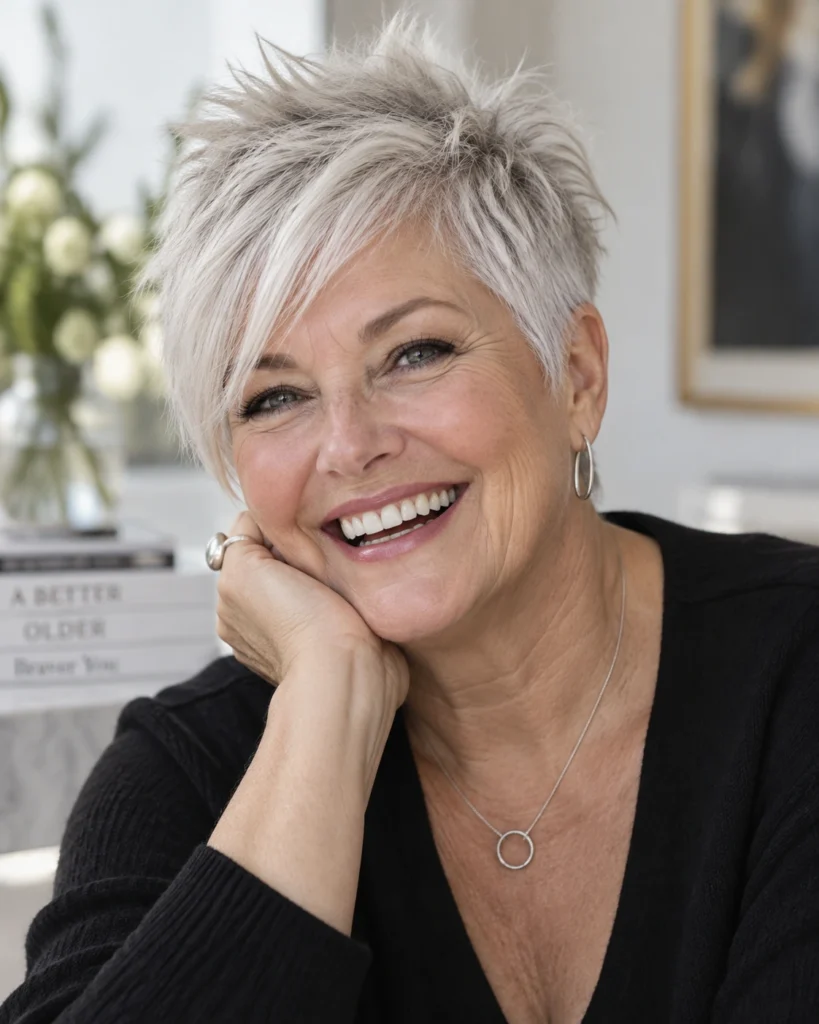
Look 07 • Slims a fuller face
Short, textured pieces on top with one side cut longer and a fringe that runs on a sharp diagonal.
Round and full faces are built on curves, and a diagonal line interrupts them. The height on top adds length to the face at the same time.
Best for: Round and full faces
Fringe type: Diagonal, heavier on one side
Morning styling: Two minutes with a little matte paste
8. The Collarbone Cut with Choppy Piecey Bangs
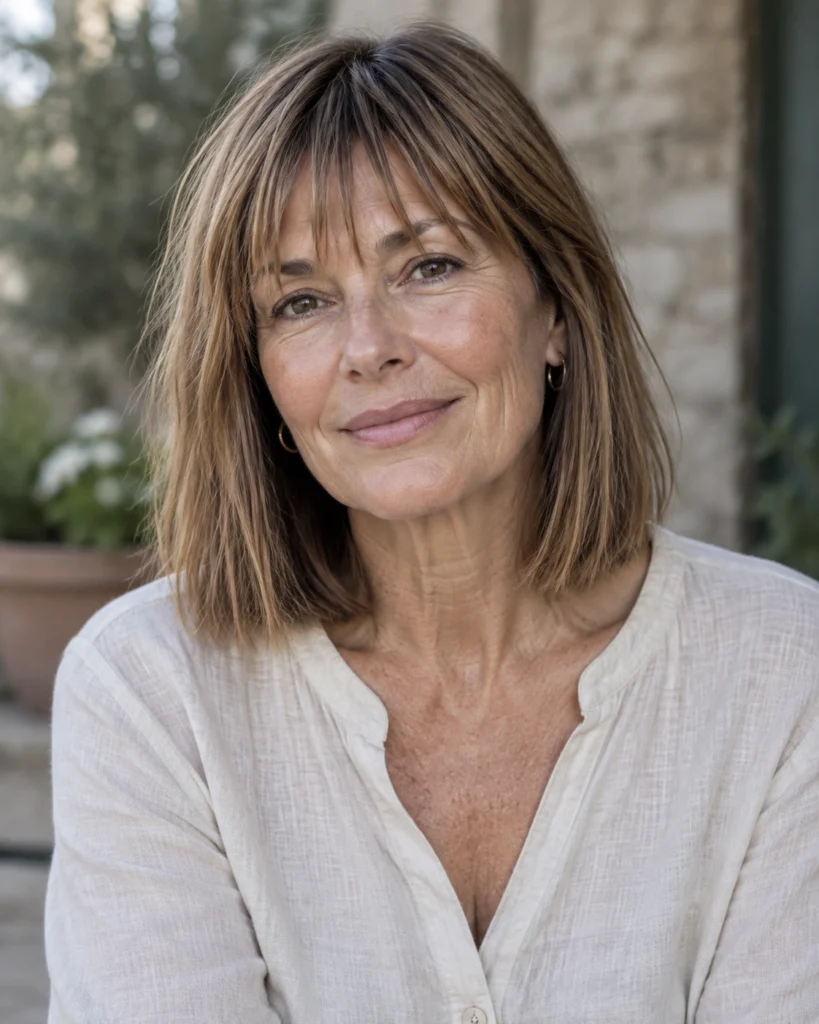
Look 08 • Maximum density
A blunt collarbone length with a fringe cut into separate, choppy pieces rather than a solid line.
Keeping the bottom line blunt protects every bit of density you have, and the piecey fringe adds movement up top without costing much hair.
Best for: Thinning ends and fine straight hair
Fringe type: Choppy and piecey
Morning styling: Four minutes, finishing the fringe with your fingertips
A fringe only looks good if the rest of the cut still has enough hair to hold its shape. Our haircuts for fine hair guides explain how to keep a blunt perimeter while still getting movement.
9. The Curly Bob with Brow-Grazing Ringlets
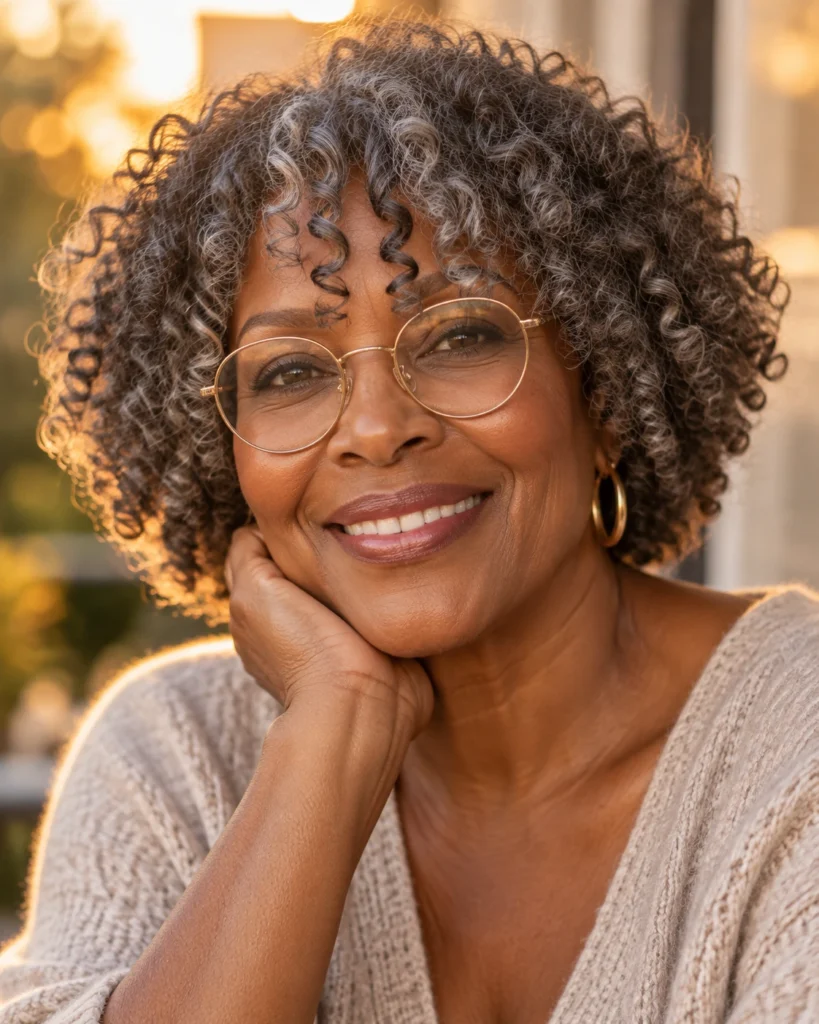
Look 09 • For natural curls
A curly bob cut to sit wider at the crown than at the ends, with curls left to fall naturally at brow level.
Curly bobs cut straight across tend to balloon into a triangle. Shaping the weight higher keeps the silhouette balanced, and curly fringes are forgiving with glasses.
Best for: Natural curls and coils
Fringe type: Curly, left to fall where it wants
Morning styling: Define the curls and diffuse on low
10. The Stacked Inverted Bob with Swoop Bangs
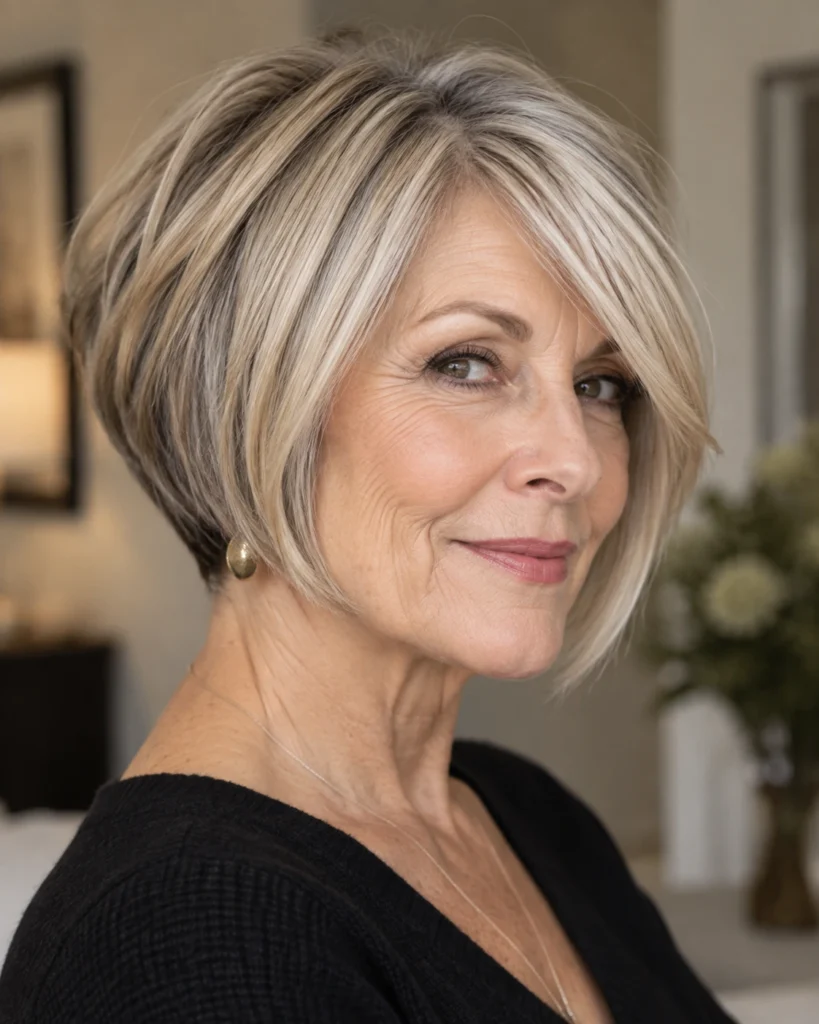
Look 10 • Lifts the whole shape
Graduated short at the back, longer toward the front, with a fringe that swoops in one smooth curve to the side.
The stacking builds height at the nape and crown, and the angle toward the front sharpens the jawline without any styling.
Best for: Flat crowns and softening jawlines
Fringe type: Swoop, blended into the side
Morning styling: Five minutes, lifting the back as you dry
11. The Soft Italian Bob with Wispy Fringe

Look 11 • Dense and breathable
A weighty, blunt bob sitting just below the jaw, paired with a fringe thinned so you can see skin through it.
The solid baseline gives fine hair real presence, and the airy fringe keeps that weight from reading as heavy at the front.
Best for: Fine hair that needs to look thicker
Fringe type: Wispy and see-through
Morning styling: Four minutes with a paddle brush and cool air
12. The Brushed-Forward Bixie with Textured Bangs
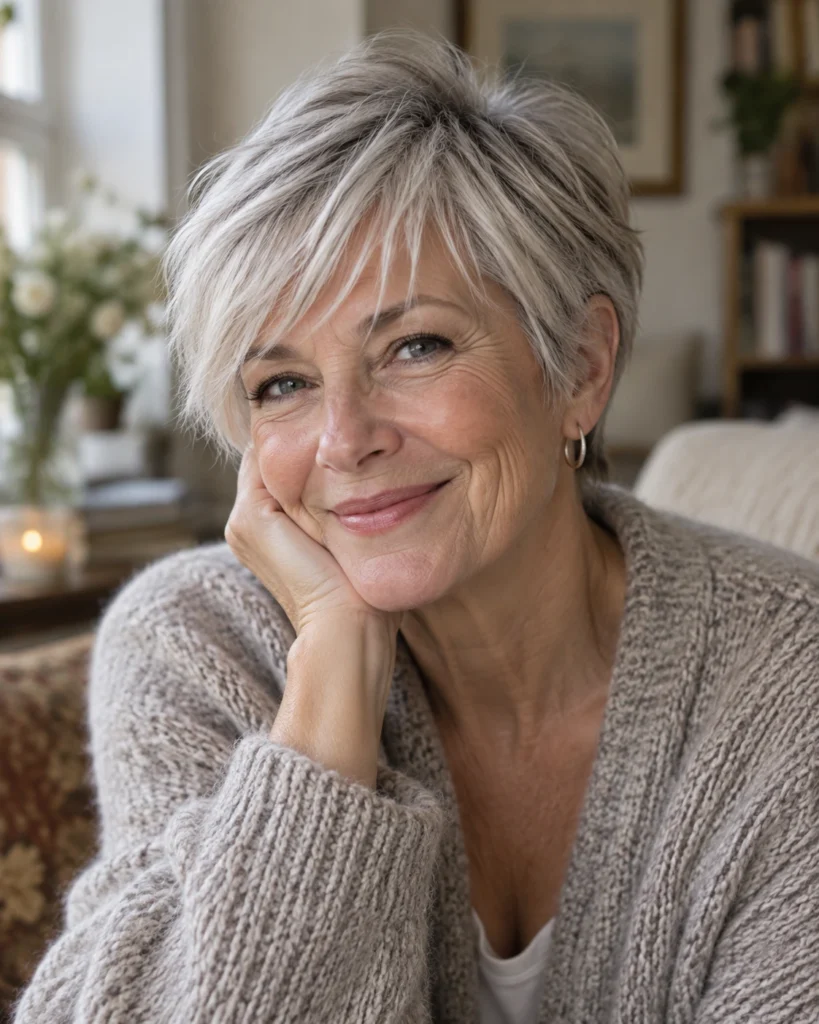
Look 12 • The two-minute cut
Part pixie, part bob, with the hair brushed forward from the crown into a textured fringe.
Brushing everything forward means there’s no part to fight and no cowlick to control. You towel-dry, push it forward, and leave.
Best for: Busy mornings and very fine hair
Fringe type: Textured, brushed forward from the crown
Morning styling: Two minutes, start to finish
13. The Salt-and-Pepper Feathered Wedge
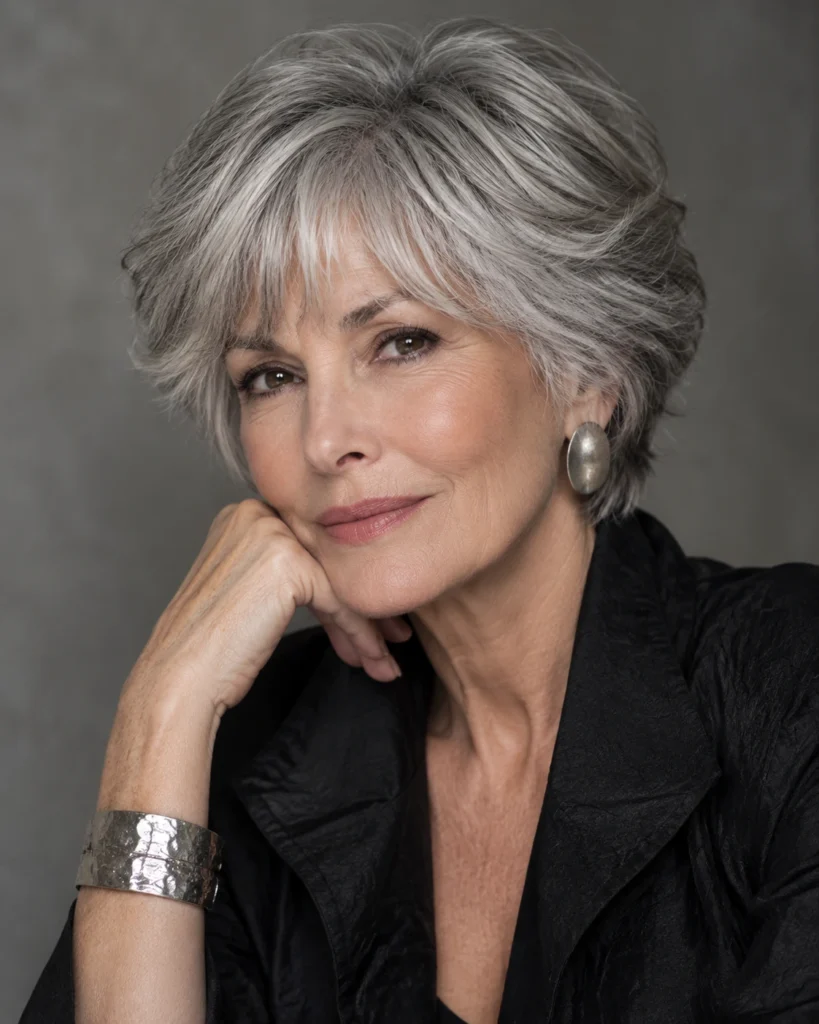
Look 13 • Classic, updated
A wedge shape built into a soft curve at the back, with feathered layers and a light fringe at the brow.
The wedge was a classic for a reason, but the old versions were stiff. Feathering the layers lets the silver and darker tones show at different depths, which reads as fullness.
Best for: Salt-and-pepper hair and flat backs of the head
Fringe type: Soft brow fringe, feathered
Morning styling: Four minutes, lifting the back sections as you dry
14. The Shoulder-Grazing Shag with Bardot Curtain Bangs

Look 14 • Volume and softness
A shoulder-length shag with a fuller curtain fringe that sweeps out toward the cheekbones.
Bardot bangs look lush without needing thick hair, because they’re swept aside rather than worn straight down. The shag layers add body through the lengths.
Best for: Fine hair wanting more volume
Fringe type: Bardot curtain, swept outward
Morning styling: Six minutes with a large round brush on the fringe
15. The Classic Pixie with Soft Side Tendrils

Look 15 • Made for statement glasses
A clean pixie with a micro-fringe and a few longer, softer pieces left in front of the ears.
Bold frames need space around them, and this cut gives them exactly that. The tendrils soften the edges so the short shape never looks severe.
Best for: Statement and bold frames
Fringe type: Micro-fringe with side tendrils
Morning styling: Two minutes with a fingertip of light cream
The 3-Minute Morning Bang Reset
Most fringes don’t need rewashing. They need their shape reset before the day starts, and this takes less time than making coffee.
Step 1: Wet only the front roots
Mist just the fringe roots with water, not the whole head. Overnight, your fringe sets into whatever direction your pillow pushed it, and water is the only thing that breaks that set.
Step 2: Flat-wrap it, left then right
Put a concentrator nozzle on your dryer and dry the fringe flat against your forehead, brushing it to the left, then to the right, then back again. Crossing it over like this cancels out a cowlick instead of lifting it.
Step 3: Seal with cool air
Finish with a few seconds of the cool shot while the fringe is still lying where you want it. Cooling closes the cuticle, which is what stops the fringe splitting again when the air turns humid.
Frequently Asked Questions
Do bangs make a woman over 60 look younger or older?
It depends entirely on the fringe. A heavy, blunt fringe tends to look dated and pulls the face down, while a soft, wispy one blurs forehead lines and draws attention to your eyes.
The goal isn’t looking younger so much as looking fresher. The right fringe does that almost immediately.
How do I stop my bangs splitting over a cowlick?
Stop fighting it with a round brush, which only lifts it higher. Wet the roots, then dry the fringe flat against your forehead in alternating directions until the cowlick gives up.
Ask your stylist to leave the fringe slightly longer over the cowlick too. A little extra weight helps hold it down.
Which fringe works best with reading or progressive glasses?
A fringe that clears the top of your frames, or one long enough to sweep past the hinges at your temples. Curtain and bottleneck bangs both do this naturally.
Keep your glasses on for the final check at the salon. Hair falls differently once the frames are in place, and that’s when the useful adjustments happen.
How often should bangs be trimmed on thinning hair?
Every three to five weeks keeps a fringe clear of your eyes and your frames. Fine hair shows a grown-out fringe faster than thick hair does.
Many salons will trim a fringe between appointments for little or nothing. It’s worth asking.
Final Thoughts
The right fringe at sixty isn’t a disguise. It frames your eyes, softens the lines you notice most, and takes a couple of minutes in the morning rather than twenty.
Start lighter than you think you need, keep it clear of your glasses, and give it one trim cycle to settle. For more cuts built around silver hair and changing texture, browse our hairstyles over 50 section.