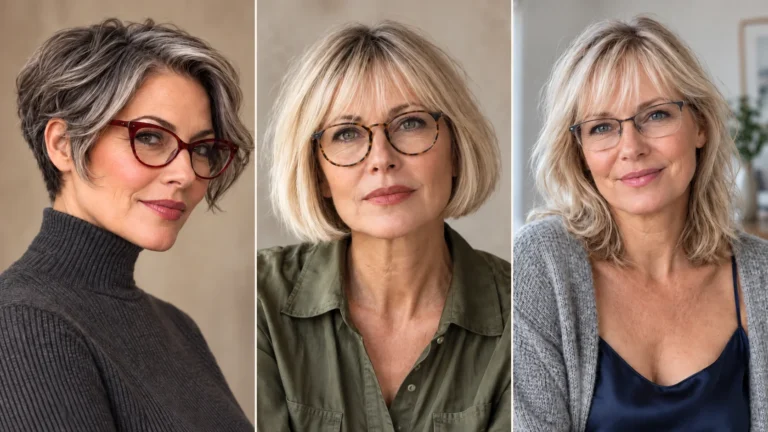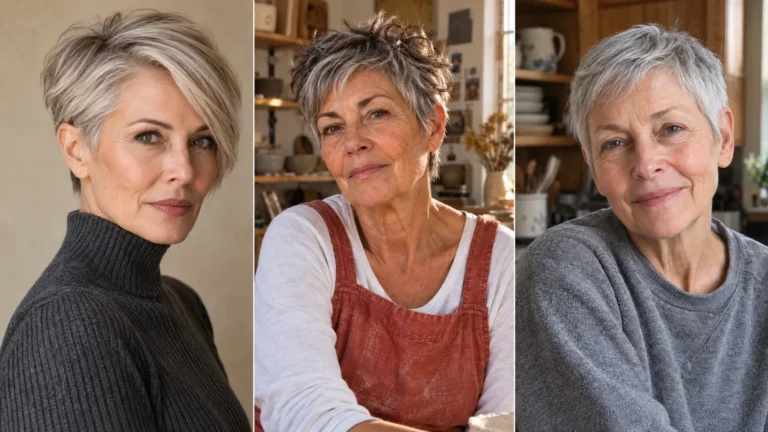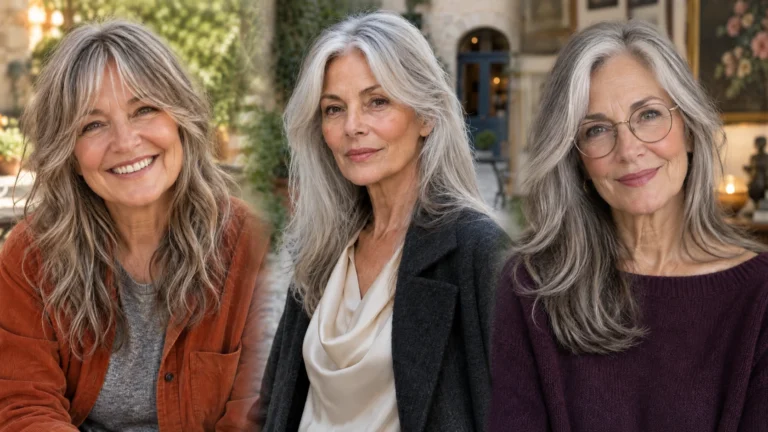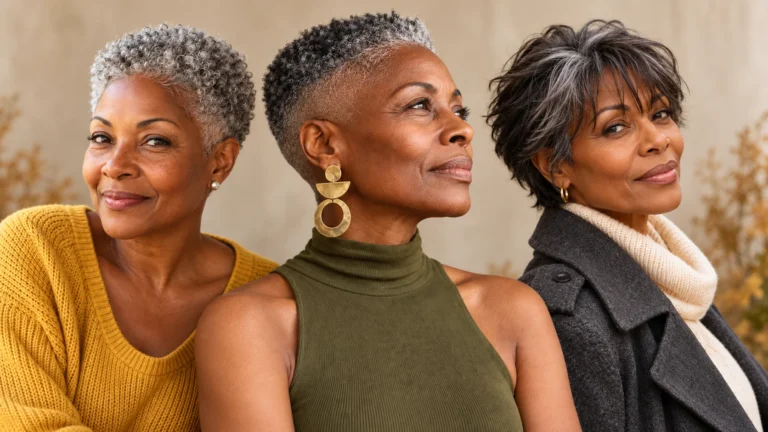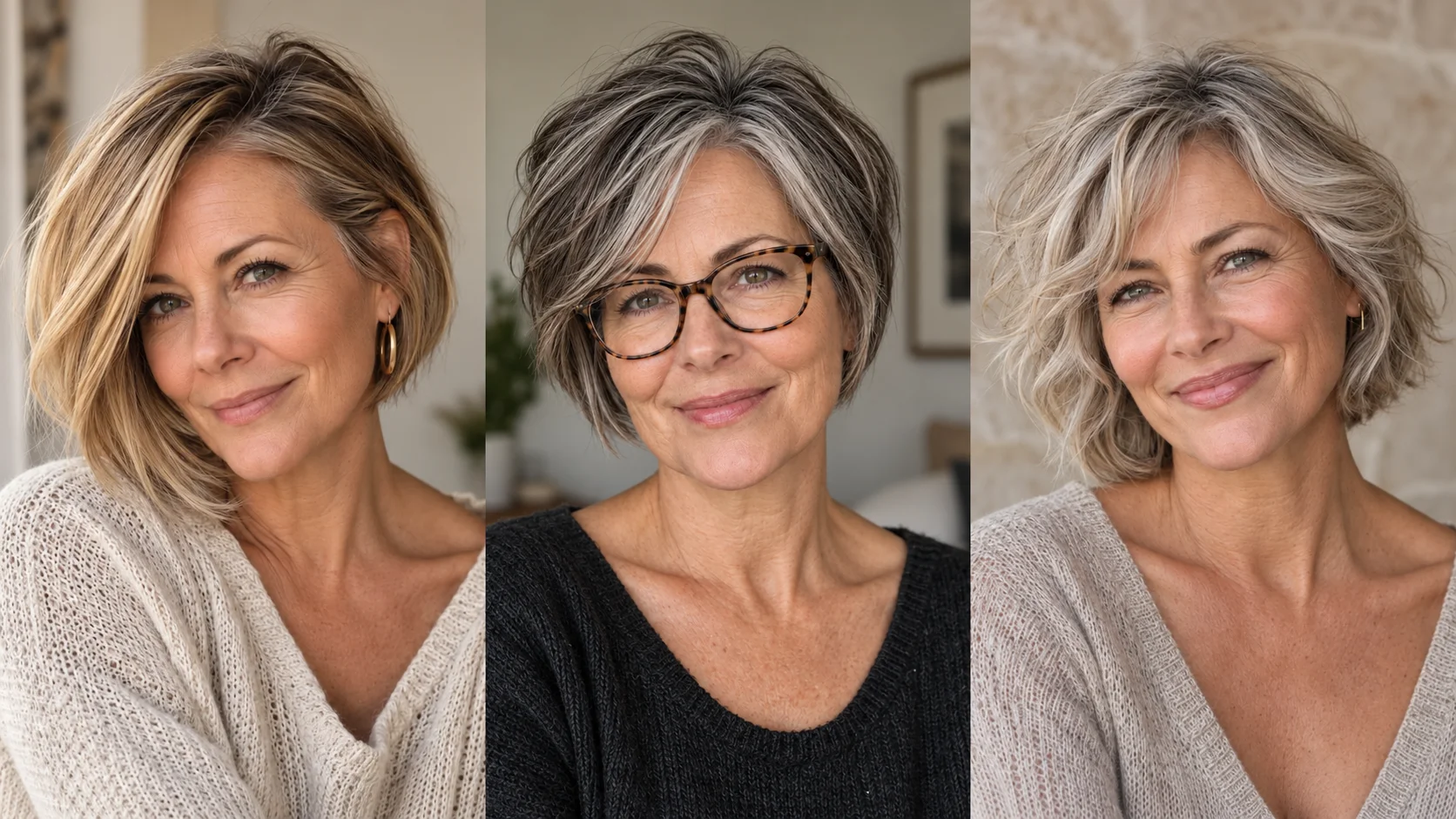
12 Short Bobs for Fine Hair Over 50 That Look Twice as Thick
You know the bob you’re afraid of. Wide and puffy at the cheeks, tapering down to ends you can see straight through, with the whole thing sitting on your shoulders like a little triangle.
That shape is almost always the result of one thing: too much weight removed from the bottom. A stylist thins the ends to make them look softer, and on fine hair, softer just means thinner.
Meanwhile your hair has changed on its own. Individual strands have narrowed, the crown and temples have lost density first, and your jawline has softened in a way that longer, flatter hair only draws attention to.
Here’s why the bob is worth another try. Of every cut in a salon, it’s the one that most reliably fakes density, because ending every strand at the same point gives fine hair a solid, light-catching edge it can’t create on its own.
The Golden Rules of a Mature Fine Hair Bob
The Blunt Base Is Everything
A blunt perimeter means every hair in the bottom line ends at the same length. Stand back and your eye reads that line as one dense mass, because there are no tapering wisps to see through.
The moment a razor or thinning shears touch that edge, the line breaks up. Some strands end higher, some lower, and light passes between them. What was density becomes transparency.
This is why scissors matter so much on mature hair. A clean scissor cut leaves a flat edge that reflects light, while a razor leaves a frayed end that splits and frizzes, especially where grey has come in.
Remove Weight From the Inside, Not the Surface
You still want movement. The difference is where the stylist takes the weight from.
Internal layers are cut inside the shape, underneath the top layer, so they create bounce and separation while the outside edge stays fully intact. Surface layers sit on top where you can see them, and on fine hair they read as steps and stringy pieces.
If your stylist reaches for thinning shears near your ends, ask them to work higher up instead. The bottom two inches of a fine bob should stay untouched.
Where the Length Falls Decides Everything
A bob that ends at the chin or jaw creates a horizontal line right across the lower face, and that line makes the jaw look cleaner and more defined than it does under longer hair.
Drop the same cut to the shoulders and it does the opposite. The length pulls the eye downward, the shoulders push the ends outward, and the whole shape drags your face with it.
The chin-to-jaw zone is the sweet spot for most women over 50. An inch either way changes more than you’d expect, so it’s worth being specific in the chair.
12 Short Bobs for Fine Hair Over 50
Each shape below solves a different problem, whether that’s a flat crown, thinning temples, glasses, or ends that have gone wispy. Start with the one closest to your current length, since the smallest change is usually the one you keep.
1. The Classic Blunt French Bob

Short, blunt, and cut to land right at the chin, usually with a soft fringe. It’s the purest version of the blunt-base principle, with no layers anywhere.
On fine hair this is the single most effective shape for visible thickness. Every strand ends at the same point, so the bottom line reads as one solid, shining edge rather than a fade into nothing.
- Best for: Genuinely thinning ends, fine straight hair, and anyone whose current cut has gone see-through at the bottom.
- Ask for: One blunt length at the chin, scissors only, and no internal thinning below the ear.
- Styling: Blow-dry with a medium round brush, turning the ends slightly under, then 30 seconds of cool air to set the shine.
- Skip it if: You have a very short neck. Dropping the length an inch below the chin keeps the same effect without crowding.
2. The Textured Collar-Skimming Lob

The longest cut here, stopping just above the collarbone. It’s the compromise for women who aren’t ready to lose length but can feel their current hair pulling downward.
The length works only because the layers are internal. Movement comes from inside the shape while the perimeter stays blunt, which is what stops a lob at this length from going stringy.
- Best for: Anyone easing into shorter hair, and fine hair that’s still reasonably dense.
- Ask for: A blunt perimeter just above the collarbone, with weight removed internally and a few soft face-framing pieces.
- Styling: Light mousse at the roots, bend the mid-lengths with a large barrel iron, then shake it out with your fingers.
- Skip it if: Your ends have already thinned, because this length needs real density at the bottom to hold its shape.
3. The Soft Curved Wedge Bob
Graduated through the back so weight builds into a rounded curve at the back of the head, then tapers down toward the nape.
Many women have a flat spot at the back of the skull, and a straight-down bob makes it obvious in the second mirror. The wedge builds a soft round profile there and balances the whole head shape from the side.
- Best for: Flat backs of the head, and anyone who likes their cut from the front but not from behind.
- Ask for: Graduation building a soft curve through the back, with the nape kept close and the front left longer.
- Styling: Dry the back sections lifted straight out from the head, then let them fall and set with cool air.
- Skip it if: You wear your hair tied back often, since the shorter back won’t reach.
4. The Side-Parted Asymmetrical Bob

A deep side part with one side cut noticeably longer than the other, creating a diagonal line across the face.
The deep part is doing quiet work. It pushes hair up and over at the root, which builds instant crown lift, and it sweeps length across the temple area where thinning shows first.
- Best for: Thinning temples, flat crowns, and anyone who wants lift without any styling effort.
- Ask for: A deep side part set before cutting, with real length difference between the two sides.
- Styling: Dry the roots at the part in the opposite direction first, then flip the hair back over to where it belongs.
- Skip it if: You switch your part regularly, because this cut commits to one side.
5. The Bixie-Bob Hybrid

Part pixie, part bob. Short layers through the crown with the length at the front kept near the jaw, so it reads as a bob from the front and a pixie from behind.
It’s the best of this list with glasses. The sides sit close and tapered so frames don’t push hair outward at the temples, while the front length keeps the shape soft around your face.
- Best for: Daily glasses wearers, flat crowns, and anyone curious about short hair but not ready for a full pixie.
- Ask for: Short crown layers, jaw-length front pieces, tapered sides, and a check with your glasses on before the finish.
- Styling: Rough-dry upside down, push the crown up and the front forward with your fingers, done in about four minutes.
- Skip it if: You want one uniform length, since this cut relies on contrast between the crown and the front.
6. The Chin-Length Bob with Wispy Curtain Bangs

A chin bob paired with a fringe that parts softly in the middle and sweeps outward on both sides, falling to about cheekbone level.
The curtain frames your eyes without walling off your forehead, and because it’s wispy enough to see skin through, it softens forehead lines rather than drawing a hard line across them.
- Best for: Softening the forehead, higher hairlines, and anyone who has always wanted a fringe but feared the weight.
- Ask for: A blunt chin-length base with a fringe thinned and point-cut so light passes through it.
- Styling: Dry the fringe first, brushing it back and away from your face, before you touch the rest.
- Skip it if: Your hair is very fine overall, since a fringe borrows density from the rest of the cut.
7. The Inverted A-Line Bob
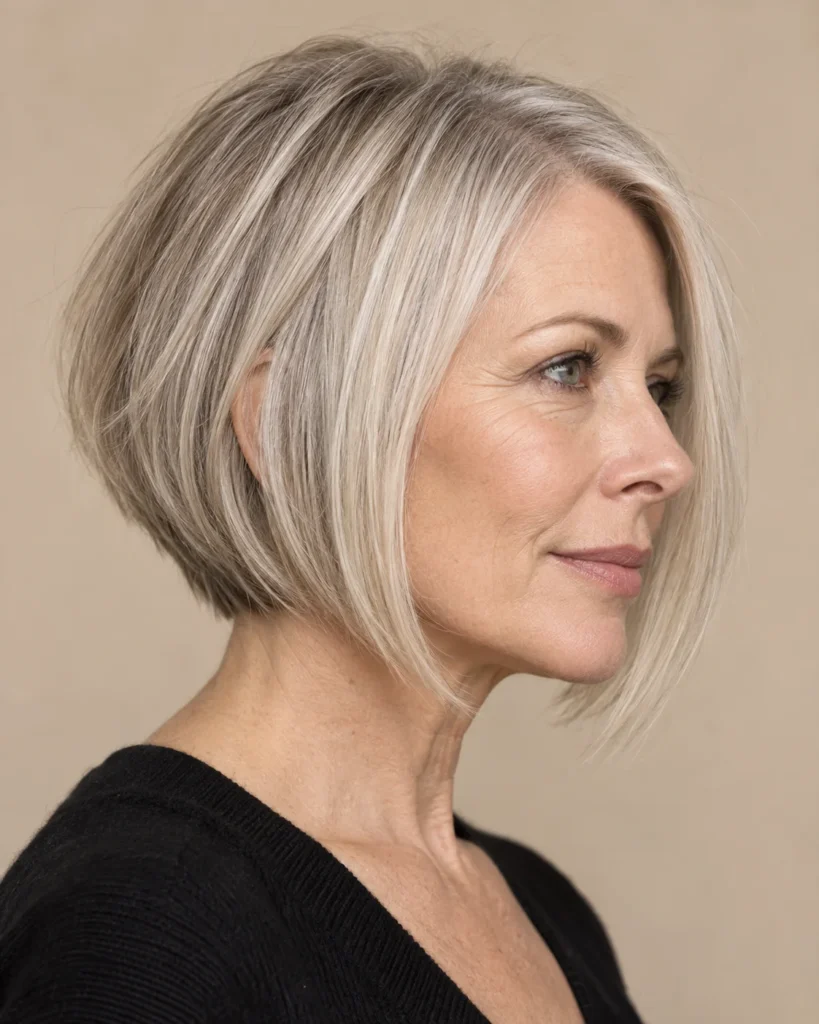
Shorter at the back and angling longer toward the front, so the two front pieces sit below the jaw while the nape stays high.
The forward angle creates a diagonal that points up toward your cheekbones, and diagonals lift the eye in a way flat horizontal lines never do. The shorter back gives you built-in height.
- Best for: Crowns that go flat by lunchtime, and anyone who wants lift and face-framing in one shape.
- Ask for: A high, graduated nape angling down to front pieces that sit just below the jaw.
- Styling: Lift the back straight up as you dry it, then smooth the front sections down and forward with a flat brush.
- Skip it if: You prefer your hair off your face, because those long front pieces are the whole point.
8. The Textured Shaggy Bob

A bob with soft, irregular layers concentrated around the crown and face, cut with point-cutting rather than clean horizontal lines.
If you have natural fine waves you’ve been flat-ironing into submission, this is the cut that puts them to work. The layers give each bend somewhere to go instead of collapsing into a flat triangle.
- Best for: Natural fine waves, grey and silver tones, and anyone who wants a cut that air-dries well.
- Ask for: Layers built around the crown and face only, point-cut ends, and the perimeter kept solid.
- Styling: Scrunch light mousse into damp hair, diffuse on low, and don’t touch it until it’s completely dry.
- Skip it if: You want a sleek, polished finish, since this shape is happiest slightly undone.
9. The Sleek Glass-Shine Blunt Bob

A blunt bob dried perfectly straight and smooth, cut anywhere from the chin to just below the jaw. The whole effect depends on the finish.
Fine hair actually has an advantage here. A flat, smooth cuticle reflects light in a continuous sheet, and that shine is what makes hair look thick and healthy from across a room.
- Best for: Fine straight hair, silver and grey tones, and anyone who likes a polished, deliberate look.
- Ask for: A precise blunt line, scissors only, and absolutely nothing taken out of the ends.
- Styling: Blow-dry smooth in sections with a paddle brush, finish with cool air, and add one drop of lightweight serum to the ends only.
- Skip it if: Your hair is naturally wavy and you don’t want to heat-style most days.
10. The Feathered Jawline Bob

Cut to the jaw with soft, feathered pieces framing the face, while the back and sides keep a blunt, solid line.
The feathering is limited to the front on purpose. You get softness exactly where it flatters the jaw, and you keep full density everywhere the eye reads thickness.
- Best for: Softening a jawline, and anyone who finds a fully blunt bob too severe on their face.
- Ask for: A blunt base at the jaw with feathering restricted to the face-framing pieces only.
- Styling: Curl just the front pieces away from your face with a flat iron or small iron, and leave the rest straight.
- Skip it if: Your front sections are already thin, since feathering removes weight from exactly that area.
11. The Hollow-Layered Volume Bob
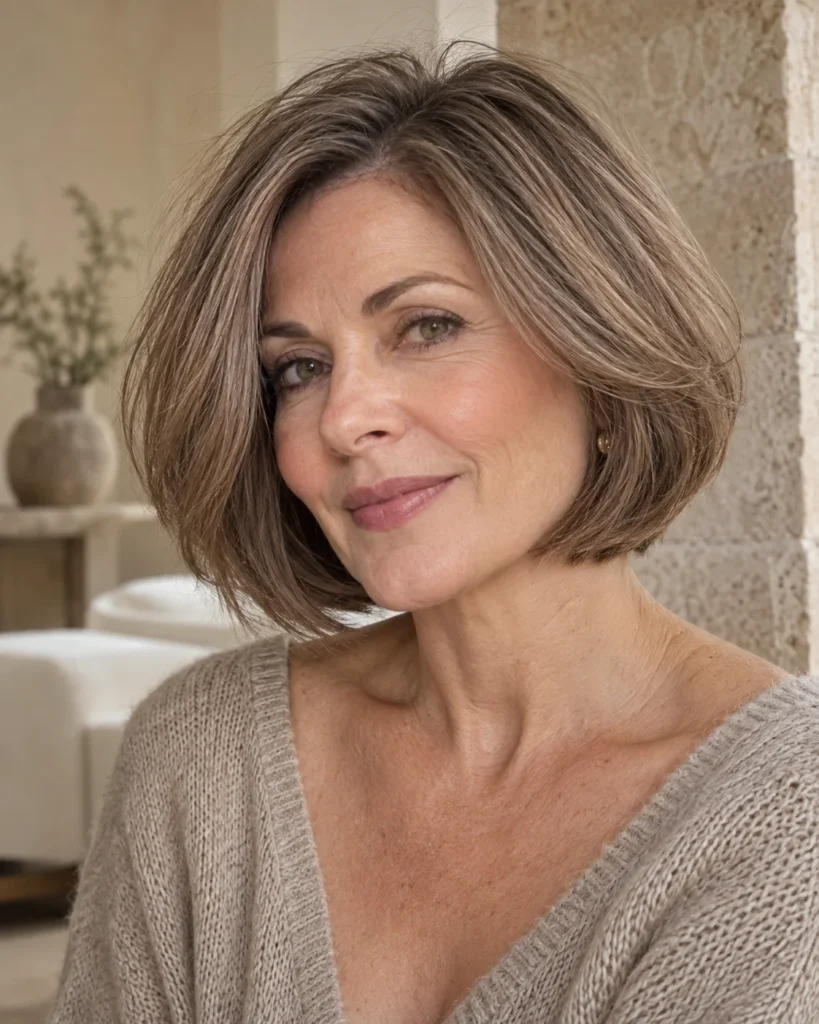
Weight removed from underneath the top layer, leaving the surface and perimeter completely intact. From the outside it looks like a solid one-length bob.
Fine hair often collapses under its own length. Hollowing out the inside removes just enough weight for the top to lift, which is why this cut holds volume all day without teasing or backcombing.
- Best for: Fine hair that goes flat within hours, and anyone who has never found a cut that keeps its body.
- Ask for: Internal weight removal underneath the top section, with the surface and perimeter untouched.
- Styling: Root spray at the crown, dry upside down for the first few minutes, then smooth the top layer down.
- Skip it if: Your hair is already very sparse, because there needs to be enough underneath to remove.
12. The Ear-Tuck Minimalist Bob
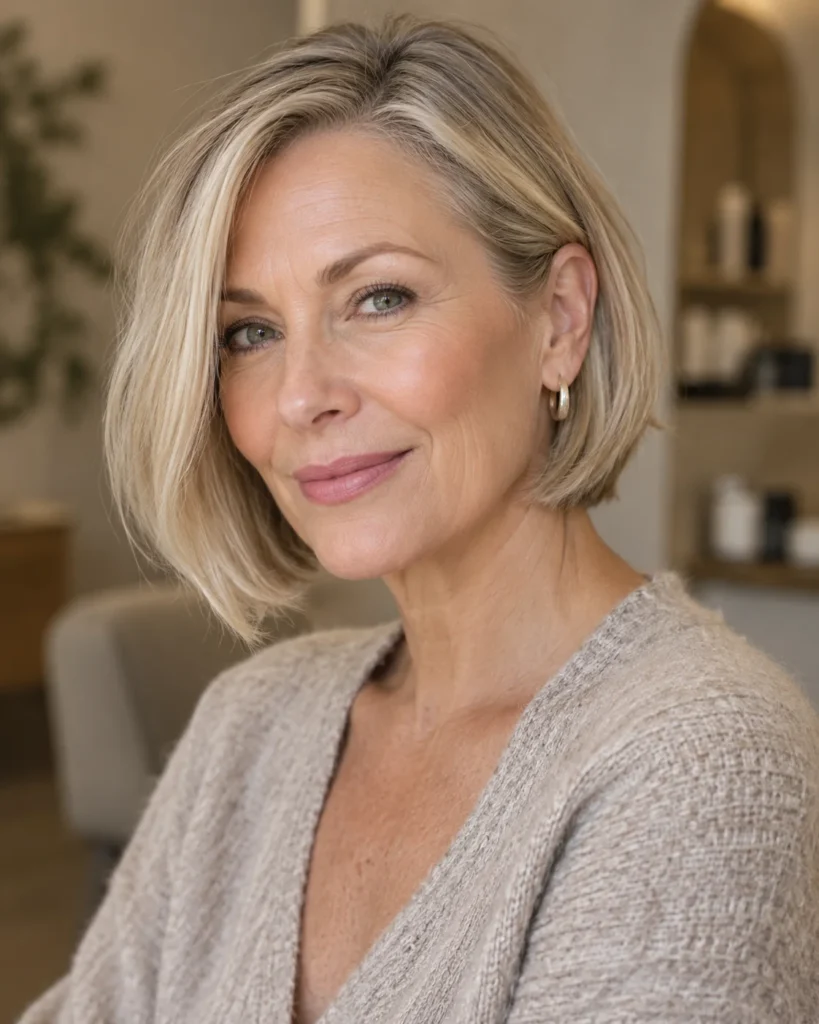
Cut just below the jaw with a straight, uncomplicated line, designed to be worn tucked behind one ear.
The tuck does something small and clever. It creates asymmetry and exposes one side of your face and jaw, which reads as effortless, and it turns a plain cut into a deliberate one.
- Best for: Low-effort mornings, hair that isn’t dramatically thin, and anyone who wants something quietly chic.
- Ask for: A clean line just below the jaw with a slight forward angle so the tucked side still frames your face.
- Styling: Air-dry or rough-dry, tuck one side, and add a light texture spray at the roots. Under five minutes.
- Skip it if: Your ears are a feature you’d rather not highlight, since one is always on show.
What to Tell Your Stylist
Bring a photo, but bring these four sentences too. Photos show the result, and these describe the technique that gets you there.
- Say this: “Please keep my perimeter blunt and take the weight out internally, so I don’t lose density at the ends.”
- Say this: “Point cutting rather than a razor, please, and go easy with the thinning shears.”
- Say this: “I’d like the length to finish right at my jaw, not below it.”
- Say this: “Can you show me how to dry it once, while I hold the brush myself?”
That last one matters more than people expect. A cut you can’t reproduce at home is a cut that works once. For more on which shapes protect density, our haircuts for fine hair guides go into more detail.
Bobs That Flatten Fine Hair vs. Bobs That Build Density
| Bobs That Flatten Fine Hair | Bobs That Build Density |
|---|---|
| Heavily thinned, razor-cut ends | A blunt, solid perimeter cut with scissors |
| Visible steps and layers on the surface | Weight removed internally, underneath the top |
| One length falling at the shoulders | A line finishing at the chin or jaw |
| A heavy blunt fringe across the brow | Wispy curtain bangs you can see through |
| Flat roots dried in their natural direction | Roots dried upside down and set with cool air |
| Rich conditioner applied at the roots | Conditioner kept from the ears down |
| Sticky firm-hold hairspray | Dry texture spray misted under the top layer |
Frequently Asked Questions
Will a chin-length bob emphasize a soft jawline?
It’s the opposite of what most women expect. A blunt line ending at the chin creates a clean horizontal edge, and the eye reads that edge as the jawline itself, which makes the whole lower face look more defined.
What does emphasize softness is length that sits just below the jaw and hangs there, or a heavily layered cut with wispy ends around the chin. If you’re concerned, ask for a slight forward angle so the front pieces point upward rather than down.
How do I stop the back of my bob falling flat?
The back collapses because you dry it in the direction it naturally falls, and because it’s the one area you can’t see. Dry the back sections lifted straight out from your head, using your fingers or a round brush, then let them drop.
Cool air is the other half. Hair sets as it cools, so a 30-second blast of cold at the back locks the lift in. Our volume and thickness guides cover more techniques for holding root lift through the day.
What’s the best drying technique for root lift?
Flip your head forward and dry the roots upside down for the first few minutes, until they’re about 80 percent dry. This sets them standing away from the scalp instead of glued flat against it.
Then flip back up, smooth the top layer and the ends with your brush, and finish with cool air. The order matters: roots first while they’re wet enough to reshape, surface last.
How often should a fine hair bob be trimmed?
Every six to eight weeks for most bob shapes. The blunt line is what carries the density illusion, and it starts breaking up before you notice it in the mirror.
A wedge or an inverted A-line needs closer to six weeks because the graduation loses its shape faster. A simple blunt chin bob can stretch to eight, sometimes ten if your hair grows slowly.
A signature cut isn’t the trendiest shape in the salon book. It’s the one you can dry in eight minutes, recognize in every photo, and stop thinking about the moment you leave the bathroom.
Pick the bob that solves your biggest frustration, ask for it by technique rather than by picture, and give yourself one growing-out cycle to settle into it. For more ideas, browse our hairstyles over 50 section.
Pin all 12 bobs to your hair board, then bring the one you picked and the four talking points to your next appointment.